




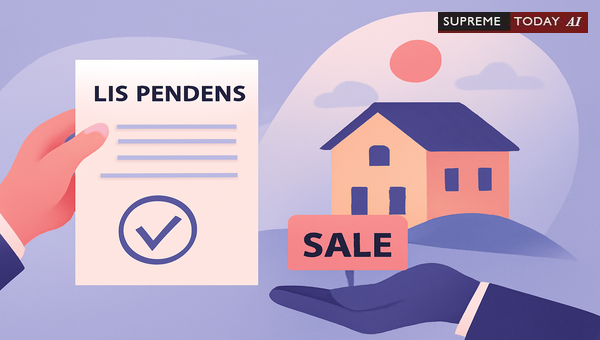
Is Property Sale During Legal?
In the complex world of real estate transactions, timing can make or break a deal. Imagine you're in the midst of a property dispute, and suddenly, a sale or surfaces. A common question arises: Is the Lease Pendency Property Sale legal? This refers to whether documents like or leases created during the (known as ) are binding and effective.
Generally, such transactions are not automatically valid. They are typically subject to the suit's outcome and may be challenged if they violate legal principles. This blog dives deep into the doctrine of , key statutes, case laws, and practical advice to help you navigate this tricky terrain. Remember, this is general information—not specific legal advice. Consult a qualified lawyer for your situation.
Understanding : The Core Doctrine
The doctrine of (Latin for pending litigation) prevents parties from altering the property's status during an ongoing suit to ensure the court's final isn't undermined. This is enshrined in (TPA), which states that during the or proceeding affecting , no transfer can be made that impacts the rights of the litigants, except with court permission.
Key implications:- Transfers (during the suit) are subject to the final .- They don't annul the transaction outright but make it subservient to the rights of the parties to litigation 2010 0 Supreme(Bom) 958.- Without court approval, such deals risk being declared invalid, especially if collusive or fraudulent.
Main Legal Finding: Not Automatically Binding
A document like a sale deed or lease created during does not automatically bind parties or become legally effective, particularly if challenged on validity grounds. Its enforceability hinges on:- Compliance with legal formalities (e.g., registration).- Absence of collusion or fraud.- Court permission, where required.
Courts scrutinize these transactions closely. For instance, the effect of is not to annul the conveyance but only to make it subservient to rights of the parties to litigation 2010 0 Supreme(Bom) 958.
Detailed Analysis of Property Transfers During Suits
Impact of Section 52 TPA
Under Section 52, any sale, lease, or during pendency is restricted. The court may permit transfers upon such terms as it may deem just 2010 0 Supreme(Bom) 958. Absent this, the transferee's rights depend entirely on the litigation's result.
Validity of
Registered aren't void but subordinate to the suit. In one case, rights under such a deed depend on the result of the pending proceedings, and rights vested under a sale deed during a suit are subject to the final 2010 0 Supreme(Bom) 958.
However, if collusive, they can be voided. Challenges often succeed on grounds of non-compliance or intent to defeat litigants' rights 2024 0 Supreme(Bom) 1004.
Leases During Pendency: A Special Case
Leases fare differently if they don't prejudice key parties. For example, a lease granted during a suit for sale of mortgaged property was not affected by if the lease did not affect the rights of the mortgagee, and the sale in execution of the superseded such rights 1971 0 Supreme(Bom) 140.
Yet, unregistered or suspicious leases can be invalidated, as seen in disputes over joint family property where sales during partition suits were deemed challengeable
.
Insights from Relevant Case Laws
Indian courts have clarified these principles through precedents:
- 2010 0 Supreme(Bom) 958 Emphasized that purchasers' rights hinge on the suit's outcome; transfers aren't void but conditional.
- 1971 0 Supreme(Bom) 140 Held leases valid pre-sale execution if mortgagee rights untouched.
- 2024 0 Supreme(Bom) 1004 Ruled agreements during pendency non-binding if collusive or informal.
Additional cases reinforce this:- In a Karnataka dispute, a sale of suit property during litigation was contested, noting restrictions like the property should not be sold to any one else other than the plaintiff 2022 Supreme(Online)(Kar) 50698.- observed sales of joint family land could be nullified in partition suits
.- Madras cases highlighted that lease-cum-sale agreements might not convey full title without registration, even pending suits
.- Another instance involved prior lease-cum-sale documents in joint family claims, underscoring scrutiny of execution timing 2024 Supreme(Online)(KAR) 7560.
These illustrate that context—family property, mortgages, or tenancies—matters greatly.
When Is a Pendency Document Binding?
Typically, a document survives if:- Executed with court permission.- Non-collusive and in good faith.- Complies with statutes (e.g., registration under TPA).- Doesn't harm other parties' rights or the .
Otherwise, expect challenges. Purchasers should verify suit status via and court records.
Exceptions and Limitations
- Court-sanctioned transfers: Remain effective until .
- Non-prejudicial leases: Valid if mortgagee/suit rights intact 1971 0 Supreme(Bom) 140.
- Post-notice deals: Riskier if ignoring legal notices
.
- Bad-faith sales (e.g., to defeat partition claims) are
.
Practical Recommendations
To mitigate risks:- Seek court approval before any transfer during suits.- Buyers/transferees: Conduct due diligence—check notices, verify permissions.- Litigants: File or against unauthorized deals.- Scrutinize documents for collusion indicators, like rushed executions or family disputes 2024 Supreme(Online)(KAR) 7560.
Conclusion and Key Takeaways
In summary, a lease or sale during property suit pendency is generally not automatically legal or binding. It may hold if court-approved and bona fide, but often subordinates to the or faces invalidation 2010 0 Supreme(Bom) 958 2024 0 Supreme(Bom) 1004.
Key Takeaways:- prioritizes suit integrity over mid-litigation deals.- Always prioritize court nod and legal compliance.- Buyers beware: Rights are provisional.
This landscape evolves with case specifics—consult a legal expert for tailored guidance. Stay informed to protect your property interests.
Disclaimer: This post provides general insights based on statutes and cases like 1971 0 Supreme(Bom) 140, 2010 0 Supreme(Bom) 958, 2024 0 Supreme(Bom) 1004, 2022 Supreme(Online)(Kar) 50698, etc. It is not legal advice.
#LisPendens #PropertyLaw #RealEstateLaw












