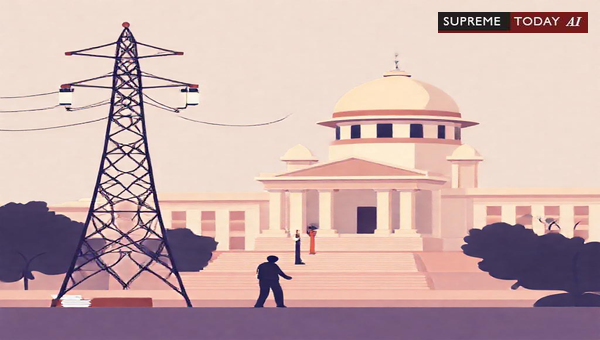
Supreme Court and Section 138 of the Electricity Act: Summary
Main Points and Insights
Section 138 of the Electricity Act, 2003: This section deals with the offence of theft of electricity, which is a criminal offence punishable under the Act. It specifies that using electricity unlawfully, such as theft or tampering, constitutes an offence under this section. Courts recognize that offenses under Section 138 are compoundable, meaning they can be settled through compounding procedures with the consent of the court (2018 0 Supreme(Raj) 2278, 2019 0 Supreme(Raj) 1104).
Jurisdiction and Adjudicatory Powers: Disputes related to unauthorized use or theft of electricity, including those under Section 138, are primarily handled by specialized tribunals or courts. The Lok Adalat and Permanent Lok Adalat have jurisdiction to settle such disputes, provided they fall within their scope, and their orders can be subject to judicial review (2020 0 Supreme(Del) 584,
Tata Power Delhi Distribution Limited vs Rampal - Delhi
).Compoundability of Offenses: Several judgments confirm that offences under Sections 135 and 138 of the Electricity Act are compoundable under Section 152 of the same Act. This allows parties to settle disputes amicably, and courts have upheld the legality of such compoundings, including quashing proceedings based on settlement (2025 Supreme(Online)(ALL) 693, 2025 Supreme(Online)(ALL) 648, 2018 0 Supreme(Raj) 2278, 2019 0 Supreme(Raj) 1104).
Legal Proceedings and Court Interventions: Courts have examined whether criminal proceedings under Section 138 can be quashed if the parties reach an agreement. The Supreme Court has held that such offences are not non-compoundable and can be quashed if the parties agree, emphasizing the importance of amicable settlement in electricity theft cases (2018 0 Supreme(Raj) 2278, 2019 0 Supreme(Raj) 1104).
Related Legal Frameworks: The Electricity Act interacts with other laws such as the Recovery of Debts Due to Banks and Financial Institutions Act, 1993 and the Legal Services Authorities Act, 1987, especially concerning dispute resolution and procedural aspects of criminal and civil cases involving electricity dues or theft (
Chanchal Rajesh More VS State Bank of Patiala - Dishonour Of Cheque
,Chanchal Rajesh More VS State Bank of Patiala - Dishonour Of Cheque
).
Analysis and Conclusion
The Supreme Court has clarified that offences under Section 138 of the Electricity Act, 2003, are compoundable, allowing for amicable settlement between the parties involved. Courts and tribunals, including Lok Adalats, have the jurisdiction to settle disputes related to electricity theft, and their orders can be challenged or set aside based on legal provisions. The emphasis is on conciliation and settlement, promoting alternative dispute resolution mechanisms over protracted criminal proceedings. Overall, the legal stance favors a pragmatic approach, enabling dispute resolution while recognizing the criminal nature of electricity theft under Section 138.
References: - 2018 0 Supreme(Raj) 2278, 2019 0 Supreme(Raj) 1104: Supreme Court and High Court judgments on compoundability of Sections 135 and 138. - 2020 0 Supreme(Del) 584,
Tata Power Delhi Distribution Limited vs Rampal - Delhi
: Jurisdiction of Lok Adalats and procedural aspects. - 2025 Supreme(Online)(ALL) 693, 2025 Supreme(Online)(ALL) 648: Court decisions on quashing criminal proceedings via settlement. -Chanchal Rajesh More VS State Bank of Patiala - Dishonour Of Cheque
,Chanchal Rajesh More VS State Bank of Patiala - Dishonour Of Cheque
: Interactions with other legal provisions and procedural amendments.