Searching Case Laws & Precedent on Legal Query!
Scanned Judgements…!



Searching Case Laws & Precedent on Legal Query!
Scanned Judgements…!
138 Cases Filed Against Civil Transactions - Main points and insights
Civil Nature of Transactions and Criminal Proceedings: Several sources clarify that transactions of a civil nature, such as loans or contractual agreements, generally do not automatically attract criminal liability under Section 138 of the Negotiable Instruments Act (N.I. Act). For example, judgments highlight that dishonour of cheques related to civil debts or contractual disputes may not constitute criminal offences unless specific criminal elements are established 2023 0 Supreme(Bom) 1154, 2023 0 Supreme(AP) 773.
Conditions for Criminal Liability under Section 138: To prosecute under Section 138, the complainant must prove that the cheque was issued for a legally enforceable debt or liability, and that the cheque was dishonoured due to insufficient funds or other reasons specified under the Act. If the transaction is not reflected in books of account or tax returns, or if it is purely civil, courts may dismiss the case or quash proceedings 2023 0 Supreme(Bom) 1154, 2024 0 Supreme(Guj) 1765, 2024 0 Supreme(Guj) 1763.
Quashing of Complaints and Civil Nature: Multiple cases demonstrate that criminal complaints under Section 138 can be quashed if the court finds that the transaction is civil in nature, or if the ingredients of the offence are not satisfied. Courts have quashed criminal proceedings when the dispute pertains to civil rights or contractual obligations, emphasizing that criminal prosecution should not be used as a tool to settle civil disputes 2023 0 Supreme(Guj) 993, 2024 0 Supreme(Guj) 1765.
Court Judgments and Legal Precedents: Courts have consistently held that the mere dishonour of cheques does not automatically imply criminal liability, especially when the underlying transaction is civil, or if there is no evidence of criminal intent or fraudulent conduct. The evidence must establish the existence of a debt, issuance of cheque, and its dishonour due to insufficiency of funds to proceed with criminal charges 2023 0 Supreme(AP) 773, 2025 0 Supreme(Del) 587, 2024 0 Supreme(Raj) 670.
Civil Remedies and Alternative Legal Avenues: It is emphasized that parties have alternative remedies such as civil suits for recovery or specific performance, and criminal proceedings under Section 138 are not always appropriate or justified. Filing criminal cases solely to harass the other party without substantive criminal elements is discouraged 2025 0 Supreme(Gau) 1153.
Analysis and Conclusion
Crucial insights from the sources indicate that Section 138 of the N.I. Act is primarily intended to address dishonour of cheques issued for legally enforceable debts. Cases where transactions are civil, not reflected in books, or involve contractual disputes without criminal intent are often quashed or dismissed by courts. Therefore, filing a criminal case under Section 138 against a civil transaction requires clear proof of a debt, issuance of cheque, and dishonour due to insufficient funds. Courts tend to discourage criminal proceedings that are essentially civil in nature or used as a tool for harassment, emphasizing the importance of establishing the criminal elements before proceeding with prosecution.
References:- 2023 0 Supreme(Bom) 1154- 2024 0 Supreme(Guj) 1765- 2024 0 Supreme(Guj) 1763- 2024 8 Supreme 191- 2025 0 Supreme(Gau) 1153- 2023 0 Supreme(AP) 773- 2025 0 Supreme(Del) 587- 2024 0 Supreme(Raj) 670
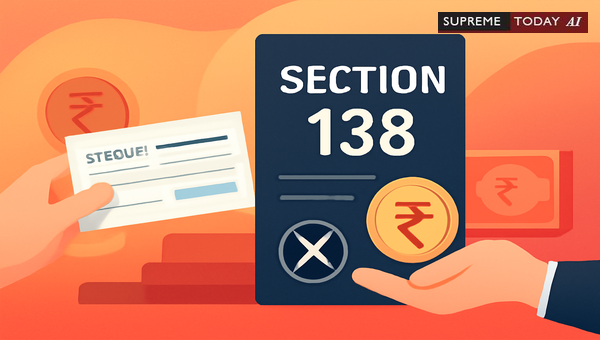
In the world of business transactions, cheques are a common payment method, but what happens when a cheque bounces? Under (NI Act), can lead to . A frequent query arises: Cases Related to NI Act 138 where Partial Payment Already Made before Filing a Case. Can a complainant still file a Section 138 case if the drawer has made partial payment prior to filing? This blog post delves into this nuanced issue, examining legal principles, judicial precedents, and practical considerations.
While partial payments may reduce the outstanding debt, they do not automatically bar a Section 138 complaint if a remains and the cheque was issued for its discharge. However, courts scrutinize the nature of the underlying transaction, often viewing Section 138 offences as having a character 2023 0 Supreme(Raj) 631. Let's break it down step by step.
Section 138 criminalizes the dishonour of a cheque due to insufficient funds or exceeding arrangement, provided the cheque was issued for the discharge of a or liability2021 0 Supreme(J&K) 69. A partial payment before filing does not negate the offence if:- The cheque was presented within its validity period.- A was issued within 30 days of dishonour.- The drawer failed to pay the cheque amount within 15 days of notice receipt.
Partial payment might acknowledge the debt, potentially strengthening the complainant's case by evidencing a . Yet, if the payment covers the full cheque amount or renders no subsisting liability, courts may quash proceedings 2002 0 Supreme(Ker) 505.
To succeed, complainants must prove:1. Issuance of cheque for a 2021 0 Supreme(J&K) 69.2. Dishonour due to specified reasons (e.g., insufficient funds) 2008 0 Supreme(AP) 527.3. Compliance with notice requirements 2013 0 Supreme(Mad) 1830.
If partial payment was made post-dishonour but pre-filing, it could be argued as , but the complaint typically pertains to the bounced cheque's value
. Courts have held that even in civil contexts, Section 138 applies if ingredients are met 2023 0 Supreme(Raj) 631.
Many cheque bounce cases stem from civil transactions like loans or goods sales. The has clarified that Section 138 transforms a civil obligation into a criminal offence under specific conditions 2023 0 Supreme(Raj) 631. However, if the underlying transaction lacks enforceability (e.g., or illegal), no offence occurs 2021 0 Supreme(J&K) 69 2008 0 Supreme(P&H) 1074.
In scenarios with partial payments:- Acknowledgment of Debt: Partial payment often implies admission of liability, supporting enforceability
.- Civil vs. Criminal Nature: Sources emphasize that if a case has an overwhelmingly and predominantly civil character, especially in commercial transactions including cheque bouncing, proceedings may be quashed upon equitable settlement 2019 0 Supreme(Del) 624.
For instance, in one case, cheques issued post-delivery of goods for future payment were deemed civil, leading to quashing of the Section 138 complaint
. Similarly, courts quash if no criminal intent is evident or if disputes are purely contractual 2023 0 Supreme(Bom) 1985.
Atma Tube Products Ltd. VS Tata Steel Ltd. - Dishonour Of Cheque (2008)
. Partial payment in a civil suit might adjust claims but doesn't halt criminal case.Courts discourage using Section 138 as a harassment tool for civil scores 2025 0 Supreme(Gau) 1153. If partial payment resolves much of the dispute, settlement could lead to quashing 2019 0 Supreme(Del) 624.
Pro Tip: Maintain records like receipts, ledgers, or bank statements. Lack of documentation weakens claims 2023 0 Supreme(Bom) 1154.
Courts intervene via powers if:- No exists 2024 0 Supreme(Raj) 670.- Transaction is civil/commercial without fraud 2019 0 Supreme(Del) 624.- Partial payments or settlements render proceedings 2024 0 Supreme(Guj) 1765.
Example: The transaction was of civil nature and a complaint under Section 138 of the Act was required to be quashed
.
Filing a Section 138 NI Act case after partial payment is possible if a persists and offence ingredients are met. However, courts often treat these as civil matters in criminal garb, quashing where appropriate 2023 0 Supreme(Raj) 631. Partial payments bolster debt acknowledgment but invite scrutiny on remaining liability.
Key Takeaways:- Assess Enforceability: Verify debt validity pre-filing 2021 0 Supreme(J&K) 69.- Document Everything: Essential for both parties.- Consider Alternatives: Civil suits or arbitration for purely civil disputes 2025 0 Supreme(Gau) 1153.- Seek Settlement: Equitable resolution often quashes proceedings 2019 0 Supreme(Del) 624.
This post provides general information based on precedents and is not legal advice. Consult a qualified lawyer for case-specific guidance.
References:- 2023 0 Supreme(Raj) 631 2021 0 Supreme(J&K) 69 2008 0 Supreme(P&H) 1074 2002 0 Supreme(Ker) 505
Atma Tube Products Ltd. VS Tata Steel Ltd. - Dishonour Of Cheque (2008)
2023 0 Supreme(Bom) 1985 2019 0 Supreme(Del) 624 2008 0 Supreme(AP) 5272023 0 Supreme(Bom) 1154 2024 0 Supreme(Guj) 1765 2024 0 Supreme(Guj) 1763 2023 0 Supreme(AP) 773 2025 0 Supreme(Del) 587 2024 0 Supreme(Raj) 670 2025 0 Supreme(Gau) 1153 #Section138, #ChequeBounce, #NIACT


Violation of Sections 269-SS and/or Section 271-AAD of the Act of 1961 would not render the transaction unenforceable under Section 138 of the Act of 1881. The decisions in Krishna P. ... It has been further held that the offence made punishable by Section 138 of the Act of 1881 could be described as a regulatory offence as bouncing of a cheque was largely in the nature of a civil wrong whose impact was usually confined to....

Act is being filed. ... In aforesaid controversy, considering the peculiar facts and circumstances of the present case, the issue falls for my consideration as to whether the applicant- accused have made out a case for quashing of criminal complaint filed under Section 138 of the N.I. Act? 11. ... of transaction and prima- facie, the ingredients of Section 138 are not m....
Act is being filed. ... In aforesaid controversy, considering the peculiar facts and circumstances of the present case, the issue falls for my consideration as to whether the applicant- accused have made out a case for quashing of criminal complaint filed under Section 138 of the N.I. Act? 11. ... of transaction and prima- facie, the ingredients of Section 138 are not m....

Additional Senior Civil Judge & Chief Judicial Magistrate, Surat for the offences punishable u/s. 138 of N.I. ... Application No.7834 of 2018, the impugned complaint being Special Criminal Case No.33686 of 2017 filed in the Court of Addl. Senior Civil Judge & Chief Judicial Magistrate, Surat for the offences punishable under Section 138 of the Negotiable Instruments Act, 1881 is hereby q....

The cheques were dishonoured and consequently, respondent No.2 filed a complaint under Section 138 of the Negotiable Instruments Act, 1881. ... It is clarified that the observations made hereinabove shall have no bearing on the merits of the Civil Suit, if filed, which shall be decided by the Courts as per its own merit. 8. ... The challenge herein is to an order dated 17.09.2021, passed by the High Court of Judicature at ....

He submits that alternative legal remedies, such as a case under Section 138 of the Negotiable Instruments Act (N.I. Act) or a civil suit for specific performance, were available to respondent No. 2 (informant), but instead, he filed a criminal case solely to harass the petitioners. ... The petitioners contended that the case and Charge Sheet is lacking legal basis or criminal elements.....

It is against those convicting judgments of both the Courts below, this revision is filed stating that evidence was improperly appreciated and the disputed transaction is of civil in nature and could not have been prosecuted as a criminal case and there was no debt outstanding so as to attract liability ... ORDER : This Criminal Revision Case is filed under Section 397 and 401 Cr.P.C. ch....

Learned Magistrate, on consideration of the material on record, held the accused guilty of the offence punishable under Sec. 138 of the N.I. Act and sentenced him as above. The accused filed an appeal against his conviction and sentence. ... In this revision application, challenge is to the judgment and order dtd. 5/5/2015, passed by learned Sessions Judge, Akola, whereby learned Sessions Judge allowed the appeal filed by the accused agains....

Section 138 of N.I. Act was filed by the Respondent. 4. ... The Apex Court in the case in which has been followed by this Court in Kulwinder Singh vs. Kafeel Ahmad, CR.LP 478/2011, held the acquittal under Section 138 of N.I. Act, to be proper. ... Such transaction cannot be considered valid as has been held in the case of Krishna Janardhan Bhat vs. Dattattraya G. Hegde , Criminal App....

This is in addition to the civil remedy that is available. ... The objective of the Act in general and Section 138 specifically is to enhance the acceptability of cheques and to inculcate faith in the efficacy of negotiable instruments for the transaction of business. 7 Section 138 criminalises the dishonour of cheques. ... Section-138 not only imposes criminal liability against the payee but also provide....

Act - or “matrimonial dispute” or “family dispute”, genuine resolution on equitable terms, in entirety, by the parties should result in criminal proceedings being quashed. If the criminal case has “overwhelmingly and predominantly civil character”, particularly if it arises out of “commercial” (financial, mercantile, partnership or such other) transaction - and this would include the “cheque bouncing cases” under Section 138 N.I.

Hence, the case has been filed under Section 138 r/w 141 of the Negotiable Instruments Act, against the accused. Even after the receipt of the legal notice, the accused neither paid the cheque amount nor sent any reply.

The accused in C.C.No.444 of 2006, preferred the present revision case challenging the order of the Junior Civil Judge/Judicial First Class Magistrate, Macherla in Criminal M.P. No.925 of 2008 in C.C. No.444 of 2006. It is mentioned in the complaint that the accused gave EX. P.3 cheque for discharge of legally enforceable debt and when he presented the same before the bank, the bank returned the said cheque with an endorsement 'insufficient funds. The Criminal Case was filed against ....

4. The Petitioner in Writ Petition No. 272/2004 was an accused in Summary Criminal Case No.803/96 before the Judicial Magistrate, First Class, Buldana. Respondent No.1 filed Summary Criminal Case No. 803/96 against the Petitioner herein for having committed an offence under Section 138 of Negotiable Instruments Act. The learned Judicial Magistrate, First Class by Judgment and Order dated 12.12.2002 held that the petitioner herein had committed an offence under the Negotiable ....
The payment was to be made on some future date and there was no debt or liability on the date of delivery of cheques. Delivery of goods was effected and cheques were issued, as per the case of the contesting respondent, to fulfil the obligation of the petitioners to make payment of the value of the goods received by the petitioners. Therefore, it was found that the transaction was of civil nature and a complaint under Section 138 of the Act was required to be quashed.


An indispensable Tool for Legal Professionals, Endorsed by Various High Court and Judicial Officers
Please visit our Training & Support
Center or Contact Us for assistance

Scan Me!
India’s Legal research and Law Firm App, Download now!


For Daily Legal Updates, Join us on :



 Back to top


