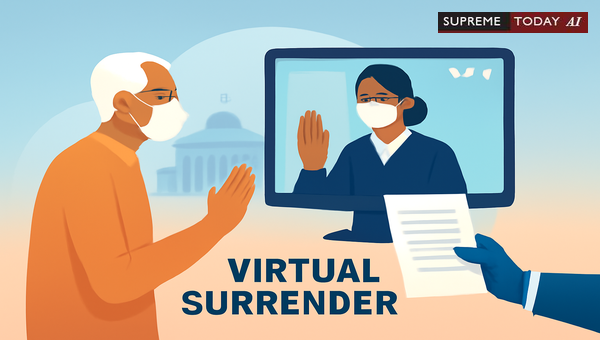
Virtual Surrender in Indian Courts: Is It Allowed?
In the wake of the COVID-19 pandemic, the Indian judiciary has undergone a digital transformation, embracing virtual hearings to ensure justice continues uninterrupted. But what about Virtual Surrender? Can an accused person, especially the elderly or those with health concerns, surrender virtually instead of appearing physically in court? This question has gained prominence as courts balance procedural requirements with public health safety.
This blog post delves into the evolving practice of virtual surrender in the Indian legal system, drawing from key judicial orders and precedents. While virtual modes are increasingly accepted, procedures may vary by court and case. Note: This is general information and not specific legal advice. Consult a qualified lawyer for your circumstances.
Understanding Virtual Surrender
Virtual surrender refers to an accused individual formally submitting themselves to the court's jurisdiction through online platforms, rather than in person. Traditionally, surrender implies physical presence, but recent judicial trends recognize virtual alternatives, particularly during health emergencies.
Courts have noted that virtual methods of appearing before the court are increasingly accepted in the Indian judiciary system, particularly in light of the COVID-19 pandemic. 2023 0 Supreme(SC) 109 This shift ensures accessibility without compromising fairness.
Key Drivers: COVID-19 and Judicial Flexibility
The pandemic accelerated the adoption of hybrid (virtual/physical) arrangements. Courts emphasized that virtual appearances are permissible and should be embraced where they do not compromise trial fairness or integrity. 2023 0 Supreme(SC) 109 2023 0 Supreme(Del) 3803 2025 0 Supreme(Ori) 10
For instance, during the third wave of COVID-19, petitions for extended surrender time were considered due to unavoidable reasons, highlighting health-related leniency.
MUKESH MALAKAR vs The State of Bihar - Patna
SHASHI RANJAN KUMAR @ SHASHIDEO KUMAR @ PACHKHURIA vs The State of Bihar - Patna
Judicial Precedents on Virtual Appearances and Surrender
Several rulings affirm virtual surrender as a viable option:
- Alternative for Vulnerable Individuals: Courts recognize virtual methods as an alternative to physical appearances, especially for those with age-related concerns. 2023 0 Supreme(SC) 109
- District Court Provisions: Even district courts arrange virtual hearings during public health emergencies. 2023 0 Supreme(SC) 109
- Court-Provided Platforms: Petitioners are granted liberty to address the court virtually, with links provided for submissions. 2023 0 Supreme(SC) 898
- Complex Cases: Virtual hearings have been used successfully in intricate matters, overcoming online interaction challenges. 2022 2 Supreme 321
In surrender-specific contexts, courts permit accused persons to surrender virtually or in person within timeframes, often allowing post-surrender bail applications. This balances procedure with safety, particularly for senior citizens. 2025 Supreme(Online)(Ori) 5082 2025 Supreme(Online)(Ori) 5200 2025 Supreme(Online)(Ori) 4172
One order notes: Learned counsel for the petitioner submits that due to some unavoidable reasons, the petitioner could not surrender.
MUKESH MALAKAR vs The State of Bihar - Patna
This underscores flexibility during crises.
Broader Interpretations of Surrender
Surrender isn't always strictly voluntary. As one ruling states: The term 'surrender' itself is flexible one and does not always connote the meaning of voluntarily surrender. 2019 0 Supreme(Bom) 2423 Courts have also clarified implied surrender: Implied surrender is a surrender by operation of law which arises by creation of new relationship. 2012 0 Supreme(Bom) 1388
In tenancy contexts, surrender of tenancy occurs only when both parties... voluntarily agree, but possession relinquishment can imply surrender. 2018 0 Supreme(Cal) 186 2010 0 Supreme(Guj) 401 These principles inform criminal surrender adaptations.
Additionally: Surrender was initially supposed to be a voluntary surrender. 2009 0 Supreme(Mad) 4519 Yet, virtual modes adapt this for modern needs.
Procedures for Virtual Surrender
To pursue virtual surrender:1. File a Petition: Approach the relevant court (High Court or District) seeking permission for virtual appearance.2. Provide Justification: Highlight health issues, age, or logistical challenges, supported by medical certificates if possible.3. Court Coordination: Courts may provide video conferencing links. Ensure compliance with Standard Operating Procedures (SOPs). 2023 0 Supreme(SC) 8984. Technical Readiness: Use stable internet and authorized platforms. Courts appoint Remote Point Coordinators for smooth proceedings. 2024 0 Supreme(P&H) 967
Virtual hearings follow guidelines: advance notice, cooperation, and fairness safeguards. Challenges like technical glitches or resource shortages (e.g., lack of display units) are acknowledged, with calls for improvements. 2024 0 Supreme(P&H) 967
Recommendations for Litigants
- Explore Options: If your client is elderly or health-compromised, virtual surrender is worth pursuing based on precedents. 2023 0 Supreme(SC) 109
- Contact the Court: Inquire about specific virtual procedures.
- Seek Expert Counsel: A lawyer can tailor the approach to the case.
Courts encourage this: Several orders highlight the flexibility granted to litigants to surrender or appear virtually, especially for elderly or vulnerable persons. 2023 0 Supreme(SC) 109 2023 0 Supreme(Del) 3803 2025 0 Supreme(Ori) 10
Challenges and Future Outlook
Despite progress, hurdles remain:- Technical Issues: Glitches disrupt proceedings. 2024 0 Supreme(P&H) 967- Resource Gaps: Not all courts have adequate infrastructure.- Fairness Concerns: Ensuring witness credibility online.
However, the judiciary views virtual modes as a vital tool, especially during pandemic waves, favoring hybrid systems. 2025 0 Supreme(Ori) 94
Conclusion and Key Takeaways
Virtual surrender is increasingly feasible in Indian courts, driven by COVID-19 necessities and technological integration. Precedents show flexibility for vulnerable parties, with courts providing platforms and time extensions. 2023 0 Supreme(SC) 109 2023 0 Supreme(SC) 898
Key Takeaways:- Virtual appearances are accepted alternatives, especially for health reasons.- Always check court-specific rules.- Consult professionals to navigate procedures.- The trend points to sustained hybrid justice delivery.
This evolution enhances accessibility, but success depends on preparation. For personalized guidance, reach out to a legal expert. Stay informed as the judiciary continues adapting.
(Word count: 1028. Sources cited are from judicial documents; interpretations are general.)
#VirtualSurrender #IndianCourts #LegalTech