
 Back
Back





IN THE HIGH COURT OF ANDHRA PRADESH AT AMARAVATI
K. SURESH REDDY, K. SREENIVASA REDDY, JJ.
Sayaboina Venkatanarayana, Guntur Dst. & Another - Appellants
Versus
The State of AP Rep. by PP - Respondent
Criminal Appeal No.277 Of 2017
Decided On : 14-10-2024
Criminal Law - Murder - IPC Sections 302, 201 - The court discussed the principles of circumstantial evidence, emphasizing the need for a complete chain of evidence to establish guilt beyond reasonable doubt, ultimately leading to the acquittal of the accused.
Fact of the Case:
Accused Nos.1 and 2 were convicted for the murder of the deceased, with the prosecution alleging they killed him and disposed of the body in a canal. The case relied on circumstantial evidence and witness testimonies.
Finding of the Court:
The court found the circumstantial evidence insufficient to establish guilt, highlighting inconsistencies in witness testimonies and the improbability of the extra-judicial confession made to a stranger.
Issues: Whether the prosecution proved the guilt of the accused for the offences under Sections 302 and 201 IPC beyond reasonable doubt.
Ratio Decidendi: The court reiterated that in cases based on circumstantial evidence, all circumstances must be conclusively established, leaving no reasonable doubt about the accused's guilt.
Result: The appeal is allowed, and the accused are acquitted of all charges.
JUDGMENT :
(K. Sreenivasa Reddy, J.) :
Accused Nos.1 and 2 in Sessions Case No.24 of 2016 on the file of the XIII Additional District and Sessions Judge, Guntur at Narasaraopet, (hereinafter referred to, as ‘the learned Additional Sessions Judge’) are the appellants in the present Criminal Appeal. Accused Nos.1 and 2 were tried by the learned Additional Sessions Judge for the offences punishable under Sections 302 and 201 read with 34 of the Indian Penal Code, 1860 (for brevity ‘IPC’).
2. Vide Judgment, dated 19.12.2016, the learned Additional Sessions Judge convicted the accused Nos.1 and 2 and sentenced to undergo imprisonment for life each and to pay a fine of Rs.500/- (Rupees five hundred only) each, in default of payment of fine, to undergo simple imprisonment for a period of one (01) month each for the offence punishable under Section 302 read with 34 IPC. Further, accused Nos.1 and 2 were sentenced to undergo rigorous imprisonment for a period of two (02) years each and to pay a fine of Rs.100/- (Rupees one hundred only) each, in default of payment of fine, to undergo simple imprisonment for a period of fifteen (15) days each for the offence punishable under Section 201 read with 34 IPC. Both the substantial sentences were directed to run concurrently.
3. The substance of the charges as against the accused Nos.1 and 2 is that on 31.08.2014 at about 8.00 p.m., in the fields of Yarla Seethamma of Sangineedupalem village, while accused No.2 caught hold the legs of one Gorre Ramanjaneyulu (hereinafter referred to, as ‘the deceased’), accused No.1 caused the death of the deceased by squeezing the neck of the deceased. In the course of the same transaction, the accused threw the dead body of the deceased into NSP Canal to screen the evidence.
4. Case of the prosecution, briefly, is as follows:
(i) The accused and the deceased are residents of Sangineedupalem village of Bollapalli Mandal. P.W.1 is the father, and P.W.2 is the brother, of the deceased. The deceased discontinued his studies after X class and used to attend agricultural works; the deceased used to drink alcohol.
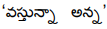
(ii) On 31.08.2014 at about 6.00 p.m., the deceased informed P.W.1 that one Amarason Balu called him on phone and suggested to raise chilly seed links  ; thereafter, he went into the washroom to take bath; even, while the deceased was taking bath, his mobile rang and the deceased attended the same and said
  (‘coming brother’); the deceased was wearing black pant, red colour banian; he did not come back for the dinner; P.W.1 waited for the arrival of the deceased till 11.00 p.m., thereafter, they slept in their house; on the next day morning, P.W.1 went to the fields, as usual, to attend the works; they were there in the fields till 12.00 noon; around 12.00 noon, P.W.1 returned home for lunch and after having lunch at home, P.W.1 took food for others, who were working in the field; in the field, P.W.1 told the workers that the deceased did not come back; thereafter, P.W.1 returned home and enquired his relatives over phone with regard to whereabouts of the deceased but, no one gave information about the deceased.
(iii) About 7.00 or 8.00 p.m., P.W.1 proceeded to the house of accused No.1 to know the whereabouts of the deceased; by the time P.W.1 reached the house of accused No.1, the family members of accused No.1 were taking him to the hospital, as he consumed pesticide; P.W.1 returned home; on the next day morning, he proceeded to the Vellaturu Hospital, where accused No.1 was taking treatment; P.W.1 enquired accused No.1 about the deceased, for which, accused No.1 and his father uttered as  (‘Are we security guards to your son?’).
(iv) On his way back to home, P.W.1 searched for the deceased in two wells, on suspicion, but, in vain. Then, P.Ws.1 and 2 proceeded to the NSP canal, on bike, in search of the deceased; at Siddinapalem, they found an old man washing clothes in the canal; on enquiry, he informed P.Ws.1 and 2 that a dead body was flowing in the can




AI
In criminal cases based on circumstantial evidence, the prosecution must establish a complete and unbroken chain of evidence to prove guilt beyond reasonable doubt.

Circumstantial evidence must be conclusive, with no gaps in the chain, to establish guilt beyond reasonable doubt, as per Indian law.
In order to sustain conviction must be complete and incapable of explanation of any other hypothesis than that of the guilt of the accused and such evidence should not only be consistent with the gui....
Circumstantial evidence must form a complete chain pointing to guilt, and extrajudicial confessions require corroboration to be credible.

Circumstantial evidence must form a complete chain pointing to guilt, and extrajudicial confessions require corroboration to be reliable.


In murder cases based on circumstantial evidence, each link must be established beyond reasonable doubt, with all evidence consistently pointing to the guilt of the accused.

The judgment emphasizes the principle that the guilt of the accused must be proved beyond all reasonable doubt, especially in cases based on circumstantial evidence.

(i) Acquittal – Merely because appellate Court can take another view, it cannot be a ground for reversing the judgment of acquittal.(ii) Chain of circumstances – The prosecution is required to prove....

The court ruled that both the 'last seen together' theory and extra-judicial confessions require corroboration and cannot independently sustain a conviction.



An indispensable Tool for Legal Professionals, Endorsed by Various High Court and Judicial Officers
Please visit our Training & Support
Center or Contact Us for assistance

Scan Me!
India’s Legal research and Law Firm App, Download now!


For Daily Legal Updates, Join us on :



 Back to top


