
 Back
Back





IN THE HIGH COURT OF KARNATAKA AT BENGALURU
G. BASAVARAJA, J.
Sri. Hanumantha Naik, S/o. Sri. Tavarya Naik – Petitioner
Versus
State, By Basavapatna Police Station, Represented By Its SPP, High Court Of Karnataka – Respondent
Criminal Revision Petition No. 641 of 2017
Decided On : 10-06-2025
| Table of Content |
|---|
| 1. factual background of the case and charges. (Para 1 , 3 , 4) |
| 2. arguments of parties regarding lack of evidence. (Para 6 , 7 , 8) |
| 3. court's analysis of evidence and legal standards. (Para 9 , 20 , 21 , 22 , 23) |
| 4. court ruled on the necessity of substantial proof. (Para 10) |
ORDER :
(G. BASAVARAJA, J.)
The petitioner has preferred this petition against the judgment of conviction and order of sentence passed by the Senior Civil Judge and J.M.F.C, Channagiri in CC.No.30/2014 dated 13.08.2014, which is confirmed in Crl.A.No.107/2014, on the file of I Additional District and Sessions Judge, Davangere, dated 20.09.2016.
2. The parties are referred as per the rankings of the trial Court.
3. Brief facts leading to this revision petition are that, the Circle Inspector of Police, Channagiri, has laid a charge sheet against the accused for offences punishable under Section 279 and 304(A) of IPC. It is alleged by the prosecution that on 23.05.2012 at about 9.30 p.m., near Doddaghatta Village, Channagiri, Davangere road, the accused being a driver of the Tractor Trailer bearing registration No.KA-17/TA-575 and KA-17/TA-576, has taken CW1 and CW2 and one Bhimanaik S/o. Sevyanaik for bringing fertilizers from Davangere. Bhimanaik was sitting on the engine mudguard. The accused drove the said Tractor and Trailer in a rash and negligent manner while coming from Tyavanagi. When they came near the lands of Pujar Halappa of Doddaghatta Village, Bhimanaik fell down and the rear wheel of the trailer rammed Bhimanaik suffering injury and he died on his way to the hospital and thereby the accused has committed the alleged offences.
4. After filing the charge sheet, the jurisdictional magistrate has taken cognizance against the accused for the alleged offences and the case was registered in CC.No.30/2014. The substance of plea was recorded, accused pleaded not guilty and claimed to be tried.
5. To prove the case of the prosecution, in all 7 witnesses were examined as PW1 to PW7, 9 documents were marked as Ex.P1 to Ex.P9. On closure of prosecution side evidence, statement under Section 313 of Cr.P.C was recorded. Accused has denied all the incriminating evidence appearing against him, however, he has not adduced any evidence on his behalf. Having heard the arguments on both sides, the trial Court has convicted the accused for the offences punishable under Section 279 and 304(A) of IPC and passed the sentence. Being aggrieved by this judgment of conviction and order of sentence, the accused has preferred this appeal before the I Additional District and Sessions Judge, Davangere in Crl.A.No.107/2014, and the same came to be dismissed on 28.09.2016. Being aggrieved by the judgment of both Courts, the accused has filed this revision petition.
6. Learned counsel for the revision petitioner would submit that absolutely there is no evidence to prove the offences under Section 279 and 304(A) of IPC.
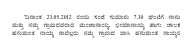
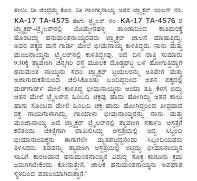
7. Though there are no independent witnesses, trial Court has convicted the accused without any substantial evidence to show that the driver of the tractor drove the same in a rash and negligent manner. Further, he would submit that in Ex.P1-complaint the tractor number is shown as KA-17/TA-4575 and trailer number is shown as KA-17/TA-4576, whereas at the time of filing the charge sheet the tractor bearing registration No.KA17/TA- 575 and trailer number KA17/TA-576 is inserted for the reason that the tractor bearing No.KA-17/TA-4575 and KA-17/TA-4576, has no insurance as on the date of the accident and only to get claim as to the death of deceased, the tractor bearing No.KA-17/TA-575 and trailer number KA-17/TA-576 has been falsely implicated. The investigating officer has not explained anything in this regard. However, both Courts have failed to appreciate this fact and failed to appreciate the evidence on record in accordance with law and facts, on all these grounds sought to allow the appeal. To substantiate his arguments he has relied on the following d
AI
Conviction under IPC sections for rash driving requires cogent evidence; failure to substantiate claims leads to acquittal.

Prosecution must establish clear evidence of guilt; procedural failures can lead to reversal of convictions.
Proper appreciation of evidence, inconsistencies, and reasonable doubt are crucial in determining the sustainability of judgments.

Revisional jurisdiction limited; no interference with concurrent conviction for rash driving on wrong side causing deaths absent perversity, despite vehicle registration ambiguity, as eyewitnesses re....
The prosecution must prove guilt beyond reasonable doubt; inconsistencies in evidence justified acquittal in a criminal case.

The prosecution must conclusively prove rashness or negligence to establish criminal liability for driving offences; mere claims of high speed are insufficient without supporting evidence.
The prosecution must prove negligent conduct beyond reasonable doubt; inconsistencies in eyewitness accounts can lead to acquittal for criminal charges, even if other offenses are upheld.
Revisional jurisdiction limited to perversity; lower courts erred ignoring mechanical reports' inconsistencies on vehicle damage and witness speed contradiction, creating reasonable doubt on rash dri....
The accused's guilt was established based on the material evidence presented by the prosecution, including witness testimonies and documentary evidence. The court applied the principles of Section 31....



An indispensable Tool for Legal Professionals, Endorsed by Various High Court and Judicial Officers
Please visit our Training & Support
Center or Contact Us for assistance

Scan Me!
India’s Legal research and Law Firm App, Download now!


For Daily Legal Updates, Join us on :



 Back to top


