
 Back
Back





IN THE HIGH COURT OF KARNATAKA, DHARWAD BENCH
G. BASAVARAJA, J.
State Of Karnataka, Represented By The Police Inspector, Honnavar Police Station, Uttara Kannada, Karwar, Through The Addl. State Public Prosecutor – Appellant
Versus
Badruddin Mohammad Sab - Respondent
Criminal Appeal No.100180 of 2018 (A)
Decided On : 07-06-2024
| Table of Content |
|---|
| 1. appeal based on prior acquittal. (Para 1 , 3 , 4 , 5 , 6) |
| 2. contrasting arguments of the parties. (Para 7 , 8) |
| 3. court's analysis of the evidence. (Para 9 , 11 , 12 , 13 , 14 , 15 , 16 , 17 , 18) |
| 4. order to dismiss the appeal. (Para 19) |
JUDGMENT :
G. BASAVARAJA, J.
State has preferred this appeal against the judgment of acquittal passed by the learned Special Judge, Uttara Kannda, Karwar (for short ‘trial Court’) in Special Case No. 31/2011 dated 13.11.2017.
2. Parties are referred to as per their ranking before the trial Court.
3. Brief relevant facts leading to filing of this appeal are as under:
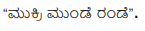
It is alleged by the prosecution that the complainant and CW4 are belonging to Mukri community which is classified under SC & ST category. Accused is a Muslim. That on 31.08.2011 at about 9.00 p.m. when the complainant was near Masjid cross in between Karki and Naduchitte village, accused came there and abused CW1 by saying 
 and assaulted him with hands over his body and hands and caused simple injuries. When CW4 came for rescue the accused also abused her in filthy language and insulted her. Thus the accused has committed the offences punishable under Section 323 and 504 of IPC and Section 3(1)((X)(XI) of SC & ST (Prevention of Atrocities) Act, 1989.
4. After filing charge sheet, the trial Court has taken cognizance and a case was registered in Spl.Case No.31/2011. In response to the summons, accused appeared before the trial Court and enlarged on bail. On hearing, charges framed for the aforesaid offences, the same was read over and explained to the accused. Having understood the same, the accused pleaded not guilty and claimed to be tried.
5. To prove the case of prosecution, nine witnesses were examined as PWs.1 to 9; documents as per Exs.P.1 to P.13 were marked. On closure of prosecution side, statement of accused under Section 313 Cr.P.C. was recorded. The accused has totally denied the evidence of prosecution witnesses but has not adduced any defence evidence on his behalf.
6. Having heard arguments of both sides the trial Court has passed the impugned judgment of acquittal. Being aggrieved by the judgment of acquittal, the State has preferred this appeal.
7. Sri Madanmohan M. Khannur, learned Additional Government Advocate would submit that the judgment of acquittal passed by the trial Court is contrary to law and facts. The trial Court has failed to appreciate the evidence in accordance with law & facts and on these grounds, he prayed to allow the appeal.
8. As against this, learned counsel for accused would submit that the trial Court has appreciated the evidence on record in accordance with law and facts which needs no interference. On these grounds, he sought for dismissal of the appeal.
9. Having heard arguments of both sides, the following points would arise for my consideration.
1) Whether the prosecution has made out grounds to interfere with the impugned judgment of acquittal?
2) What order?
10. My answer to the above points are as under:
Point No. 1 : In the negative
Point No. 2 : As per final order
11. Reasons to Point No.1: I have carefully examined the materials placed before the Court. Ex.P.11-caste certificate is issued by the Tahasildar, Honnavar, which reveals that Ravi son of Timma Mukri, i.e., the complainant-PW1 and Smt.Jattu wife of Timma Mukri, mother of the complainant-PW3 belongs to schedule caste. The same is not in dispute. Accused belongs to Muslim community, which is also not in dispute.
12. With regard to the offence U/s 323 IPC is concerned, it is the case of the prosecution that the accused assaulted PW1 with his hands on the hands and body of PW1. When his mother-PW3 went to rescue him the accused abused her and she has received injury on her left hand finger. The incident took place on 31.08.2011 at 9.00 a.m. The complaint came to be filed on 01.09.2011 at 00.230 hours. FIR was received by the Magistrate on 01.09.2011 at 12.25 p.m. The place of occurrence is at the distance of 5 kms as show

AI
The judgment affirms that the prosecution must establish all elements of charged offenses beyond a reasonable doubt, highlighting inconsistencies and insufficient evidence led to an acquittal.

In an appeal against acquittal, the appellate court must respect the trial court's findings unless they are found to be perverse, as presumption of innocence is reinforced by an acquittal.
The appellate court affirmed the trial court's acquittal, emphasizing the necessity of substantial evidence for conviction and the presumption of innocence for the accused.

In acquittal appeals, evidence must prove guilt beyond reasonable doubt; presumption of innocence remains unless proven otherwise.

In acquittal appeals, if the trial court’s assessment of evidence is plausible, the appellate court will not interfere, emphasizing the burden of proof on the prosecution.

In acquittal appeals, presumption of innocence is reinforced, and the appellate court should only interfere with the acquittal if the trial court's ruling is perverse or unreasonable based on the pre....

The appellate court must respect the presumption of innocence and not interfere with an acquittal unless the trial court's decision is unreasonable or perverse.
An appellate court must respect the presumption of innocence and should not interfere with an acquittal unless there is manifest illegality or perversity in the trial court's judgment.
An appellate court must respect the presumption of innocence and can only overturn an acquittal if the trial court's conclusions are unreasonable or perverse.



An indispensable Tool for Legal Professionals, Endorsed by Various High Court and Judicial Officers
Please visit our Training & Support
Center or Contact Us for assistance

Scan Me!
India’s Legal research and Law Firm App, Download now!


For Daily Legal Updates, Join us on :



 Back to top


