
 Back
Back





IN THE HIGH COURT OF KARNATAKA AT BENGALURU
VIBHU BAKHRU, C.J., C.M.JOSHI, J.
Jaiprakash Engineering And Steel Co. Ltd., Represented By Its Authorized Signatory Mr. Kamalaksha – Appellant
Versus
State Of Karnataka Represented By Its Additional Chief Secretary Commerce & Industries Department – Respondent
Writ Appeal No. 1659 Of 2024 (GM-KIADB) C/W Writ Appeal No. 1661 Of 2024 (GM-KIADB) Writ Appeal No. 1703 Of 2024 (GM-KIADB)
Decided On : 19-12-2025
The legal document discusses a complex scenario involving the allotment, possession, and subsequent resumption of land by the Karnataka Industrial Areas Development Board (KIADB) in relation to the appellant, JESCO. The key points are as follows:
Absence of Formal Allotment and Conditions: The appellant was handed over possession of the land through possession certificates without any formal allotment letter or execution of lease or sale agreements that set out specific terms and conditions (!) (!) . The possession certificates do not constitute an allotment or confer any enforceable right or interest in the land (!) (!) .
Lack of Compliance with Conditions: The initial conditions stipulated in the allotment letter, such as payment of initial deposits and fulfillment of other requirements, were not fulfilled by the appellant (!) . The land was handed over without the execution of formal agreements, and the conditions for allotment remained unfulfilled (!) .
Possession Without Transfer of Title: The possession was provided based on the proposal to establish a steel plant, but without formal transfer or allotment, and the appellant did not acquire any enforceable rights or title in the land (!) (!) .
Revocation and Resumption of Land: The government issued orders for resumption of the land, which the appellant challenged but ultimately withdrew, leading to the finality of the resumption order (!) (!) . The land was resumed after the appellant was found to have abandoned or not pursued the intended projects, and the land was not used for the purpose for which it was allotted or handed over (!) (!) .
Legal Implications of Handing Over Possession: The document emphasizes that mere possession certificates do not amount to allotment or confer rights, especially in the absence of formal agreements. Without compliance with statutory procedures, the land continues to vest with the government or KIADB, and the appellant’s possession does not create a legal right to retain the land (!) (!) .
Procedural and Statutory Requirements: The process of resumption under the relevant statute (Section 34-B of the KIAD Act) requires a formal notice and adherence to procedural safeguards, which were not properly followed in this case, especially given the lack of formal allotment or lease (!) (!) .
Final Court Findings: The court concluded that the appellant had no legal right, title, or interest in the land, as the possession was not backed by a formal allotment or statutory transfer, and the land was lawfully resumed after the appellant failed to pursue the projects or comply with conditions (!) (!) .
Enquiry and Accountability: The court also suggested that the manner of dealing with public land warrants an enquiry to examine potential misconduct or irregularities in the process, including possible violations of statutory provisions and principles of natural justice (!) .
In summary, the court held that possession certificates alone do not establish ownership rights, especially when statutory procedures for allotment and transfer have not been followed. The land remains with the government, and the resumption was lawful due to the appellant’s failure to implement the projects or comply with the conditions of possession.
| Table of Content |
|---|
| 1. context of the three writ appeals (Para 1 , 2 , 3 , 4 , 5) |
| 2. overview of jesco's land acquisition process (Para 6 , 7 , 8 , 9 , 10) |
| 3. details of land allotment notifications (Para 11 , 12 , 13 , 14) |
| 4. land possession specifics handed to jesco (Para 15 , 16 , 17 , 18 , 19) |
| 5. information related to surrendered land (Para 20 , 22 , 23) |
| 6. attempts and conditions surrounding further proposals (Para 24 , 25 , 26 , 27) |
| 7. regulatory requirements for land possession (Para 28 , 29 , 30 , 31) |
| 8. failure to implement approved projects (Para 32 , 33 , 34 , 35) |
| 9. legal challenges and their outcomes (Para 36 , 37 , 38 , 39) |
| 10. details on the subject lands rescinded (Para 40 , 41 , 42 , 43) |
| 11. judgment observations on jesco's inaction (Para 44 , 45 , 46) |
| 12. arguments presented by both parties (Para 47 , 48 , 49 , 50) |
| 13. final remarks on the legal arguments (Para 51 , 52) |
| 14. critical examination of the facts presented (Para 53 , 54 , 55 , 56) |
| 15. legality of jesco's land retention (Para 57 , 58 , 59) |
| 16. authorities' responsibilities in land allocation (Para 60 , 61 , 62) |
| 17. allegations of procedural violations (Para 63 , 64) |
| 18. conflict regarding land ownership (Para 65 , 66 , 67) |
| 19. resolution of land ownership disputes (Para 68 , 69 , 70) |
| 20. conclusion on appeals and legal rights (Para 71 , 72 , 73) |
JUDGMENT :
VIBHU BAKHRU, C.J.
INTRODUCTION
1. These three Writ Appeals arise from a common judgment and order dated 26.09.2024 [the impugned order] passed by the learned Single Judge of this Court in W.P.No.41829 of 2019 (GM- KIADB) captioned Jaiprakash Engineering & Steel Co.Ltd. v. State of Karnataka & Ors., Connected with W.P.No.52937 of 2017, and W.P.No.566 of 2018, whereby these petitions were dismissed.
2. The appellant [hereinafter referred to as JESCO or the appellant) has filed these appeals assailing the impugned order The present appeals were filed on 07.11.2024. Writ Appeal No.1703/2024 assails the impugned order insofar as it relates to Writ Petition No.52937/2017; Writ Appeal No.1661/2024 assails the impugned order insofar as it relates to Writ Petition No.566/2018; And, Writ Appeal No.1659/2024 arises from the impugned order insofar as it relates to Writ Petition No.41829/2019.
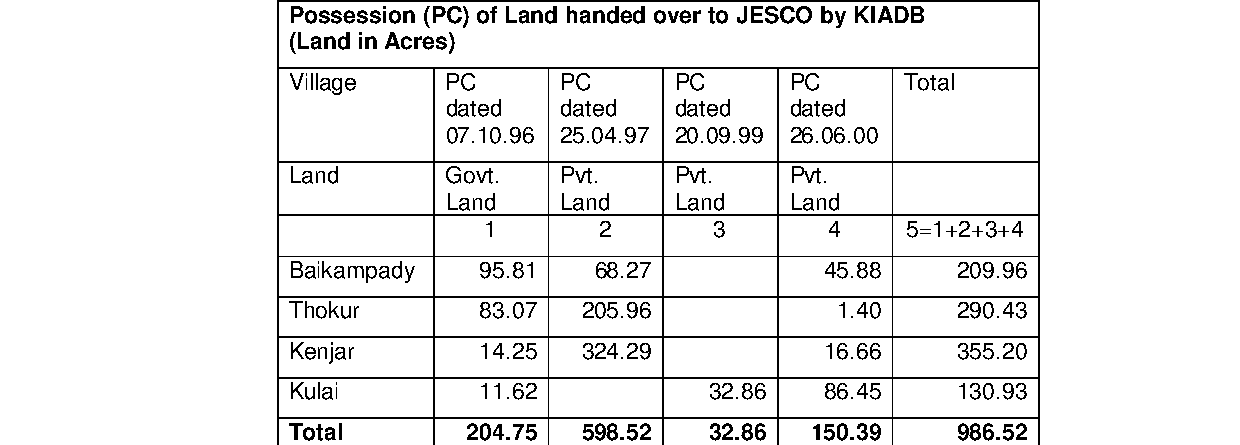
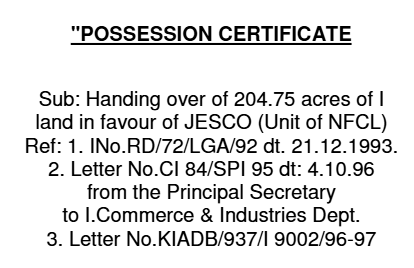
3. The writ petitions were filed by the appellant in respect of the grievance relating to the decisions of the Karnataka Industrial Areas Development Board [hereinafter referred to as ‘KIADB’ or Respondent No.2] in respect of lands situated in Kenjar, Thokur and Kulai villages of Mangaluru Taluk, Dakshina Kannada District [hereinafter ‘the Subject lands’], the possession of which was handed over to JESCO.
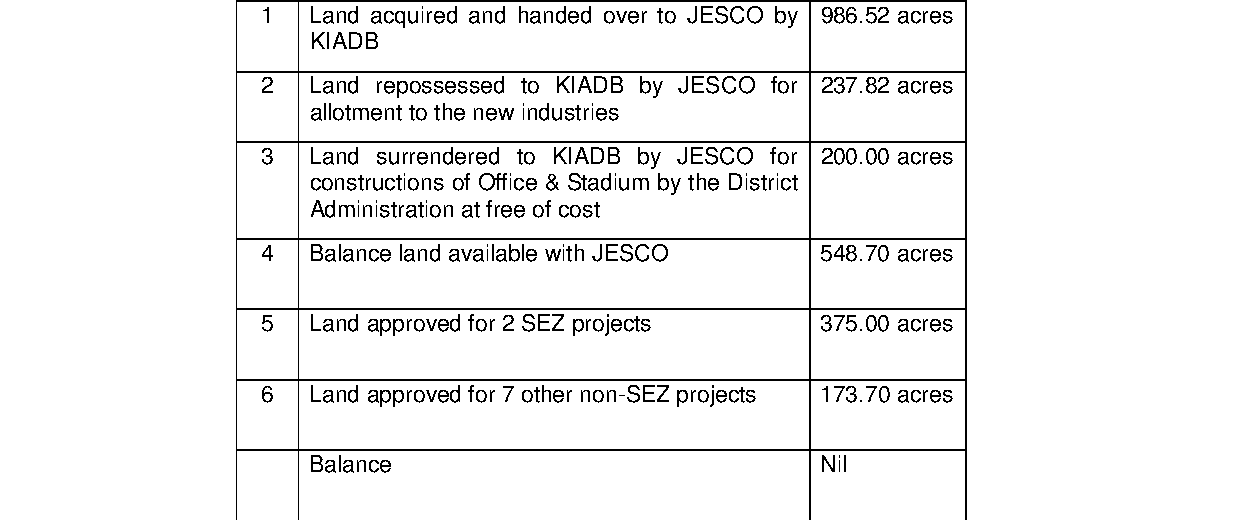
4. The possession of the subject lands was handed over to JESCO between the years 1995-2000 and it claims that it had paid a sum of Rs.30.79 crores towards the tentative costs of land and service charges to the KIADB, as and when the lands were handed over.
5. In W.P.No.52937/2017, the appellant, inter alia, challenged the notice dated 14.11.2017 issued by KIADB under Section 34 -B(4) of the Karnataka Industrial Areas Development Act, 1966 [hereinafter referred to as ‘the KIAD Act’], whereby the appellants were directed to surrender possession of certain portions of the subject lands. The appellants also sought for quashing of the order dated 11.11.2013, passed by the respondent No.1 [Government of Karnataka].
6. In W.P.No.566/2018, the appellant had assailed the minutes of the 48th meeting of the State High Level Clearance Committee [hereafter referred to as ‘the SHLCC’] held on 31.08.2017 insofar as it relates to the appellant. The appellant also impugned the Mahazar dated 22.11.2017 and claimed that the Mahazar process was in violation of the principles of natural justice and the order of status quo passed by this Court.
7. In W.P.No.41829/2019, the appellant challenged the corrigendum dated 08.03.2018 issued by respondent No.1 [the Government of Karnataka], as illegal and contrary to the decision made in the 35th meeting of the SHLCC dated 14.05
AI
Possession without formal allotment does not confer rights; non-compliance with statutory conditions justifies resumption of land under the Karnataka Industrial Areas Development Act.


Approval conditions for land acquisition must be met to establish vested rights; public interest considerations prevail in land allocation disputes.
The acquisition proceedings under the Right to Fair Compensation Act lapsed due to non-payment of compensation and failure to take possession, rendering subsequent notifications void and constituting....



An indispensable Tool for Legal Professionals, Endorsed by Various High Court and Judicial Officers
Please visit our Training & Support
Center or Contact Us for assistance

Scan Me!
India’s Legal research and Law Firm App, Download now!


For Daily Legal Updates, Join us on :



 Back to top


