1. Prosecution permission to cross-examine its own witness under Section 154 Evidence Act — rejection by trial court. (Para 1 , 2 , 3 )
 Back
Back
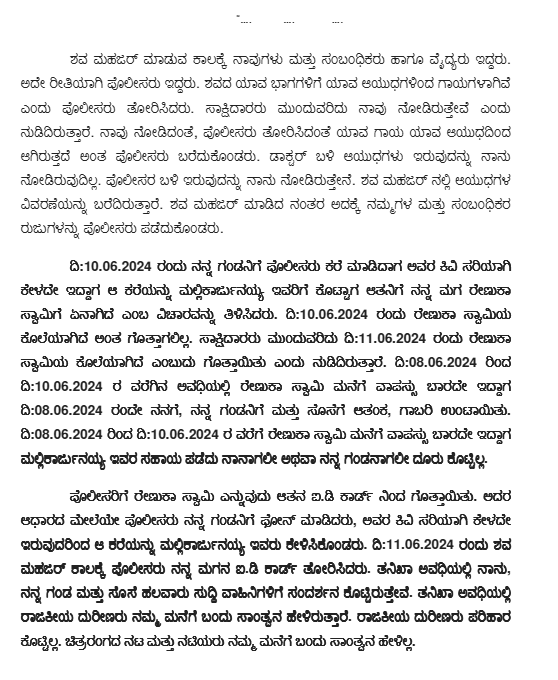
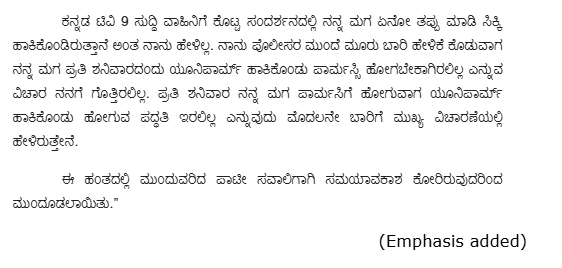
Next 





2026 Supreme(Kar) 223
IN THE HIGH COURT OF KARNATAKA AT BENGALURU
M.NAGAPRASANNA, J.
State Of Karnataka – Petitioner
Versus
Pavitra Gowda, D/o. Puttanna – Respondent
Criminal Petition No. 6820 Of 2026
Decided On : 18-08-2026
Advocates Appeared:
For The Petitioner: Sri P.Prasanna Kumar, Spl.Pp
For The Respondent:Sri Hashmath Pasha, Sr.Advocate For Sri Kariappa N.A., Advocate, Sri Sudhanva D.S., Advocate, Sri Ranganath Reddy, Advocate
For The Petitioner: Sri P.Prasanna Kumar, Spl.Pp
For The Respondent:Sri Hashmath Pasha, Sr.Advocate For Sri Kariappa N.A., Advocate, Sri Sudhanva D.S., Advocate, Sri Ranganath Reddy, Advocate
Cross-examination of one's own witness under Section 154 of the Evidence Act is an extraordinary remedy requiring material proof of hostility or material contradiction; it cannot be invoked for trivial inconsistencies or inconvenient answers, especially if the party failed to utilize the remedy of re-examination.
Headnote:(A) Indian Evidence Act, 1872 - Section 154 - Question by party to his own witness - Discretion of the Court to permit the person who calls a witness to put any questions to him which might be put in cross-examination by the adverse party - This discretion is judicial, wide, and unqualified, and is not conditional upon the witness being formally declared "adverse" or "hostile" - However, the discretion must be exercised judiciously in the interests of justice and is not a licence for mechanical exercise. (Paras 10, 10.1 and 12)
(B) Threshold for exercise of discretion under Section 154 - Permitting a party to cross-examine its own witness is an extraordinary phenomenon confined to special cases - There must be material indicating the witness has resiled from an earlier statement, is suppressing the truth, has exhibited hostility, or has transferred allegiance to the adversary - Trivial inconsistencies, stray answers, or insignificant omissions made in an unguarded moment do not constitute hostility and cannot be the foundation for invoking Section 154. (Paras 12 and 14)
(C) Re-examination vs. Section 154 - If ambiguities or inconsistencies surface during cross-examination by the opposite party, the party calling the witness has the remedy of re-examination to clarify those matters - Section 154 cannot be used as a procedural second innings if the option of re-examination was passed over. (Para 19)
Facts of the case:
The State challenged an order of a trial court which rejected the State's request to cross-examine a prosecution witness under Section 154 of the Evidence Act in a murder trial. During cross-examination by the defense, the witness, who was the mother of the deceased, made certain statements regarding the identification of the body, mobile phone call records, and the recovery of weapons that were contrary to the prosecution's version and the material on record. The trial court rejected the request, holding that the witness had not exhibited hostile animus.
Findings of Court:
The witness had not turned her back on the prosecution nor transferred her loyalty to the defense. The discrepancies in the testimony were mere stray statements made in an unguarded moment and not a wholesale abandonment of the prosecution case. The trial court properly distinguished between a witness who is truly adverse and one whose testimony contains inconvenient answers.
Issues: Whether the trial court was justified in rejecting the prosecution's request to cross-examine its own witness under Section 154 of the Evidence Act based on certain inconsistencies in the witness's deposition.
Ratio Decidendi: The court ruled that inconvenience is not hostility and discrepancy is not disloyalty. The exception provided under Section 154 of the Evidence Act cannot be permitted to casually swallow the general rule that a party cannot cross-examine its own witness. Since there was no demonstrable transfer of loyalty or material showing the witness was not speaking the truth, the exercise of discretion under Section 154 was not warranted, especially when the prosecution failed to utilize the remedy of re-examination.
Result: Petition rejected.
Legal Category Hierarchy
- practice and procedure
- crime and sentencing
Table of Contents
2. Prosecution argued witness deposed contrary to record; defence contended no hostility shown, permission rightly denied. (Para 5 , 6 )
3. Court found PW-1 did not abandon prosecution case; stray inconsistent statements insufficient for Section 154 permission. (Para 15 , 16 , 17 , 18 , 20 )
4. Section 154 discretion is extraordinary; requires material showing hostility, resiling or untruth; not minor inconsistencies. (Para 10 , 11 , 12 , 13 , 14 )
5. Petition dismissed; impugned order rejecting permission to cross-examine own witness warrants no interference. (Para 22 , 23 )
6. What is required for a court to grant permission under Section 154 Evidence Act to cross-examine one's own witness?
The court must find material showing the witness has resiled from an earlier statement, is not speaking truth, has exhibited hostility, or transferred allegiance to the adversary. (Para 11 , 12 , 13 , 14 )
7. Does a witness need to be declared 'hostile' before permission under Section 154 is granted?
No. The Indian Evidence Act avoids the term 'hostile'; the court's discretion is unqualified and apart from any question of hostility. (Para 10 )
8. Can a party use Section 154 to cross-examine its witness based on minor inconsistencies or inconvenient answers?
No. A small discrepancy, insignificant omission, or an unguarded answer cannot furnish the foundation for invoking Section 154; it is an extraordinary remedy. (Para 12 , 13 , 14 , 16 )
9. What is the effect of permitting cross-examination under Section 154 on the witness's testimony?
The evidence is not washed off the record. The court may accept the creditworthy part of the testimony with due caution. (Para 13 )
10. Is re-examination an alternative remedy that must be exhausted before seeking Section 154 permission?
Yes. If ambiguity surfaces during cross-examination by defence, the party has the remedy of re-examination, which should be used before seeking Section 154 relief. (Para 19 )
ORDER :
M.NAGAPRASANNA, J.
The State through its Special Public Prosecutor is before the Court calling in question an order dated 17-01-2026 passed by the LVI Additional City Civil and Sessions Judge, Bengaluru, by which the concerned Court rejects the permission sought by the State to conduct cross-examination of PW-1 in S.C.No.1319 of 2024.
2. Facts, in brief, germane are as follows; -
A crime comes to be registered on a first information by one Keval Ram Dorji before the Kamakshipalya Police Station, which becomes a crime in Crime No.250 of 2024 for offences punishable under Sections 302 and 201 of the IPC. It is the case of the first informant that he was working as Security Officer at Sattva Anugraha Apartment and on 09-06-2024, at about 8.00 a.m., the first informant/CW-1 reported to duty at the apartment and while he was patrolling in front of the apartment, which adjoins a stream of water drain, notices a body of a male person aged about 32 to 35 years and informs the Police. The Police officials of Kamakshipalya Police Station visited the spot, notices several injuries over the face, head, ears and on several parts of the body indicating grave assault. On the fulcrum of the said complaint becomes the aforesaid crime. An inquest mahazar is conducted and during the course of investigation several accused are drawn into the dragnet of crime. Initially accused Nos.4, 15 to 17 were held to be allegedly guilty of the murder of the deceased Renukaswamy. The investigation continued and accused Nos.1 to 7 then crop up in a larger conspiracy to do away with the life of the deceased. On interrogation of accused Nos.4, 15 to 17, other accused i.e., accused Nos.1 to 3 and 5 to 14 come into the web of crime. The matter is pending trial before the concerned Court in S.C.No.1319 of 2024 after its committal and framing of charges by the concerned Court.
3. The issue is not with regard to merit of the matter before the concerned Court. Subsequent to the framing of charges, it appears, that the prosecution examines CW-8 as PW-1 and marked documents Exhibits P1 to P13 and material objects 1 to 8. PW-1 was thereafter, subjected to cross-examination by the counsel of the accused, wherein the said witness is said to have deposed contrary to the material available on record and to the aspects deposed in the examination-in-chief, which were marked as Exs.D1 to D22. At that juncture, the prosecution/State makes an oral request to the concerned Court to permit the prosecution to cross- examine PW-1 under Section 154 of the Indian Evidence Act, 1872 (‘the Evidence Act’ for short). The concerned Court rejects the oral request on the score that the prosecution without turning the prosecution witness hostile cannot be permitted to be cross- examined. The rejection of the prayer of the petitioner is what is called in question in the subject petition.
4. Heard Sri P.Prasanna Kumar, learned Special Public Prosecutor appearing for the petitioner; Sri Hasmath Pasha, learned senior counsel appearing for respondent Nos. 2, 11 and 12; Sri Sudhanva D.S., learned counsel appearing for respondent No.3 and Sri Ranganath Reddy, learned counsel appearing for respondent Nos. 4, 6 to 10, 13 and 15 to 17.
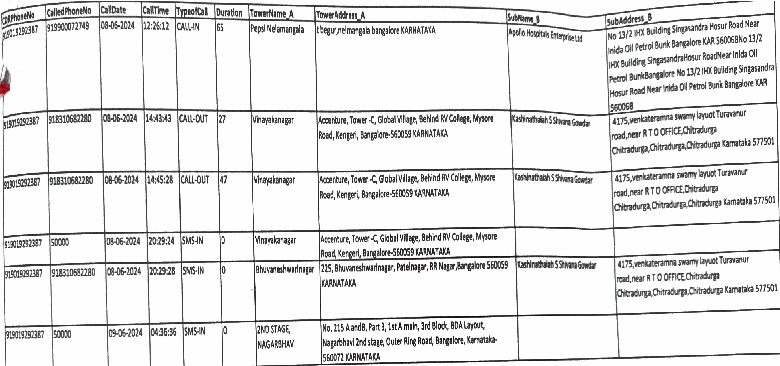
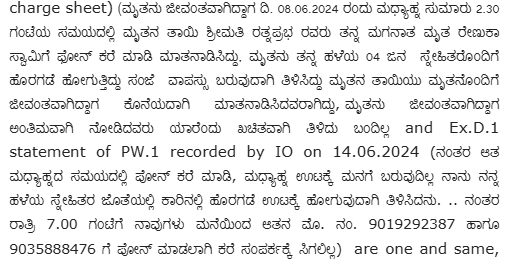
5. The learned Special Public Prosecutor Sri P.Prasanna Kumar would vehemently contend that CW-1, the mother of the deceased Renukaswamy, during the cross-examination has deposed that the Police have identified the body of the deceased based upon his ID card. It is his submission that there was no ID card in the case at hand. The tower location or the CDR details of PW-1 indicated that she contacted the deceased with mobile on a particular number, which she denies. The third instance is with regard to statements made during the cross-examination about the weapon and wound on the deceased body. When these factors were deposed, it is then the oral submissions were under Section 154 of the Evidence Act. The learned Special Public Prosecutor submits that Section 154 of the E