
 Back
Back





IN THE HIGH COURT OF JUDICATURE AT BOMBAY AURANGABAD BENCH
SIDDHESHWAR S. THOMBRE, J.
Sunil S/o Bibhishan More – Appellant
Versus
Dattatray S/o Marotirao Solanke – Respondent
Writ Petition No. 13280 of 2022
Decided On : 09-01-2026
| Table of Content |
|---|
| 1. petition challenges prior court order (Para 2 , 3) |
| 2. arguments on the validity of the agreement (Para 4 , 5) |
| 3. agreement to sell without possession isn't a conveyance (Para 6) |
| 4. supreme court ruling on unregistered documents (Para 7 , 8) |
| 5. error in lower court's ruling identified (Para 9) |
| 6. court's final order and decision (Para 10 , 11) |
JUDGMENT :
SIDDHESHWAR S. THOMBRE, J.
1. Heard. Rule. Rule made returnable forthwith. Heard the petition finally with the consent of the parties at the stage of admission.
2. By way of the present petition, the Petitioners are assailing the order dated 13.10.2022 passed below Exhibit-22 by the learned 5th Joint Civil Judge, Senior Division, Latur in Special Civil Suit No.47/2021, whereby the Application filed by the Original Defendants/Respondents for impounding the agreement to sell dated 23.11.2020 came to be allowed.
3. The suit was filed for specific performance of contract. In the said suit, the Defendants filed an application below Exhibit-22 contending that the agreement of sale dated 23.11.2020, allegedly executed by the Original Defendants/Respondents in favour of the Original Plaintiffs/Petitioners, was an unregistered document, and therefore, cannot be read in evidence unless it is impounded.
4. The learned Counsel for the Petitioners invited the attention of this Court to the document sought to be impounded, placed at Page No.38 of the paper-book. She submits that the agreement is in respect of sale of property without delivery of possession, and therefore does not require registration. She further submits that the document is not a conveyance and hence is not compulsorily registrable. In support of her contentions, reliance is placed on the Judgment of the Hon’ble Supreme Court in S. Kaladevi Vs. V.R. Somasundaram & Ors., Civil Appeal No. 3192 of 2010 [Arising out of SLP (C) No. 1451 of 2009], decided on 12.04.2010 and submits that the impugned order deserves to be set aside.
5. Per contra, the learned Counsel for the Respondents/Original Defendants submits that the agreement of sale dated 23.11.2020 was executed on a stamp paper of Rs.100/- and is insufficiently stamped. Therefore, the said document cannot be read in evidence unless proper stamp duty is paid. He supports the impugned order and relies upon the Judgment of the Hon’ble Supreme Court in Bidyut Sarkar and Another Vs. Kanchilal Pal (Dead) through LRs. and Another, 2024 SCC Online SC 2603.
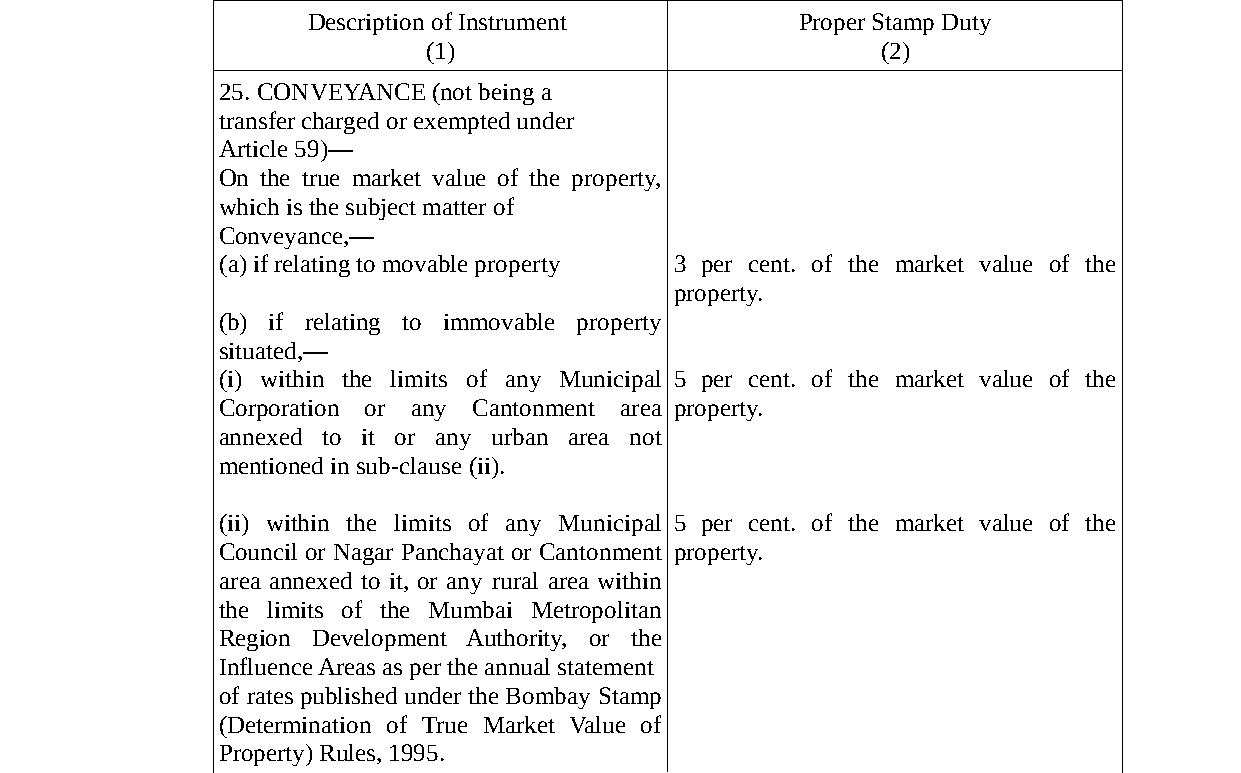
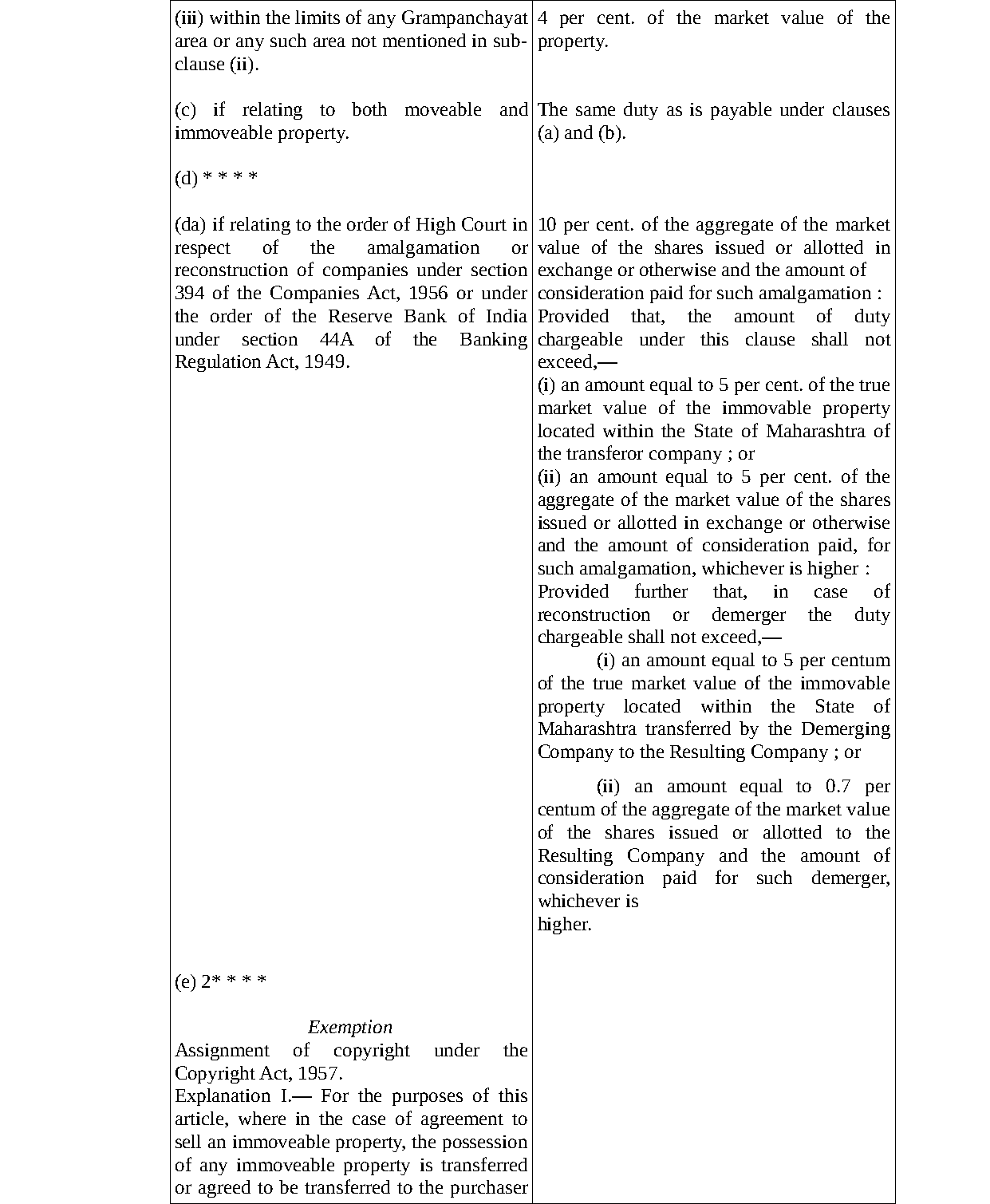
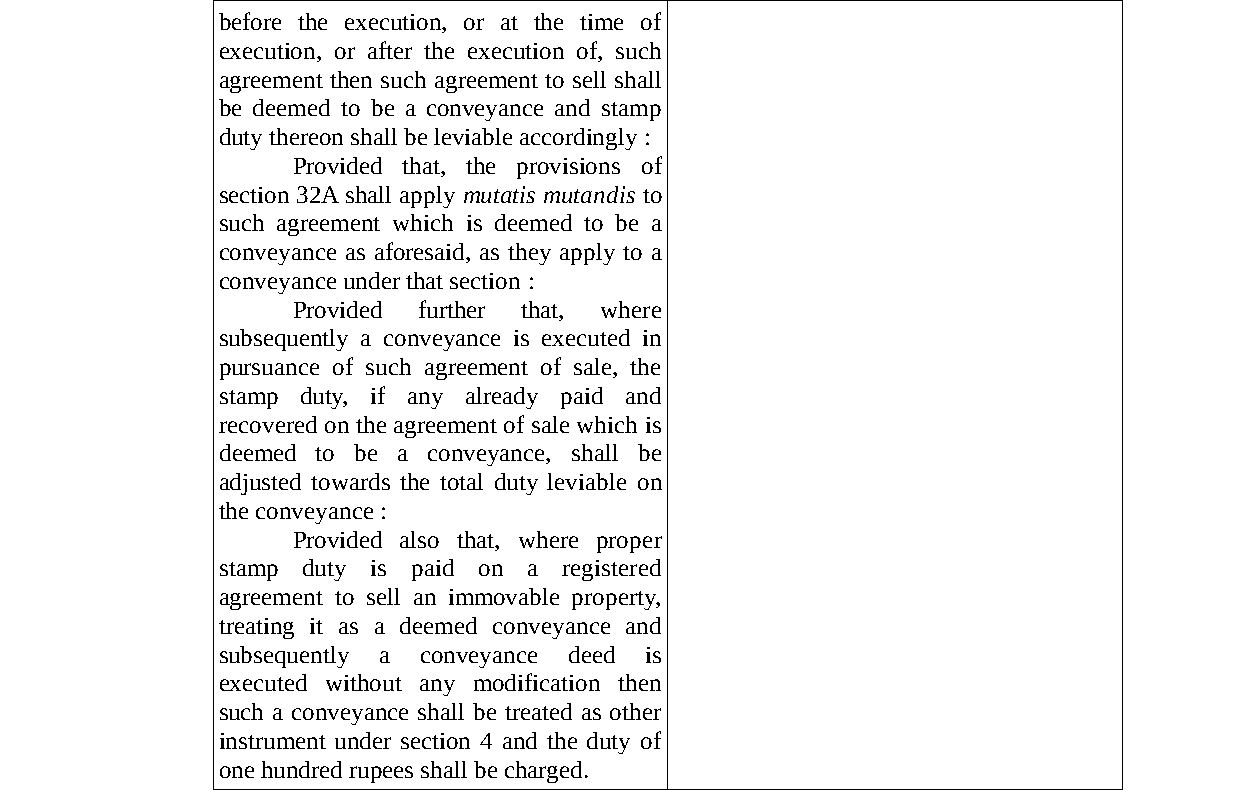
6. Having heard the learned Counsel for the parties, there is no dispute that the suit is for specific performance of contract. Upon perusal of the agreement placed at Page No.38 of the paper-book, it is clear that the recitals specifically state that the possession would be handed over only after execution of sale deed. Thus, the said agreement to sell is without delivery of possession and it cannot be treated as a conveyance. The Maharashtra Stamp Act, 1958 defines the conveyance under Section 2 (g) as follows :
“ Conveyance ” includes—
(i) a conveyance on sale.
(ii) every instrument.
(iii) every decree or final order of any Civil Court.
(iv) every order made by the High Court under section 394 of the Companies Act, 1956 or every order made by the National Company Law Tribunal under sections 230 to 234 of the Companies Act, 2013 or every confirmation issued by the Central Government under sub-section (3) of section 233 of the Companies Act, 2013, in respect of the amalgamation, merger, demerger, arrangement or reconstruction of companies (including subsidiaries of parent company); and every order of the Reserve Bank of India under section 44A of the Banking Regulation Act, 1949 in respect of amalgamation or reconstruction of Banking Companies; by which property, whether moveable or immoveable, or any estate or interest in any property is transferred to, or vested in, any other person, inter vivos and which is not otherwise specifically provided for by Schedule I:
Explanation.—An instrument whereby a co-owner of any property t
AI
Unregistered agreements for the sale of property without possession delivery are not conveyances and do not require stamping, valid for evidence in specific performance cases.

The trial Court has discretion to deny document production in a specific performance case; unregistered agreements can serve as evidence if possession was not delivered.

Proper stamping and registration are essential for the admissibility of unregistered documents affecting immovable property as evidence in a suit for specific performance. The court has a duty to dec....


Agreement to sell – Impounding an agreement to sell of an immovable property after 23 years of its alleged execution, where execution itself is disputed and which was never presented for registration....

A suit for specific performance necessitates the plaintiff's readiness to fulfill obligations, while unregistered documents cannot substantiate ownership rights unless properly admitted as evidence.


Stamp duty is on instrument and not on transaction – For several documents to form part of a single transaction, there must be a transaction in furtherance of which several other documents are execut....

An unregistered document can be admissible in a suit for specific performance, and a plaint cannot be rejected solely on the grounds of non-registration or insufficient stamp duty without trial evide....



An indispensable Tool for Legal Professionals, Endorsed by Various High Court and Judicial Officers
Please visit our Training & Support
Center or Contact Us for assistance

Scan Me!
India’s Legal research and Law Firm App, Download now!


For Daily Legal Updates, Join us on :



 Back to top


