
 Back
Back





IN THE HIGH COURT AT CALCUTTA
KRISHNA RAO, J.
Enterabio Ltd. - Appellant
Versus
The Controller General of Patents & Designs, Mumbai & Anr. - Respondents
IPDPTA No. 12 of 2023
Decided On : 30-08-2024
Patent - Patent Application - Patents Act 1970 - Sections 2(1)(j), 8, 13(3) - The court emphasized the necessity of a Second Examination Report and adherence to statutory procedures in patent examination, highlighting the importance of novelty and inventive steps in patentability.
Fact of the Case:
The appellant's patent application for an oral insulin composition was rejected by the Assistant Controller, citing lack of novelty based on prior art documents. The appellant contended that the rejection was based on selective reading and misrepresentation of prior arts.
Finding of the Court:
The court found that the Assistant Controller failed to follow mandatory procedures, including issuing a Second Examination Report after amendments were made. The court emphasized the need for a coherent analysis of prior arts and the importance of considering patents granted in other jurisdictions.
Issues: Whether the Assistant Controller's rejection of the patent application was justified based on the prior art and whether proper procedures were followed during the examination process.
Ratio Decidendi: The court held that the Assistant Controller's failure to issue a Second Examination Report and to consider relevant foreign patents constituted a violation of statutory requirements, leading to an unsustainable rejection of the application.
Result: The court set aside the Assistant Controller's order and remanded the matter for further examination.
JUDGMENT :
Krishna Rao, J.
1. This is an appeal under Section 117A of the Patents Act, 1970 against the order passed by the Assistant Controller of Patents and Designs dated 29th September, 2020, rejecting the appellant’s Patent Application No.1150/KOLNP/2011.
2. The subject invention pertains to composition for oral administration of proteins (insulin). Invention provides a single solid oral pharmaceutical composition comprising insulin, a protease inhibitor and a compound selected from the group consisting of a monosodium and a disodium salt of N-8-[2-hydroxybenzoyl]amino)caprylate (SNAC). The protease inhibitor is selected from aprotinin and soy bean trypsin inhibitor (SBTI) in a range of from 10 to 200 mg, and said compound is in a range of from 50 % to 70 % by weight of the composition and a method of administering them.
The absorption enhancer increases absorption of insulin in the blood stream.
A protease inhibitor prevents activity of protease which degrades a protein, insulin in the present case.
3. Learned Counsel for the appellant has contended that the Assistant Controller of Patents and Designs has not provided adequate reasons by selective reading and misrepresentation of prior arts. The Controller proceeded to reach his conclusion on the basis of on hindsight reconstruction which is not permitted under law. The Controller failed to consider the patent granted in all major jurisdictions.
4. In the First Examination Report, it is mentioned that “the alleged invention may not be considered novel over the prior art document D3 EP 1933862A2 (publication date : 25/06/2008). The prior art document D3 belongs to the first applicant of instant application but the applications have different priority dates and hence, D3 can be cited in here for reference. The subject matter of D3 is entirely similar to the subject matter of instant application [see abstract, claim, description]. Thus, the subject matter of instant application is merely a repetition of D3. Thus, instant application is neither novel nor inventive in view of D3. In view of this, the alleged invention cannot be considered novel u/s 2(1)(j) of Patents Act 1970.”
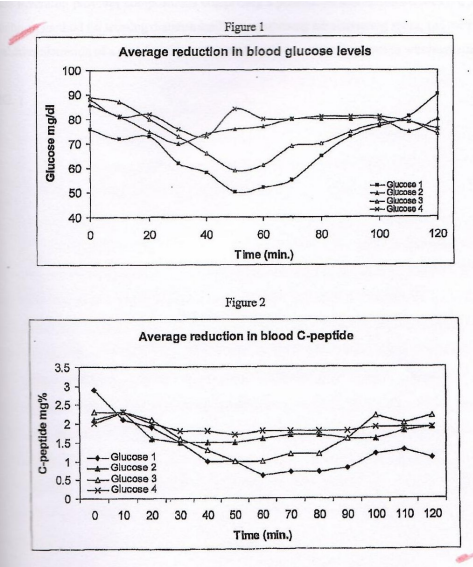
Abstract of the application reads as follows: “Various types and amounts of insulin e.g. those listed above in the specification as compared for their ability to regulate blood sugar in methods and compositions of the present invention. Insulin tablets or capsules are formulated as described in the above examples, except that the type and amount of insulin is varied. The most effective type/amount of insulin is used in clinical trials.”
5. Claim of the appellant in the application was as follows :
“WE CLAIM:
1. An oral pharmaceutical composition comprising a protein having a molecular weight of up to 100,000 Daltons, a protease inhibitor, and a compound selected from the group consisting of N-(8-[2-hydroxybenzoyl] amino)caprylate (SNAC), N-(10-[2-hydroxybenzoyl]amino) decanoate (SNAD), a salt of said SNAC or said SNAD, and a combination thereof.
2. The composition of claim 1, wherein said protein is a recombinant protein.
3. The composition of claim 1, wherein said compound is a salt of said SNAC or said SNAD, and said salt is selected from the group consisting of a monosodium salt, a disodium salt, and a combination thereof.
4. The composition of claim 1, wherein said protein is selected from the group consisting of insulin, a glucagon, an interferon gamma, an interferon alpha, a growth hormone, an erythropoietin, a GLP-1, a GLP-1 analogue, and granulocyte colony stimulating factor (GCSF)
5. The composition of claim 1, wherein said protease inhibitor is selected from the group consisting of a serpin, a suicide inhibitor, a transition state inhibitor, a protein protease inhibitor, a chelating agent, a Cysteine protease inhibitor, a Threonine protease inhibitor, an Aspartic protease inhibitor, and a Metalloprotease inhibitor.
6. The composition of claim 5, wherein said protease inhibitor is a serpin, and said serpin is
AI

The court allowed the amendment of claims at the appellate stage and found that the invention satisfied the criteria of inventive step.

A new form of a known substance can only be considered patentable provided the same demonstrates enhanced efficacy.
The Controller must provide proper reasoning for rejecting a patent application and consider the applicant's submissions, failing which violates the principles of natural justice.
A claimed patent must demonstrate novelty and an inventive step, which cannot be established by mere derivations that lack enhanced efficacy.
The court found deficiencies in the respondent's reasoning regarding patent application rejection, stressing the need for a proper evaluation of inventive step and adherence to principles of natural ....



An indispensable Tool for Legal Professionals, Endorsed by Various High Court and Judicial Officers
Please visit our Training & Support
Center or Contact Us for assistance

Scan Me!
India’s Legal research and Law Firm App, Download now!


For Daily Legal Updates, Join us on :



 Back to top


