
 Back
Back





IN THE HIGH COURT OF CHHATTISGARH AT BILASPUR
RAJANI DUBEY, AMITENDRA KISHORE PRASAD, JJ.
Mukhlal Sao S/o Late Mahavir Sao – Appellant
Versus
State of Chhattisgarh – Respondent
CRA Nos. 408, 594, 654, 853, 1418 of 2019
Decided On : 01-09-2025
| Table of Content |
|---|
| 1. hearing and disposing appeals together. (Para 1 , 2) |
| 2. prosecution case initiated based on eyewitness account. (Para 3 , 4) |
| 3. appellants charged based on circumstantial evidence. (Para 5 , 6) |
| 4. defense arguments challenge reliability of prosecution evidence. (Para 8 , 9 , 18) |
| 5. court analyzes eyewitness credibility and the absence of direct testimony. (Para 10 , 11 , 12 , 13) |
| 6. hearsay evidence undermines prosecution's case. (Para 14 , 15 , 16) |
| 7. prosecution's failure to establish a link. (Para 17 , 19) |
| 8. supreme court's previous rulings highlight evidence requirements. (Para 20 , 21 , 22 , 23 , 24 , 25 , 26) |
| 9. failure to link evidence to the accused. (Para 27 , 28 , 29 , 30) |
| 10. circumstantial evidence must establish a chain of connections. (Para 31 , 32 , 33) |
| 11. suspicion without proof is insufficient for conviction. (Para 34 , 35) |
| 12. identification evidence must adhere to proper procedures. (Para 36 , 37 , 38 , 39) |
| 13. prosecution failed to establish guilt beyond reasonable doubt. (Para 40 , 41) |
| 14. final order on acquittal and conditions for release. (Para 42 , 43) |
JUDGMENT :
AMITENDRA KISHORE PRASAD, J.
1. Since all the above-captioned appeals arise out of the same impugned judgment of conviction and order of sentence, they are being heard together and are disposed of by this common judgment.
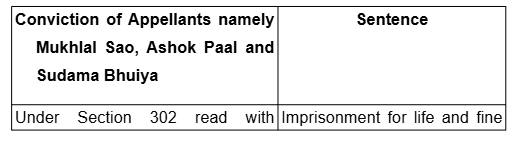
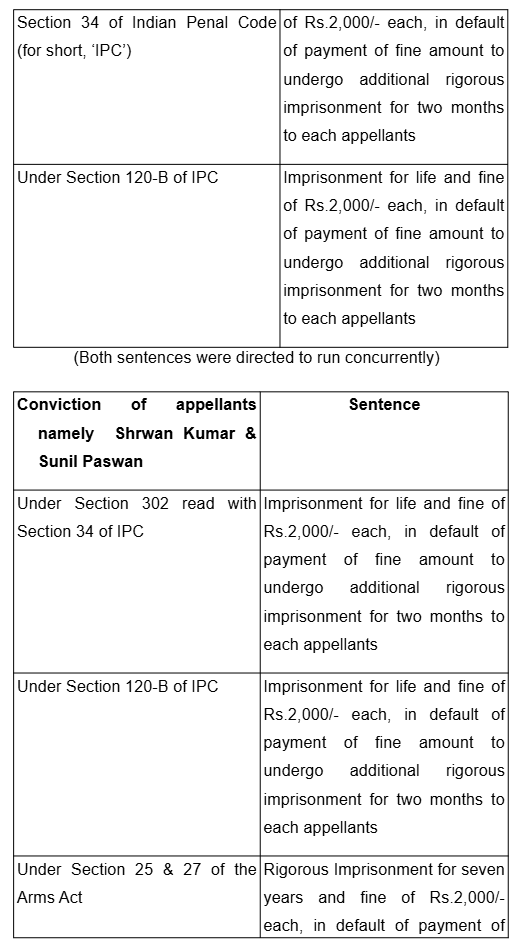
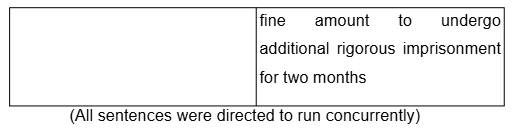
2. In these appeals filed under Section 374(2) Cr.P.C. the appellants have challenged the legality, validity and propriety of the judgment of conviction and order of sentence dated 22.02.2019 passed by the Additional Sessions Judge, Ramanujganj, District Balrampur place at Ramanujganj, C.G. in Sessions Case No.83/2017, whereby and whereunder, the appellants stand convicted and sentenced as under:-
3. Case of the prosecution, in brief, is that PW-1 Anand Gupta lodged information at Police Station Trikunda stating that on the morning of 21.07.2017, while he was in his shop at village Bagra, his father-Krishna Gupta (hereinafter called as ‘deceased’) had gone to plough the field situated at Bankheta. At about 02:00 p.m., his mother (PW-2 Lalti Devi, wife of the deceased) telephonically informed him that when she went to the field, she saw some unknown person assaulting his father/deceased and that person killed him and buried his head in the soil. On receiving the aforesaid information, PW-1 Anand Gupta immediately rushed to the spot and found his father/deceased lying face down in the field, his head buried in the ground, and blood oozing out. On touching, he found his father/deceased already dead, having sustained stab injuries on the face, nose and back. On raising alarm, villagers gathered at the spot. On the basis of this information, PW-8 Vivek Kumar Lakda, Sub- Inspector, registered Merg Intimation No. 17/2017 (Ex. P/1) and informed the Sub-Divisional Magistrate. Thereafter, FIR Ex. P/2 was registered under Crime No. 19/2017 for the offence under Section 302 of the IPC against unknown persons.
4. During investigation, spot map (Ex. P/3) was prepared. Notice (Ex. P/5) was issued to witnesses for conducting Panchnama of the dead body and Panchnama (Ex. P/6) was prepared in the presence of witnesses. Acting on the advice of the Panchas, Sub-Inspector Vivek Kumar Lakda (PW-8) sent a requisition (Ex. P/27) to CHC Ramanujganj for postmortem examination. PW-7 Dr. Vijay Rathore, thereafter, conducted the postmortem and opined (Ex.P/25) that cause of death of deceased was internal haemorrhage and mode of death was homicidal in nature. After the postmortem, the body was handed over to the relatives for cremation. From the place of occurrence, the Investigating Officer seized a one iron rod (sharp-edged weapon) about 16 inches long, a broken umbrella, a blue-coloured hawai chappal, a blood-stained gamchha, a torn piece of surgical glove, two samples of blood-stained and plain soil, and blood-stained and plain cotton vide Seizure Memo Ex. P/10. After that, statements of witnesses and spot map was prepared vide Ex.P-23. Thereafter,
AI
The conviction of accused cannot be sustained when circumstantial evidence lacks cogent linkage to the crime, and eyewitness testimony is deemed unreliable.

A mere presence in a mob does not equate to liability for criminal acts unless it is proven that the individual contributed to or shared the common object of the unlawful assembly.

Circumstantial evidence must create a complete and cogent chain linking the accused to the crime; mere suspicion, without proof beyond reasonable doubt, is insufficient for conviction.


The main legal point established in the judgment is the requirement for circumstantial evidence to establish a complete chain of events leading to the only irresistible conclusion about the guilt of ....

The court ruled that circumstantial evidence must form a complete chain to establish guilt beyond reasonable doubt, emphasizing the need for corroboration and the benefit of doubt for the accused.



An indispensable Tool for Legal Professionals, Endorsed by Various High Court and Judicial Officers
Please visit our Training & Support
Center or Contact Us for assistance

Scan Me!
India’s Legal research and Law Firm App, Download now!


For Daily Legal Updates, Join us on :



 Back to top


