
 Back
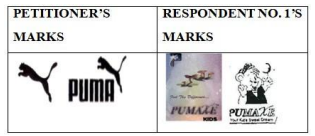
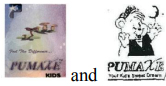
Back





IN THE HIGH COURT OF DELHI AT NEW DELHI
MINI PUSHKARNA, J.
PUMA SE - Petitioner
Versus
SH. JUGAL KISHORE JAIN T/A M/S ASHISH JAIN TEXTILE MILLS (REGD) And ANR. – Respondents
C.O. (COMM.IPD-TM) 697 Of 2022, C.O. (COMM.IPD-TM) 81 Of 2023
Decided On : 14-11-2024
(A) Trade Marks Act, 1999 - Sections 11(1)(a), 11(1)(b), 11(2), and 47(1)(b) - Petition for removal of trademarks - Petitioner, owner of the well-known mark '˜PUMA', sought removal of deceptively similar marks registered by respondent - Court held that the impugned marks are liable to be removed due to lack of bona fide use and potential confusion in the market. (Paras 1, 4.5, 16, 19)
(B) Well-known trademarks - Protection - The court emphasized that well-known trademarks require a higher degree of protection against deceptively similar marks, as they are likely to cause confusion among consumers. (Paras 12, 16)
Facts of the case:
The petitioner, a German company, sought removal of trademarks registered by respondent no. 1, claiming they were deceptively similar to its well-known mark '˜PUMA'. The petitioner had prior registrations and extensive use of the mark in India and internationally.
Findings of Court:
The court found that the impugned marks were deceptively similar and had not been used by the respondent for a continuous period of five years, warranting their removal from the register.
Issues: The main issues were the similarity of the marks and the respondent's lack of bona fide use of the impugned marks.
Ratio Decidendi: The court ruled that the petitioner's mark, being well-known, is entitled to the highest degree of protection, and the impugned marks could cause confusion among consumers.
Result: The impugned registrations are hereby cancelled.
JUDGMENT :
(Mini Pushkarna, J.)
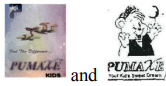
1. The present petitions have been filed under Section 57 of the Trade Marks Act, 1999 (“Trade Marks Act”) seeking removal of the trademarks, i.e. “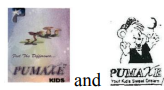 ” /PUMAXE (Label) registered under nos. 1572831 under Class 35 and 1229883 under Class 24, in favour of respondent no. 1 from the Register of Trade Marks.
2. This Court vide order dated 14th October, 2024 has proceeded ex-parte against respondent no. 1. The relevant portion of the said order is reproduced as under :
“xxx xxx xxx
1. Perusal of the order dated 01st August, 2024 shows that respondent no.1 has already expired and the legal representative of the deceased respondent no.1 was served on 19thJuly, 2024 via publication.
2. None has appeared for respondent no.1 despite service on the previous date.
3. None appears for the respondent no.1 even today.
4. Accordingly, respondent no.1 is proceeded ex-parte.
…… ….. ……..
xxx xx xxx”
3. Accordingly, this Court has proceeded to hear the present matters.
4. The facts as encapsulated in the pleadings, as necessary for adjudication of the present matters, are as under:
4.1 The petition C.O. (COMM.IPD-TM) 697/2022 was initially filed before the Intellectual Property Appellate Board (“IPAB”), and consequent to the promulgation of Tribunals Reforms (Regulation and Conditions of Service) Ordinance, 2021 and after abolition of IPAB, the matter came before this Court. The petition C.O. (COMM.IPD-TM) 81/2023 was originally instituted before this Court itself.
4.2 The petitioner is a company incorporated under the laws of Germany which through its subsidiaries in more than 120 countries including India, is engaged in the business of manufacturing and marketing a wide range of products, inter alia, sports shoes, apparel and accessories.
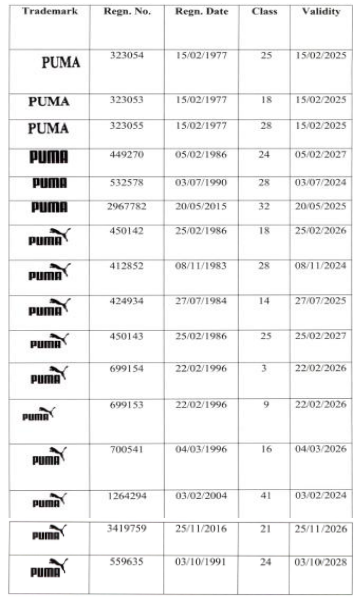
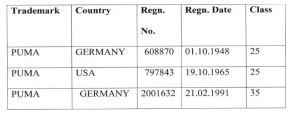
4.3 The petitioner is the owner of the brand PUMA, which is its company name as well, and is associated with the public and trade doing business under the marks, “ ”. The said marks are registered in various countries across the world, earliest of which dates back to the year 1948. Further, the petitioner has several domain names, i.e. www.puma.com and a dedicated Indian domain http://in.puma.com.
4.4 The petitioner presently is carrying out its business in India under the corporate name, ‘Puma Sports India Private Limited’ which was incorporated in 2005. However, the petitioner has been doing business in India since 1982 with its earliest India registration dating back to 15th February, 1977 along with various other registrations in other classes.
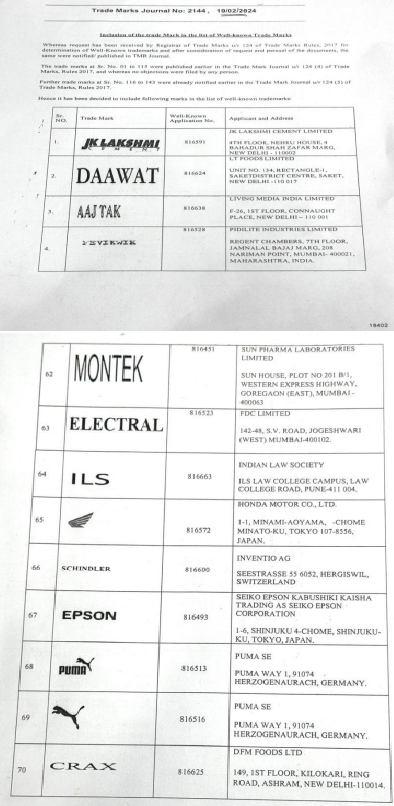
4.5 In the course of these petitions, the petitioner’s marks “ ” have also been declared as well-known trademarks on 19th February, 2024 under Rule 124 of the Trade Mark Rules, 2017. The Trade Mark Journal no. 2144 dated 19th February, 2024 indicates the well-known declaration of the petitioner’s marks on Sr. No. 68 & 69.
4.6 The respondent no. 1 is stated to be engaged in the business of manufacturing and supplying clothing, footwear and headgear goods under impugned marks, i.e. “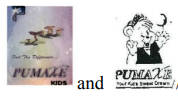 ” /PUMAXE (Label) registered under nos. 1572831 under Class 35 and 1229883 under Class 24.
4.7 The petitioner in February, 2016 filed an opposition with the Trade Marks Registry against the application for the mark “ ” bearing application no. 1751339 in Class 25, sought to be registered by respondent no. 1 herein. However, as on date the said application stands refused on account of a successful opposition on part of the petitioner.
4.8 Thus, being aggrieved by the impugned registrations bearing no. 1572831 under Class 35 and 1229883 under Class 24 in favour of respondent no. 1, the present petitions came to be filed, seeking rectification and removal of the said marks from the Register of Trademarks.
5. On behalf of the petitioner, the following submissions are made:
5.1 The petitioner due to inadvertence/oversight missed the publication of the impugned marks. Therefore, could not file an opposition towards the same. The said marks came to knowledge of the petitione




AI
Well-known trademarks require a higher degree of protection against deceptively similar marks to prevent consumer confusion.

A trade mark recognized as well-known under the Trade Marks Act is protected against concurrent use by others regardless of the class of goods, particularly when evidence of rightful prior use and bo....
Prior adoption and user rights establish entitlement to trademark protection, and their absence undermines claims for rectification, regardless of phonetic similarity.


Registration validity sustained if distinctiveness established over time despite claims of descriptiveness.

The central legal point established in the judgment is the application of Section 11(1)(b) of the Trademarks Act to determine the likelihood of confusion based on phonetic similarity and the priority....
Registration of a trademark can be revoked if it is found to be deceptively similar to a prior, distinctive mark, prioritizing consumer protection against confusion.

Registered trademarks can be removed for non-use exceeding five years, reinforcing the burden of proof on the registered proprietor to demonstrate genuine usage.
Prior use and distinctiveness of a trademark override subsequent registrations, establishing a likelihood of consumer confusion in trademark disputes.



An indispensable Tool for Legal Professionals, Endorsed by Various High Court and Judicial Officers
Please visit our Training & Support
Center or Contact Us for assistance

Scan Me!
India’s Legal research and Law Firm App, Download now!


For Daily Legal Updates, Join us on :



 Back to top


