
 Back
Back





IN THE HIGH COURT OF DELHI AT NEW DELHI
TUSHAR RAO GEDELA, J.
Abbott Products Operations Ag – Petitioner
Versus
Ms. Aprajita Sushma Proprietor Of Alrom Pharmaceuticals Pvt. Ltd. & anr. –Respondent
C.O.(COMM.IPD-TM) 163 of 2025 & I.A.16868 of 2025
Decided On : 26-02-2026
| Table of Content |
|---|
| 1. petition filed under trade marks act (Para 1 , 2 , 3 , 4 , 5 , 6 , 7 , 8 , 9) |
| 2. petitioner's continuous use and promotion of mark (Para 10 , 11 , 12 , 13 , 14 , 15 , 16) |
| 3. respondent's claims regarding 'kreoflat' (Para 18 , 19 , 20 , 21 , 22 , 23) |
| 4. court's analysis of evidence and claims (Para 24 , 25 , 26 , 27 , 28 , 29 , 30 , 31 , 32 , 33 , 34 , 35 , 36) |
| 5. public interest warrants stringent measures against confusion (Para 38 , 39 , 40 , 41) |
| 6. court's final order to rectify trademark register (Para 42 , 44 , 45) |
JUDGMENT :
TUSHAR RAO GEDELA, J.
1. Present petition has been filed under Section 57 of the Trade Marks Act, 1999, (hereinafter referred to as “Act”) to rectify, cancel and remove the entry relating to the registered trademark “KREOFLAT” bearing no.4694743 in Class 05 made in the name of the respondent no.1/Registry of Trade Marks.
BRIEF FACTS:-
2. The history of the petitioner is stated to date back to the year 1888 when its founder Dr. Wallace Calvin Abbott began manufacturing alkaloid medicine granules. Sometime in the year 1894, the petitioner was incorporated through its parent company, “Abbott Alkaloidal Company”, a medical publisher and manufacturer. It claims to have established itself in India in the year 1910 and is one of the oldest, leading healthcare companies devoted to the discovery, development, manufacture and sale of healthcare products and services. Abbott India Limited i.e., the Indian subsidiary, was incorporated in the year 1944.
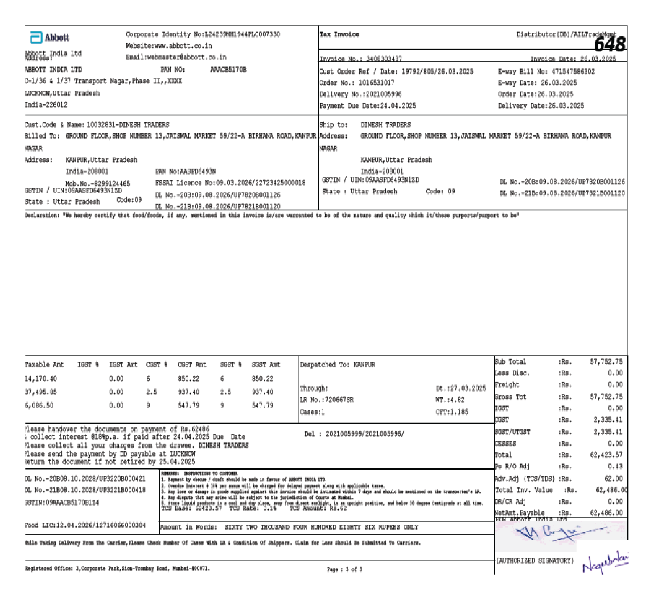
3. The predecessors in interest and title of the petitioner sincerely and bonafidely coined the unique mark “PANKREOFLAT” for the purpose of using the mark to identify, promote and distinguish their goods in the marketplace. On 16.03.1964, the petitioner obtained registration of the mark “PANKREOFLAT” bearing Registration No.221220, which is valid and subsisting till date. The petitioner claims to have undertaken numerous efforts to promote, publicize and popularize the said mark including conducting advertising campaigns.
4. The said “PANKREOFLAT” mark is specifically used for a medicinal formulation designed to treat digestive issues and bloating, containing Pancreatin and Dimethicone. Petitioner states that the said mark has been used continuously since the 1970s. On account of the extensive, continuous and uninterrupted use of “PANKREOFLAT” mark over six decades in connection with the medicinal products, the said mark has garnered immense goodwill and reputation across India. As a result thereof, the public, including the medical community, trade professionals and more importantly, the consumers exclusively associate “PANKREOFLAT” with the petitioner’s goods.
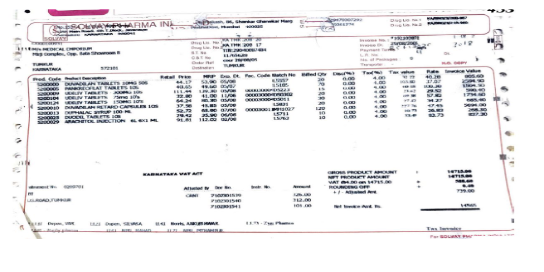
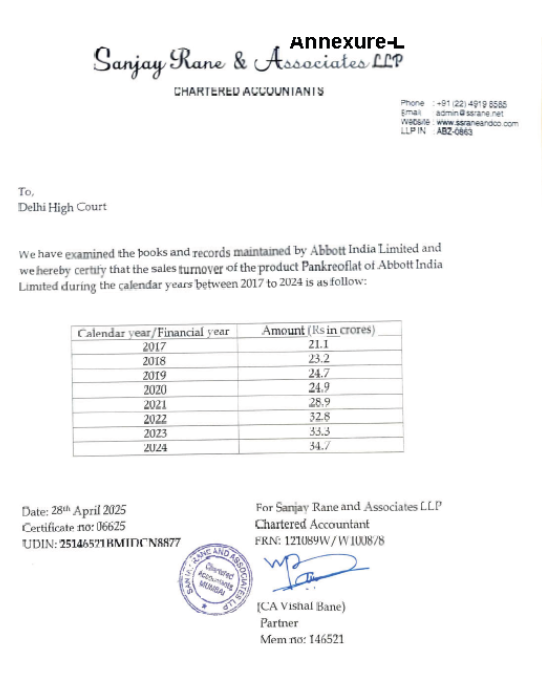
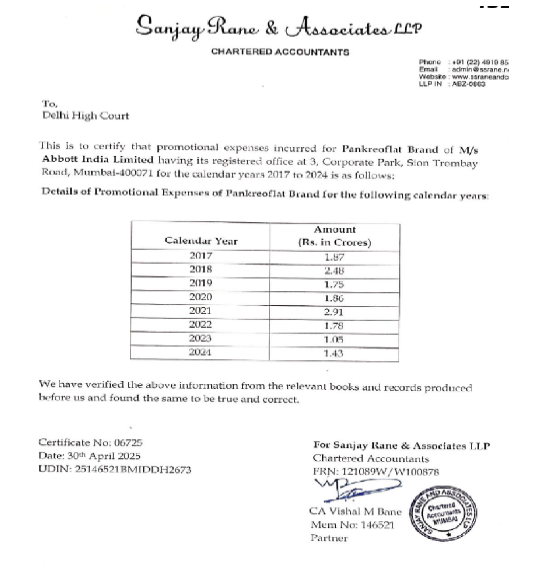
5. The sales figures in relation to the goods marketed under “PANKREOFLAT” mark in India, which were Rs.21.1 crores in 2017, have risen substantially to Rs.34.7 crores in the year 2024. The petitioner claims to have invested an immense amount of resources, time and money in the promotion of the “PANKREOFLAT” product across India via print media, online platforms and various social media platforms. The promotional expenses under the said mark in India amounted to over Rs.1.43 crores for the year 2024.
On account of the aforesaid, the petitioner claims: (a) that the “PANKREOFLAT” mark is a well-known mark; (b) that the documents on record establish adoption and prior use of the said mark since the year 1963 and (c) that the petitioner has established uniqueness and distinctiveness to its marks and earned goodwill and reputation to the extent that the mark “PANKREOFLAT” is exclusively associated with the petitioner and its predecessors.
6. Petitioner claims that sometime in the first week of October, 2024, it came across a trademark bearing registration no.4694743, dated 15.04.2021, for the mark “KREOFLAT” registered in the name of respondent no.1 in respect of Class 5, which are identical goods to those manufactured by the petitioner. Respondent no.1’s products serve the same primary function as those
AI
The court established that the test for confusing similarity in pharmaceuticals is stringent, with prior registered marks holding superior rights that protect against consumer confusion.

Pharmaceutical trademarks with shared descriptive suffix deceptively similar if phonetically alike when viewed as wholes; injunction on prima facie possibility of confusion mandatory, applying strict....

[The court established that in cases involving medicinal products, the threshold for proving deceptive similarity is lower due to the potential health risks associated with consumer confusion. The co....

The court established that prior use and the potential for public confusion are crucial in trademark registration disputes, particularly in the pharmaceutical industry.

Concealment of material facts can lead to the grant of an ad-interim injunction and dismissal of applications for cancellation of trademark registration.

The court affirmed that even slight phonetic and structural similarities between rival trade marks in the pharmaceutical industry can lead to confusion among consumers, warranting protection under tr....
The burden of proof on an ex-employee defendant in a trade mark infringement case and the relevance of uncontroverted evidence, such as the Court Commissioner's report, in establishing deceptive simi....
The use of the impugned marks EYESITE/Fig.2 and KL (Label) by the Defendants is likely to cause confusion and deception, thereby constituting infringement of the Plaintiffs' registered trademarks und....
Phonetic similarity between AZIWOK and AZIWAKE creates likelihood of confusion, warranting injunction to prevent trademark infringement.



An indispensable Tool for Legal Professionals, Endorsed by Various High Court and Judicial Officers
Please visit our Training & Support
Center or Contact Us for assistance

Scan Me!
India’s Legal research and Law Firm App, Download now!


For Daily Legal Updates, Join us on :



 Back to top


