Back
Back





2026 Supreme(Del) 411
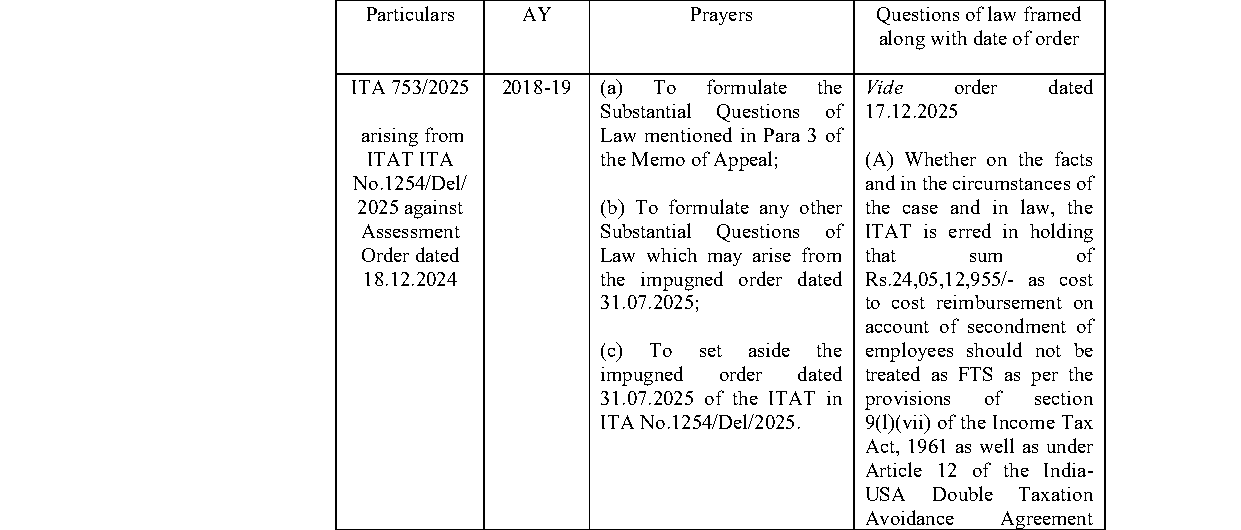
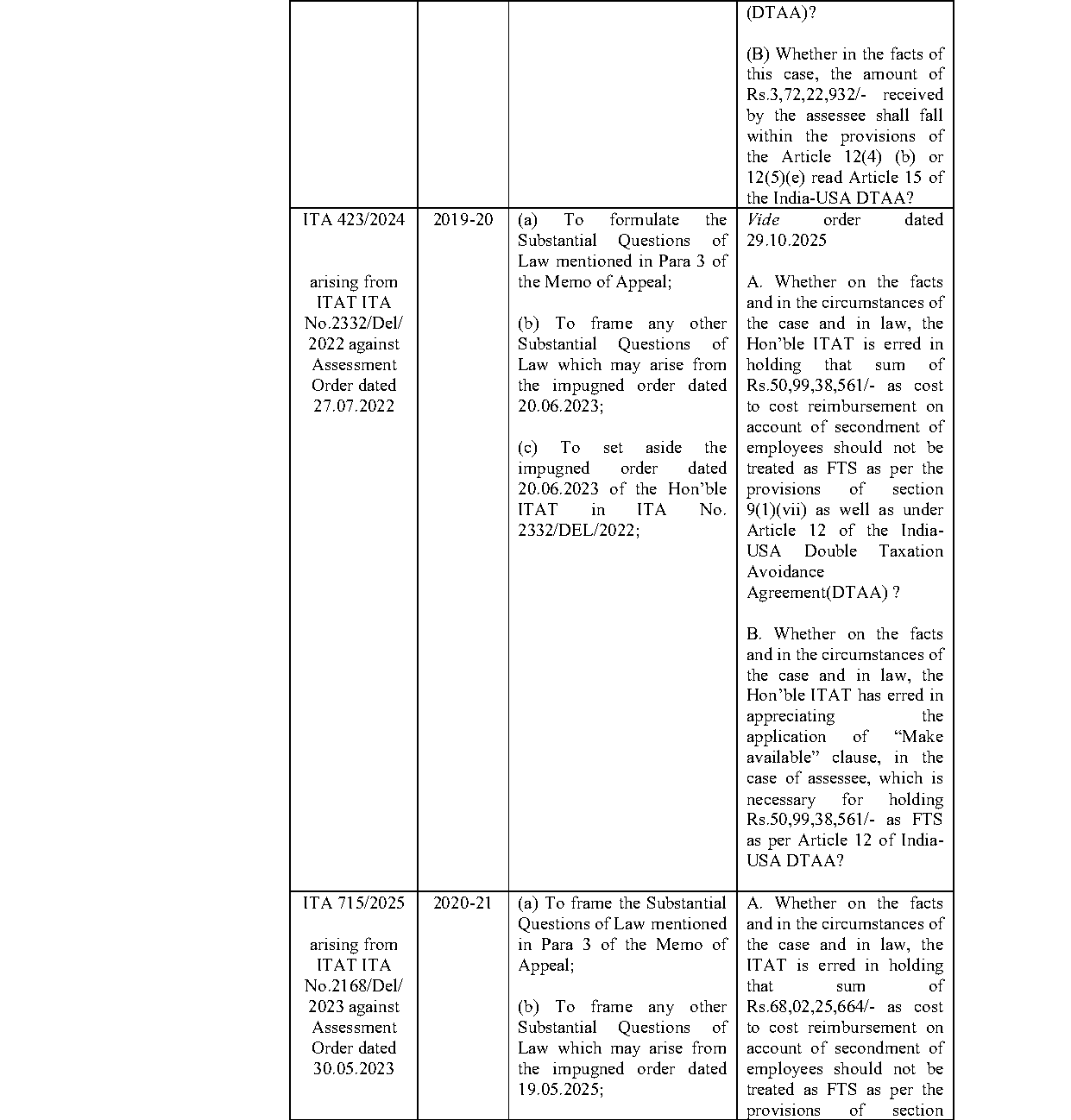
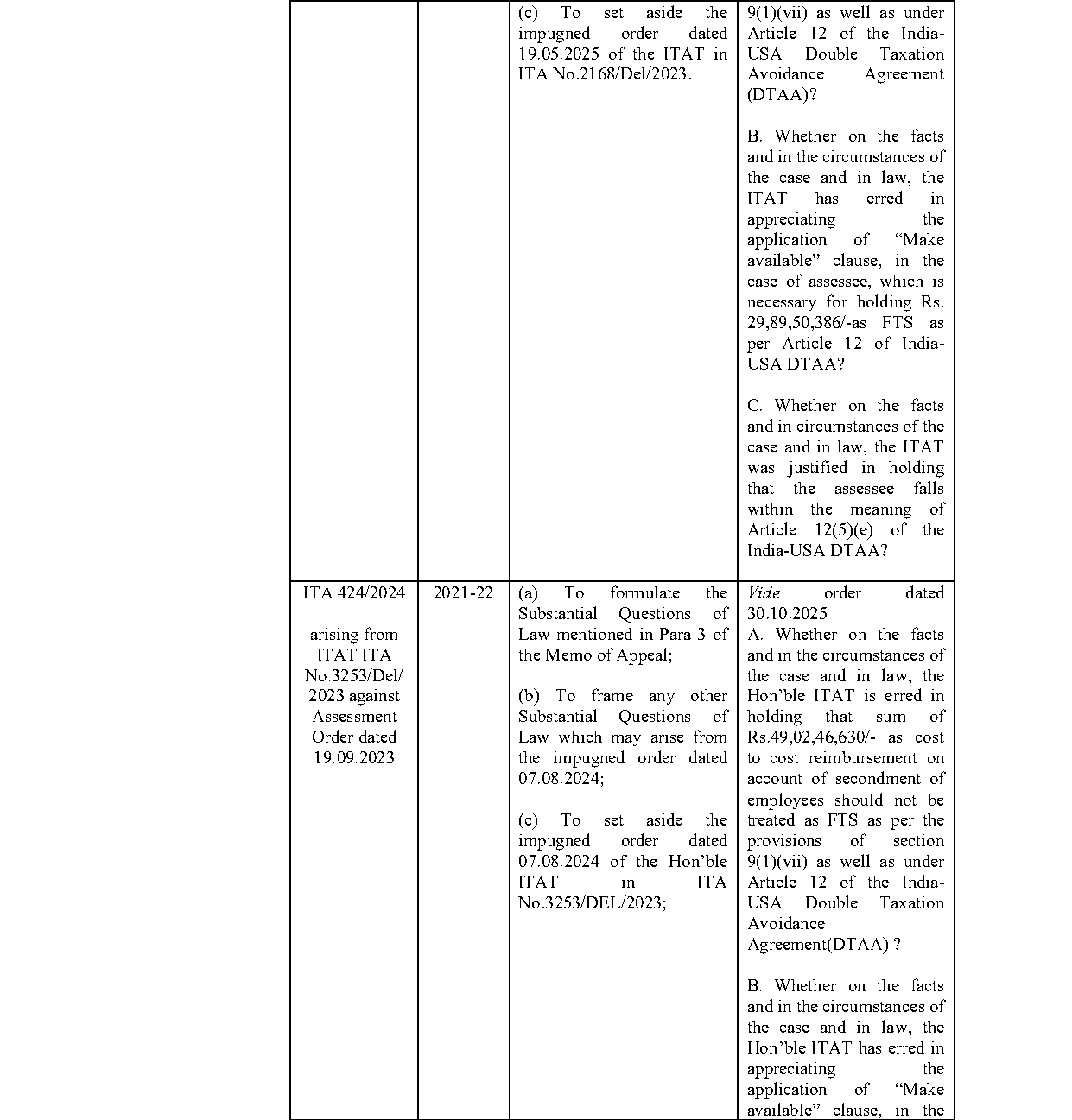
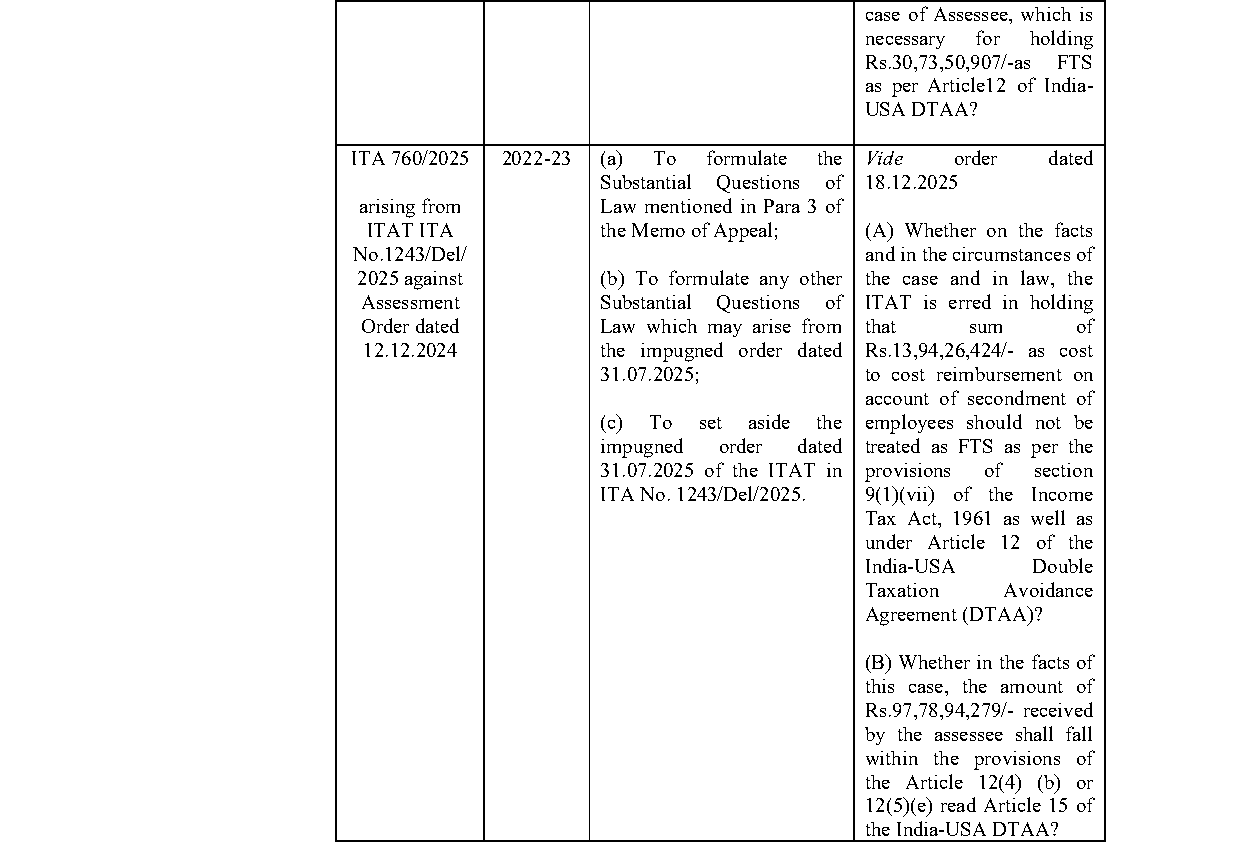
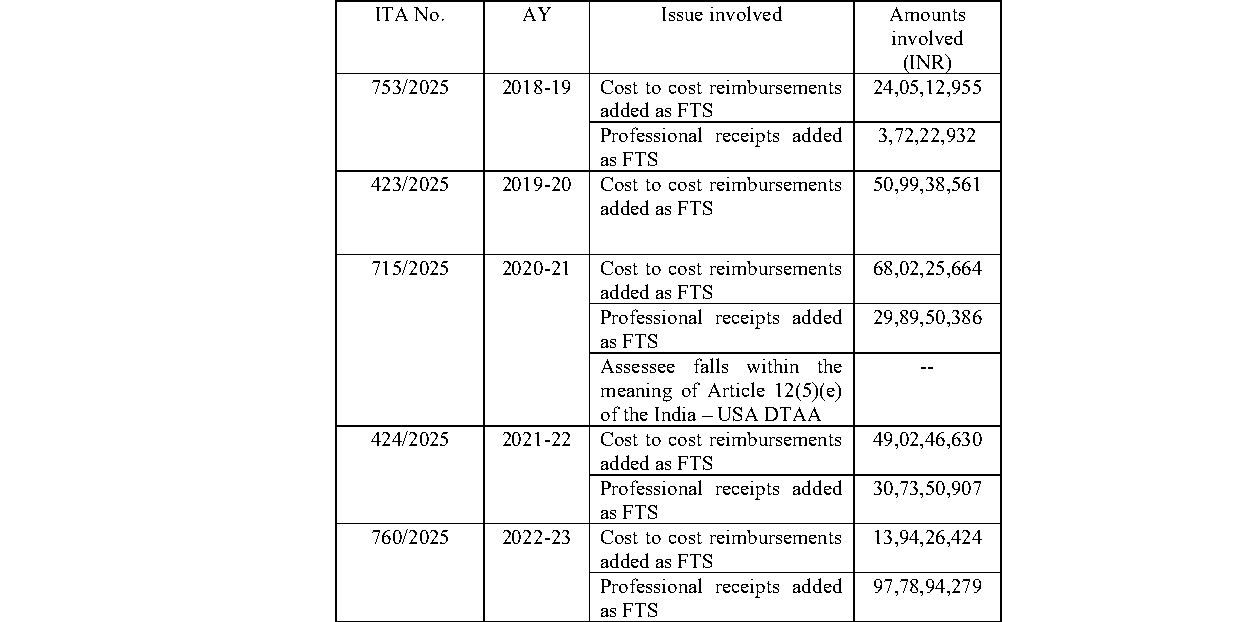
IN THE HIGH COURT OF DELHI AT NEW DELHI
V. KAMESWAR RAO, VINOD KUMAR, JJ.
The Commissioner Of Income Tax (International Taxation)-1, New Delhi – Appellant
Versus
ERNST And Young U.S. LLP – Respondent
ITA 423 of 2025, ITA 424 of 2025, ITA 715 of 2025, ITA 753 of 2025, ITA 760 of 2025
Decided On : 18-06-2026
For the Appellant : Mr. Puneet Rai, SSC with Mr. Ashvini Kr., Mr. Rishabh Nangia, Mr. Gibran, JSC.
For the Respondent:Mr. S. Ganesh, Sr. Advocate with Ms. Ananya Kapoor, Advocate.
Tax liability depends on the economic substance, not the contractual labels, of a transaction. Secondment where the foreign parent retains employment lien and provides technical training satisfying the "make available" test constitutes taxable fees for technical services, notwithstanding the absence of a profit mark-up.
Headnote:(A) Income Tax Act, 1961 - Section 9(1)(vii) - Double Taxation Avoidance Treaty - Fees for technical services - Taxability of seconded employees - Payments for deputed personnel - Whether payments constitute reimbursement or taxable income - Doctrine of substance over form - Labels used in agreements are not determinative of true nature of transaction - "Make available" test for technical services - Service recipient must acquire enduring benefit of technical knowledge, expertise, or skills - Absence of mark-up on cost-to-cost payments is not conclusive - Retention of employment lien by foreign entity - Assessment of permanent establishment. (Paras 48, 55, 64-67, 73)
(B) Appellate Jurisdiction - Scope - Power of High Court to review findings of lower tribunal - Findings must be based on evidence and legal principles - Orders ignoring binding precedents and lacking cogent reasoning are liable to be set aside as per incuriam. (Paras 32, 70)
Facts of the case:
The revenue challenged tribunal orders which held that payments made to an overseas company for seconded personnel were cost-to-cost reimbursements and that receipts for professional services were exempt from tax. The assessee contended that the deputed personnel became local employees during the term of assignment and that the payments were merely passive salary reimbursements without a profit component.
Findings of Court:
The overseas entity retained significant control and an employment lien over the seconded personnel. The services provided to the local entities involved training and the implementation of proprietary quality standards, which resulted in an enduring transfer of knowledge, satisfying the "make available" criteria. The court observed that the contractual label of "reimbursement" did not override the economic substance of the service being provided.
Issues: Whether payments for seconded employees constitute fees for technical services; whether the "make available" test was satisfied under the relevant tax treaty; and whether the "professional services" exemption was correctly applied to the receipts.
Ratio Decidendi: Where an overseas entity retains an employment lien and exerts overarching control, the secondees remain employees of the parent company, rendering the arrangement a provision of technical services rather than mere salary reimbursement. The substance over form doctrine requires ignoring superficial labels to assess the true economic reality. Since the services included training and transferring intangible know-how, the "make available" test is satisfied, triggering tax liability.
Result: Appeals allowed; findings on the professional services component remanded to the tribunal for fresh reconsideration based on these standards.
| Table of Content |
|---|
| 1. procedural context and factual background of secondment and dtaa interpretation appeals. (Para 1 , 2 , 3 , 4 , 5 , 6 , 7 , 8 , 9 , 10 , 11 , 12) |
| 2. revenue's contention that secondment constitutes fts and does not qualify for professional services exemption. (Para 13 , 14 , 15 , 16 , 17 , 18 , 19 , 20 , 21 , 22 , 23 , 24 , 25 , 26) |
| 3. respondent's argument that seconded employees are local employees and payments are mere cost-to-cost reimbursements. (Para 27 , 28 , 29 , 30 , 31 , 32 , 33 , 34 , 35 , 36 , 37 , 38 , 39 , 40 , 41 , 42 , 43 , 44) |
| 4. application of substance-over-form doctrine and 'make available' test to secondment agreements. (Para 45 , 46 , 47 , 48 , 49 , 50 , 51 , 52 , 53 , 54 , 55 , 56 , 57 , 58 , 59 , 60 , 61 , 62 , 63 , 64 , 65 , 66 , 67 , 68) |
| 5. reviewing itat's perversity in ignoring binding precedents regarding secondment as taxable technical services. (Para 69 , 70 , 71 , 72 , 73 , 74 , 75) |
| 6. interpretation of professional services scope under article 15(2) and limitations of exempting technical/advisory income. (Para 76 , 77 , 78 , 79 , 80 , 81 , 82 , 83 , 84 , 85 , 86 , 87 , 88) |
| 7. final order setting aside itat decisions and remanding issues for fresh reconsideration. (Para 89 , 90 , 91 , 92) |
JUDGMENT :
V. KAMESWAR RAO, J.
CM APPL No.75760/2025(condonation of delay) in ITA 715/2025
1. For the reasons stated in the application, the delay of 21 days in filing the appeal stands condoned.
2. The application stands disposed of.
ITA 423/2025; ITA 424/2025; ITA 715/2025; ITA 753/2025; & ITA 760/2025
3. These appeals filed by the Revenue under Section 260A of the Income Tax Act, 1961 (the Act) relate to different Assessment Years (AY) from 2018-19 upto 2022-23.
4. We must state here that these appeals involve identical questions of law however they diverge on facts. ITA 424/2025 pertains to AY 2021-22 wherein the assessee filed its return of income on 22.12.2021 declaring a total income of Rs.67,74,750/- and claimed the refund of TDS amount of Rs.3,01,41,850/- as exempt income and offered its income to tax as per Section 115A of the Act. The Assessing Officer (AO) passed a Draft Assessment Order (DAO) proposing to make an addition of Rs.18,28,95,723/- to the income of the assessee on account of payment received by the assessee with respect to seconded employees in India and Rs.30,73,50,907/- on account of receipts from professional services. The AO in the DAO had bifurcated the amounts under different heads; (i) first being the amount calculated to be reimbursed as costs with respect to seconded employees being Rs.18,28,95,723/-; and (ii) the amounts which were receipts from India based clients for services performed in and from the USA amounting to Rs.65,20,12,778/-, which services were examined and the amount of Rs.30,73,50,907/- was found to be not falling under the exemption clause, under Article 12(5) (e) of the India-USA Double Taxation Avoidance Agreement (DTAA).
5. The assessee had filed objections to the DAO before the Dispute Resolution Panel (DRP), and the DRP vide order dated 10.08.2023 rejected the contentions of the assessee and upheld the additions made by the AO in the DAO. Consequently, the final assessment order was passed, as per the directions of the DRP. The Income Tax Appellate Tribunal (ITAT) allowed the appeal filed by the assessee and set aside the assessment order. The issue which arises in this appeal is whether the payment received by the assessee on account of secondment of employees would be taxable as Fees for Technical Services (FTS) under Article 12 of the DTAA and whether the receipts for services rendered in and from the USA fall under the exemption of Article 12(5)(e) of the DTAA.
6. The challenge in ITA 423/2025 pertains to the AY 2019-20 for which the ITAT has held that the sum of Rs.50,99,38,561/- to be cost to cost reimbursement on account of secondment of employees as FTS under Section 9(1) (vii) of the Act as well as Article 12 of the DTAA. During the AY 2019-20 t