Back





2025 Supreme(Guj) 2123
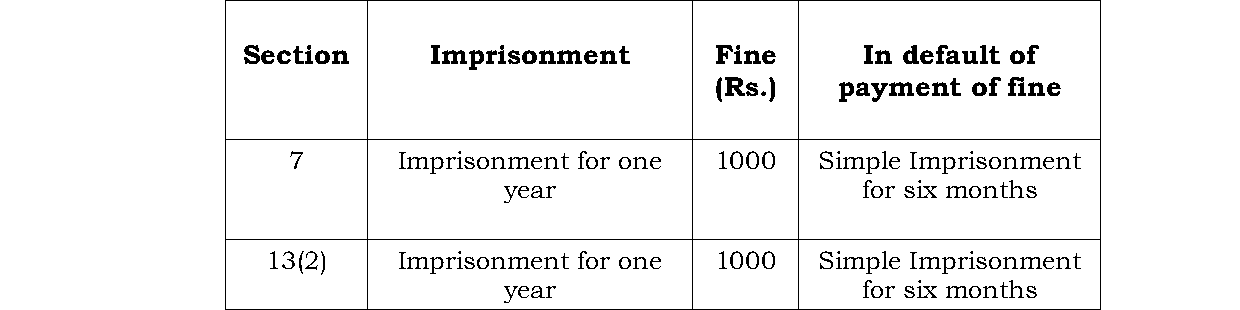
IN THE HIGH COURT OF GUJARAT AT AHMEDABAD
VIMAL K. VYAS, J.
State Of Gujarat - Appellant
Versus
Ramjibhai Valjibhai Gohil – Respondent
R/Criminal Appeal No. 1795 of 2005 With R/Criminal Appeal No. 342 of 2005
Decided On : 29-08-2025
Important Points
Subject
Criminal Law - Prevention of Corruption
Act Referred
PREVENTION OF CORRUPTION ACT : S.13(1)(d), S.13(2), S.20, S.7
Headnote
(B) Criminal Jurisprudence - Appellate court scope - When evidence leads to two plausible views, the one favoring the innocence of the accused must prevail - Burden of proof resting on the prosecution - Significant contradictions in material testimony of key witnesses regarding scientific tests render evidence unreliable. (Paragraphs 38, 39, 40, 46)
Facts of the case:
The prosecution alleged that a public servant demanded a bribe for providing assistance with official documentation and loan processing. A sting operation was conducted where marked currency was recovered. The defense argued that no valid demand was established and highlighted major contradictions in witness statements, particularly concerning the inconsistent findings of chemical tests on the hands of the accused.
Findings of Court:
The court observed that the testimony of primary witnesses regarding the chemical evaluation of the hands was mutually contradictory, casting doubt on the reliability of the recovery of the money. As the foundational facts of demand and acceptance were not proven via cogent evidence, the statutory presumption could not be triggered, and the benefit of doubt was extended to the accused.
Issues: Whether the prosecution successfully established the essential ingredients of demand and voluntary acceptance, and whether the presumption of guilt could be applied solely based on the recovery of currency in the absence of credible evidence regarding the prior demand.
Ratio Decidendi: Mere recovery of marked currency is insufficient for conviction without clear, consistent proof of prior demand and voluntary acceptance. Because the prosecution failed to establish foundational facts and provided contradictory evidence, the mandatory legal presumption does not apply, and the accused is entitled to an acquittal.
Result: Appeal of the convict allowed; acquittal granted; state appeal for enhancement dismissed.
For the Appellant : Mr Bhargav Pandya, APP
For the Respondent: Mr. Dharmesh D. Nanavaty
| Table of Content |
|---|
| 1. procedural context for appeals against conviction and sentencing. (Para 1 , 2 , 3 , 4 , 5) |
| 2. summary of prosecution case and factual history of the conviction. (Para 6 , 7 , 8 , 9 , 10 , 11 , 12 , 13) |
| 3. conflicting arguments regarding evidentiary sufficiency and proportionality of sentencing. (Para 14 , 15 , 16 , 17 , 18 , 19 , 20 , 21 , 22 , 23 , 24 , 25) |
| 4. standard of proof for demand and acceptance in corruption cases. (Para 26 , 27 , 28 , 29 , 30 , 31 , 32 , 33 , 34 , 35 , 36 , 37 , 38) |
| 5. application of reasonable doubt and acquittal of the accused. (Para 39 , 40 , 41 , 42 , 43 , 44 , 45 , 46 , 47) |
JUDGMENT :
VIMAL K. VYAS, J.
1. The present Criminal Appeals Nos.1795 of 2005 and 342 of 2005 have been preferred under Sections 377 and 384 of the Code of Criminal Procedure, 1973 (for short, ‘Cr.P.C.’) by the State and the convict, respectively, and are directed against the judgment and order dated 28.01.2005 passed by the learned Special Judge and Additional Sessions Judge, Fast Track Court No.6, Jamnagar, in Special Case No.10 of 1997.
2. By the aforesaid judgment and order of conviction and sentence, the trial court has held the appellant-accused guilty and convicted him for the offences punishable under Sections 7 and 13(2) of the Prevention of Corruption Act, and consequently, he has been sentenced to undergo imprisonment as under :-
3. Since both these appeals arise from a selfsame judgment and order passed by the trial court, they have been heard together and are being disposed of by this common judgment and order.
4. Being aggrieved and dissatisfied with the quantum of sentence awarded by the trial court, the State has preferred the Criminal Appeal No.1795 of 2005 under Section 377 of the Code of Criminal Procedure, 1973, for enhancement of the sentence, mainly on the grounds that the sentence awarded by the trial court is inadequate and disproportionate to the offences committed by the accused and the same is less than the minimum prescribed for the offences with which the appellant-accused has been convicted.
5. The Criminal Appeal No.342 of 2005 has been preferred by the convict under Section 384 of the Code of Criminal Procedure, 1973, against the judgment and order of conviction and sentence passed by the trial court, convicting him for the offences punishable under Sections 7 and 13(2) of the Prevention of Corruption Act and sentencing him to suffer imprisonment for one year.
PROSECUTION’S CASE IN A NUT-SHELL :
6. It is the case of the prosecution that on 20.03.1997, the complainant (PW-1) Dipsang Ranaji Sodha had filed a complaint, inter alia, stating that since he was intending to install an electric submersible pump into the well in his agricultural land, he had contacted the accused Ramjibhai Valjibhai Gohil, who was discharging his duties as Gram Sevak of Aliyabada Group Panchayat, for the purpose of obtaining subsidy on the pump. It is further the case of the prosecution that the accused had demanded Rs.2,000=00 for preparing the documents for obtaining the loan and the subsidy. It is alleged that the accused had obtained signatures of the complainant on the loan papers and sent it for further process to the Central Bank of India, Aliyabada Branch as well as the Taluka Panchayat Office, Jamanagar. As per the case of the prosecution, the complainant had received the cheque amount of Rs.22,000=00 from the Central Bank of India, Aliyabada Branch, therefore, the accused had demanded Rs.2,000=00 from the complainant, and when the complainant expressed his inability to pay the entire amount at the time, the accused suggested him to pay him Rs.500=00 after eight days and the remaining amount to be paid as early as possible, therefore, the complainant had paid him Rs.500=00 as instructed, but the accused had further demanded for Rs.1,500=00 from the complainant.
7. It is alleged that since the complainant was not willing to pay the amount of bribe, he approached the Police Inspector Shri Bhikhubha Balubha