
 Back
Back





IN THE HIGH COURT OF KERALA AT ERNAKULAM
A. Muhamed Mustaque, Harisankar V. Menon, JJ.
K.G.Rejimon – Petitioner
Versus
State Of Kerala, Represented By Its Secretary, Taxes Department – Respondent
OT.REV NO.32 OF 2023
Decided On : 23-09-2025
ORDER :
Harisankar V.Menon, J.
This Other Tax Revision Petition, at the instance of an assessee under the provisions of the Kerala Value Added Tax Act, 2003 (hereinafter referred to as the ‘Act’), seeks to challenge the suo motu steps initiated under Section 56 of the Act, cancelling an assessment completed in his favour, as confirmed by the Commissioner of Commercial Taxes.
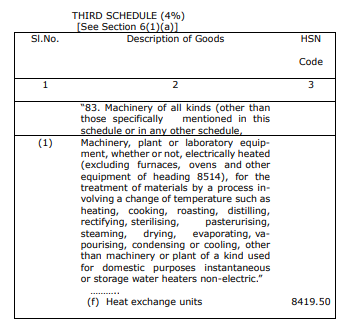
2. The assessee is stated to be engaged in the trading of “thermic fluid heater”, which, according to him, attracts tax at 4% under Entry 83(1)(f) of Schedule III to the Act. The assessment was of the year 2009-10 by an order dated 11.11.2013, imposing tax at the rate of 12.5% on the afore item, placing reliance on a clarification dated 12.08.2006 of the Commissioner of Commercial Taxes, as per which, the tax payable was at 12.5%. The assessment was challenged before the first appellate authority by filing KVATA No.99 of 2014 and by the appellate order dated 31.01.2014, the first appellate authority noticed that the clarification relied on while finalizing the assessment has been set aside by this Court in the judgment dated 15.02.2008 in OTA No.3 of 2008, since there was no proper consideration of the issue by the Commissioner, directed the Commissioner to revisit the issue afresh.
3. Consequent to the remit as above, the assessing authority passed a fresh order dated 16.10.2015(Annexure-C), imposing tax at 4% with respect to the products dealt with by the assessee.
4. Later, the authority under Section 94 of the Act issued Annexure-D order dated 07.04.2016, holding that since “thermic fluid heaters” have not been specifically covered by any of the entries in Schedule III, the tax applicable would be at 12.5% as an RNR item under S.R.O.No.82/2006. Placing reliance on the proceedings of the authority under Section 94 as above, the Deputy Commissioner, Mattanchery initiated suo motu revisional steps to cancel the order dated 16.10.2015 in favour of the assessee, since, according to him, the afore order was prejudicial to the interest of the revenue. After granting an opportunity to the assessee, the Deputy Commissioner issued Annexure-E order dated 03.09.2016 under Section 56 (3) of the Act, cancelling the assessment order dated 16.10.2015 and remitting the matter for fresh consideration.
5. The suo motu revisional order as above was further challenged before the Commissioner of Commercial Taxes, essentially contending that the Deputy Commissioner did not have any jurisdiction to invoke the power under Section 56 of the Act. It is also contended that the assessment for the year 2009-10 cannot be finalised based on the clarificatory order passed by the authority under Section 94 , dated 07.04.2016, relying on the judgment of the Division Bench of this Court in Sreedhareeyam Ayurvedic Medicines (P) Ltd. and Ors. v. State of Kerala and Anr. [(2011) 19 KTR 561 (Ker)] The Commissioner, by his order dated 28.12.2020 (Annexure- F), rejected the revision petition filed by the petitioner. When the Commissioner’s order was challenged by the petitioner- assessee, this Court, by Annexure-G order dated 25.11.2022 in O.T.Rev.No.22 of 2021, set aside the Commissioner’s order and directed fresh consideration at his hands. On the basis of the afore remand, the Commissioner has issued Annexure-I order, rejecting the revision petition, confirming the exercise of suo motu powers by the Deputy Commissioner noticed as above.
6. It is in such circumstances that the captioned revision petition is presented by the revision petitioner-assessee.
7. Sri.P.S.Soman, the learned counsel for the revision petitioner-assessee, would contend that:
i. The exercise of the revisional power under Section 56 (1) of the Act was erroneous insofar as the assessment was the subject matter of an appeal, and the order, which is now set aside, is the consequential order issued by the assessing authority. According to him, the proper remedy for the revenue was to challenge the first appellate order, as prescribed
The Deputy Commissioner has the authority to exercise suo motu revisional powers when previous assessments do not reflect accurate tax classification, with clarificatory orders applied prospectively ....

Suo motu revisions under the KVAT Act cannot proceed while an appeal on the same issue is pending, emphasizing adherence to statutory provisions.

Invalid delegation of powers and lack of jurisdiction of the Addl. CST under the OVAT Act.

Section 56 of the VAT Act would reveal that the section has wide power, but seeking of permission by the assessing authority for making reassessment of the dealer is not conferred under the said prov....

Availability of an alternative remedy does not operate as an absolute bar to maintainability of writ petition.

The court established that the authority to review and revise assessment orders under the JVAT Act is limited and must adhere to procedural requirements, particularly regarding the initiation of revi....

A Deputy Commissioner can order reopening of assessments under CST Act Section 9(2A), without invalidating prior assessment orders, ensuring due process is followed.
The main legal point established is that assessment proceedings must adhere to the prescribed limitation periods under Sections 25(1) and 56(2)(c).



An indispensable Tool for Legal Professionals, Endorsed by Various High Court and Judicial Officers
Please visit our Training & Support
Center or Contact Us for assistance

Scan Me!
India’s Legal research and Law Firm App, Download now!


For Daily Legal Updates, Join us on :



 Back to top


