Back


2026 Supreme(Ker) 917
IN THE HIGH COURT OF KERALA AT ERNAKULAM
RAJA VIJAYARAGHAVAN V, K. V. JAYAKUMAR, JJ.
Thuravoor Mahakshethra Upadeshaka Samithy Thuravoor Mahaksethram – Appellant
Versus
The Travancore Devaswom Board Nanthancode – Respondent
W.P(C).Nos.4847/2019 & 37917/2024 and DBAR No.3 of 2021
Decided on : 08-07-2026
For the Appellant : SRI. B.PRAMOD
For the Respondent: SRI.G.SANTHOSH KUMAR (P). SRI.RAAJESH S.SUBRAHMANIAN SRI.G.SREEKUMAR (CHELUR) SRI.S.RAJMOHAN, SC, TDB SRI.V.R.RAJESH SRI.RAJIT
Property acquired by a temple advisory body using public offerings is held in a fiduciary capacity for the deity. Such assets belong to the temple and must be surrendered to the statutory managing authority upon the body's dissolution, as no private entity can claim absolute ownership of consecrated institution property.
Headnote:(A) Travancore-Cochin Hindu Religious Institutions Act, 1950 - Sections 24, 30, 31, 31A - Management of religious properties - Fiduciary duty of committee - Properties acquired by a society while functioning as a temple advisory committee using funds collected from the public for the temple are deemed to be held in trust for the deity and must be vested in the institution under the managing board's control upon the committee's dissolution or cessation. (Paras 40-45, 68-70)
(B) Transfer of Property Act, 1882 - Sections 10 and 11 - Restraint on alienation and repugnant conditions - Conditions imposed in a conveyance regarding the permanent restriction on the use or alienation of property are void in cases of absolute interest, and the transferee is entitled to deal with the property as if such restrictions were non-existent. (Paras 71-74)
Facts of the case:
A registered society, previously acting as an advisory committee for a temple administration, acquired multiple immovable assets and gathered valuables utilizing public contributions and temple rituals. Upon the constitution of a new official committee, the society refused to relinquish the title deeds and possession of these assets, asserting independent ownership acquired through its own funds and charitable registration. The managing board sought judicial intervention to retrieve these assets for the temple's benefit.
Findings of Court:
The court found that the society acted in a fiduciary capacity while managing the temple affairs. Assets procured during this tenure using public donations are rightfully the property of the deity. Furthermore, attempts to impose restrictive covenants on the use or alienation of property in title deeds were held ineffective under statutory property law provisions.
Issues: The primary issues were whether a society functioning as an advisory committee can claim independent title to immovable properties acquired during its tenure and whether such properties must be surrendered to the statutory managing authority upon the committee's cessation.
Ratio Decidendi: Entities managing temple affairs perform fiduciary duties and cannot acquire property for their own benefit using funds derived from Temple devotees. All assets acquired under such circumstances constitute a dedication to the deity, and the managing board, as the statutory trustee, holds the right to possess and administer these assets regardless of any restrictive conditions in title deeds.
Result: Petition allowed; properties declared as belonging to the temple and ordered to be handed over; registration of the society challenged by the board to be considered by the registrar.
| Table of Content |
|---|
| 1. consolidation of matters due to a common subject of temple administration. (Para 1 , 2 , 3) |
| 2. factual background regarding dispute over temple property and functioning of the samithi. (Para 4 , 5 , 6 , 7 , 8 , 9 , 10 , 11 , 12 , 13 , 14 , 15 , 16 , 17 , 18 , 19 , 20 , 21 , 22 , 23 , 24 , 25 , 26 , 27 , 28 , 29 , 30 , 31) |
| 3. summary of rival contentions regarding ownership of temple assets and maintainability of writ petitions. (Para 32 , 33 , 34 , 35 , 36 , 37 , 38) |
| 4. statutory framework and supreme court guidelines on protecting temple property. (Para 39 , 40 , 41 , 42 , 43 , 44 , 45 , 46) |
| 5. temple advisory committees exercise fiduciary functions; assets acquired constitute deity's property. (Para 47 , 48 , 49 , 50 , 51 , 52 , 53 , 54 , 55 , 56 , 57 , 58 , 59 , 60 , 61 , 62 , 63 , 64 , 65 , 66 , 67 , 68 , 69 , 70 , 71 , 72 , 73 , 74 , 75 , 76 , 77 , 78 , 79) |
| 6. final orders for property restoration and dismissal of unrelated petitions. (Para 80 , 81) |
JUDGMENT :
K. V. Jayakumar, J.
All these matters pertain to the administration of Thuravoor Mahakshethram (‘the Temple’, for the sake of brevity), which is a Temple under the control of the Travancore Devaswom Board (‘the TDB’ for the sake of brevity).
2. The common issue involved in the Writ Petitions is the acquisition of properties in the name of the Temple Advisory Committee (‘TAC’ for the sake of brevity) and therefore, we deem it appropriate to dispose of these matters by a common judgment.
3. W.P.(C) No.4847/2019 is taken as the lead case and the parties and the exhibits are hereinafter referred to as stated in that Writ Petition, unless otherwise specifically stated.
Brief facts of W.P.(C) No.4847/2019
4. The petitioner in this Writ Petition is the Thuravoor Mahakshethra Upadeshaka Samithi (‘the Upadeshaka Samithi’ for the sake of brevity). The respondent No.1 is the Travancore Devaswom Board, respondents 2 and 3 are its officers. The respondent No.4 is Thuravoor Mahakshethra Bhakthajana Samithi ( hereinafter referred to as ‘the Bhakthajana Samithi’ for short).
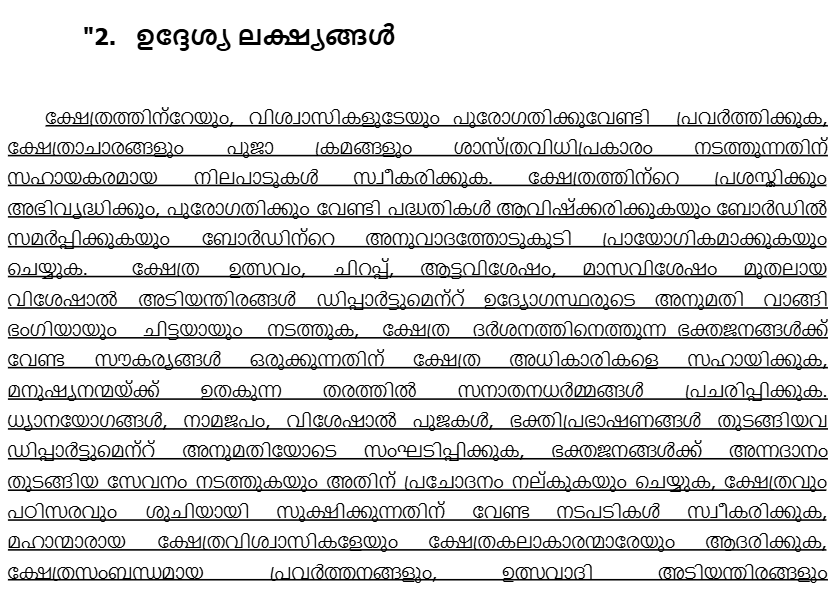
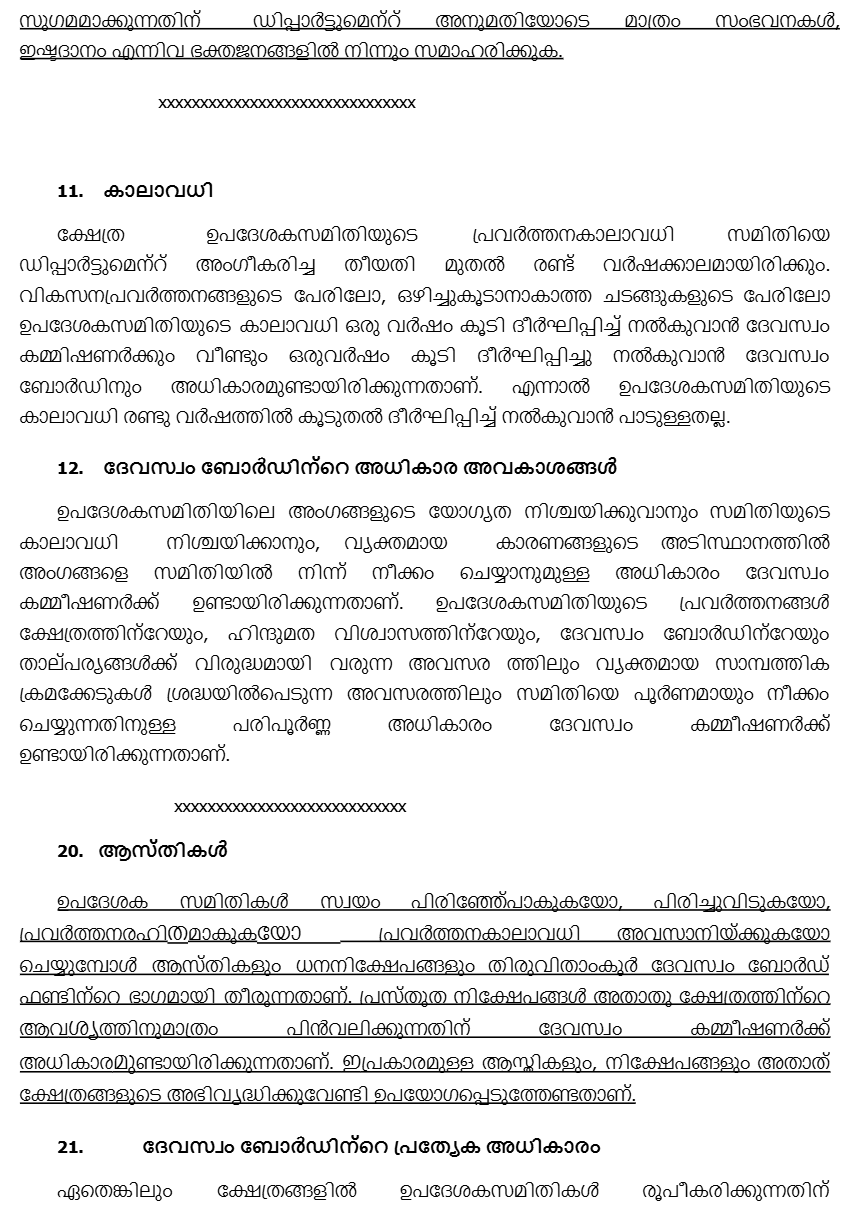
5. The petitioner, the Upadeshaka Samithi, is represented by its President Sri. Sukumara Menon. The said Samithi is constituted under Section 31A of the Travancore Cochin Hindu Religious Institutions Act, 1950 (‘the TCHRI Act’, for the sake of brevity) and the rules made thereunder. The Upadeshaka Samithi/TAC was elected as per Ext.P1 Rules framed in the year 2011.
6. According to the petitioner, the 4th respondent, Bhakthajana Samithi, is an association of individuals registered under the Travancore-Cochin Literary, Scientific and Charitable Societies Registration Act, 1955 (‘the Societies Registration Act’ for the sake of brevity). The petitioner has produced a copy of the bye-law of Bhakthajana Samithi, which is marked as Ext.P2. The petitioner states that as per Ext.P2 bye-law, Bhakthajana Samithi has no independent existence apart from the TDB.
7. The petitioner further stated that in the year 2017, the 4th respondent, the Bhakthajana Samithi, was recognised by the TDB in lieu of a statutorily constituted Temple Advisory Committee. According to the petitioner, such recognition is illegal and, therefore, challenged before the Ombudsman for Travancore and Cochin Devaswoms. On the basis of the report of the learned Ombudsman, DBP No.52 of 2018 was registered before this Court. This Court, by Ext.P3 judgment dated 05.09.2018, has directed the TDB to constitute a Temple Advisory Committee in terms of Ext.P1 Rules and held that the recognition of the Bhakthajana Samithi as Temple Advisory Committee is unsustainable in law.
8. Pursuant to Ext.P3 judgment of this Court, the present TAC was constituted and approved by the TDB on 17.10.2018 vide Ext.P4 order. The petitioner stated that from 17.10.2018, the Bhakthajana Samithi ceased to exist and therefore, all the assets of the Samithi stood vested with the petitioner Upadeshaka Samithi, being the successor in office.
9. The petitioner, Upadeshaka Samithi, asserts