Back





2025 Supreme(Raj) 1522
IN THE HIGH COURT OF JUDICATURE FOR RAJASTHAN AT JODHPUR
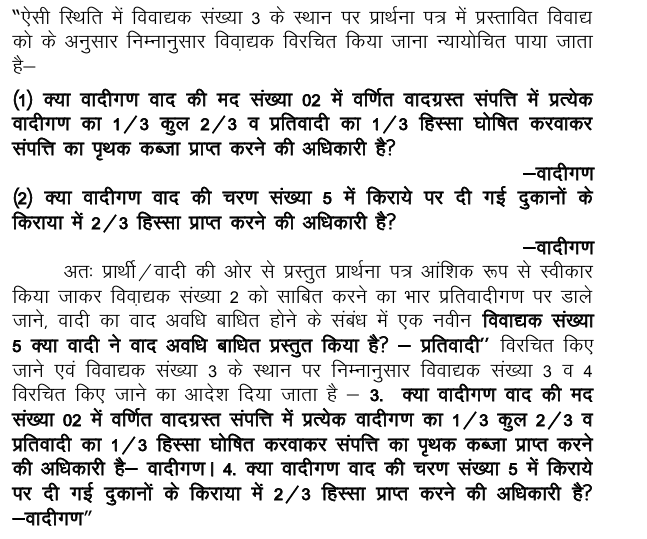
Nupur Bhati, J.
Anita Devi @ Maya D/o Late Shri Bhagirath and ors. - Petitioners
Versus
Omprakash S/o late Shri Bhagirath - Respondent
S.B. Civil Writ Petition No. 5308/2025
Decided On : 28-03-2025
Important Points
Subject
Civil Law - Property Disputes
Act Referred
CIVIL PROCEDURE CODE : O.14 R.5
Evidence Act : S.101
Headnote
(A) Constitution of India - Article 227 - Code of Civil Procedure, 1908 - Order XIV Rule 5 - Petitioners challenged the order of the Trial Court regarding the burden of proof in a suit concerning the validity of a registered Will - The Trial Court partly allowed the application for amendment of issues but placed the burden of proof on the petitioners, which was contested by them. (Paras 1-3, 12-14)
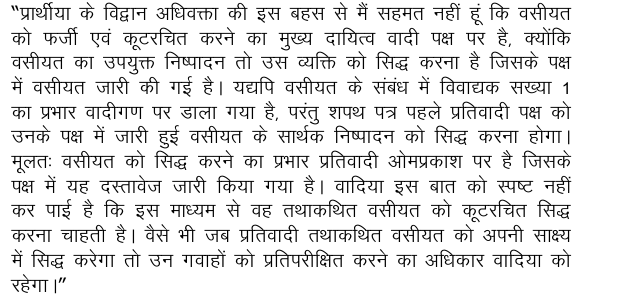
(B) Burden of Proof - The initial burden to prove the validity of a Will lies on the propounder, while the burden to prove that the Will is forged lies on the challengers - The court emphasized that the learned Trial Court correctly noted the distinction between these burdens. (Paras 12.1-12.2)
(C) Supervisory Jurisdiction - The power under Article 227 is supervisory and not appellate, and should be exercised sparingly - The court found no manifest miscarriage of justice in the Trial Court's order. (Paras 15-16)
Facts of the case:
The petitioners filed a suit to declare a registered Will void and sought partition of property, contesting the burden of proof assigned by the Trial Court.
Findings of Court:
The court upheld the Trial Court's decision regarding the burden of proof and found no error in the order.
Issues: The main issues included the burden of proof regarding the validity of the Will and the necessity of framing separate issues for each relief.
Ratio Decidendi: The court ruled that the initial burden of proof lies with the propounder of the Will, and the Trial Court's framing of issues was appropriate.
Result: Petition dismissed.
Advocate Appeared:
For the Petitioner: Mr. Monal Chugh
For the Respondent: Mr. B.R. Chahar
ORDER :
Nupur Bhati, J.
1. The petitioners/plaintiffs, by way of this petition filed under Article 227 of the Constitution of India, have assailed the validity of the order dated 20.02.2025 (Annex.7) passed by learned Additional District Judge, Suratgarh (‘Trial Court’) whereby application preferred by the petitioners/plaintiffs under Order XIV Rule 5 of the Code of Civil Procedure, 1908 (hereinafter as ‘CPC’) has been partly allowed. The prayer made in the instant petition reads as under:
“It is, therefore, most humbly and respectfully prayed on behalf of petitioner that this writ petition in the nature of certiorari may kindly be allowed and :-
i] By an appropriate writ, order or direction, the impugned order dated 20.02.2025 (Annex.7) passed by the learned Additional District Judge, Suratgarh, Sri Ganganagar in Civil Case No.09/2018 (C.I.S. No. 09/2018) (Anita Devi @ Maya & Anr. Vs. Omprakash) may kindly be quashed and set aside to the extent of rejection of petitioner's prayer; and the applications filed by the petitioners. (plaintiffs) under Order 14 Rule 5 CPC may kindly be ordered to be allowed and burden of proving in issue no.1 may kindly be ordered to lie on the respondent.
ii] Any other appropriate writ, order or direction, which this Hon'ble Court considers just and proper in the facts and circumstances of this case, may kindly be passed in favor of the petitioners.
iii] Costs of the writ petition may kindly be awarded to the petitioners.”
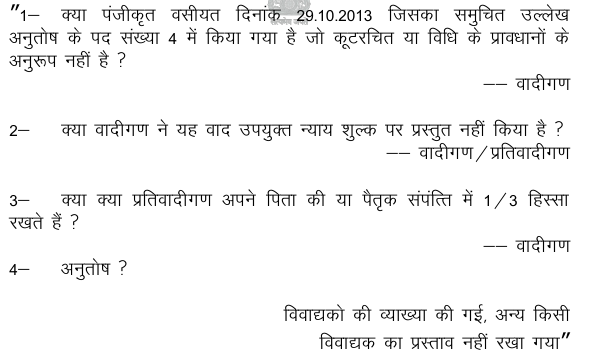
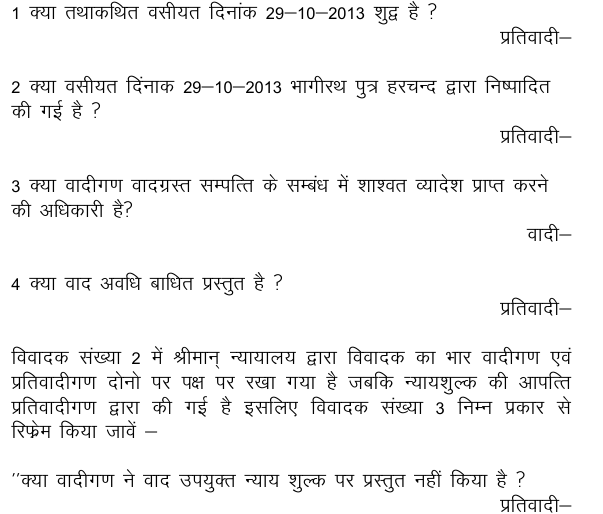
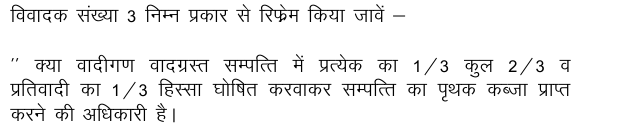
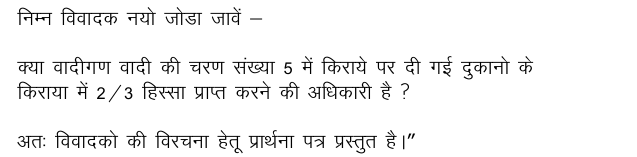
2. Succinctly stated, the facts of the case are that the petitioners/plaintiffs filed a suit for declaring the registered Will dated 29.10.2013 to be void, partition of the suit properties and declaring the petitioners/plaintiffs to have 1/3rd share each in the disputed property. After service of the summons, the respondent/defendant filed his written statement while denying the facts stated in the plaint. As per the pleadings of the parties, the learned Trial Court framed four issues vide order dated 09.01.2019 (Annex.4). Subsequently, the petitioners/plaintiffs filed an application under Order XIV Rule 5 of the CPC seeking amendment/re-framing of the issues and also framing of new issues, which was contested by the respondent/defendant by filing reply (Annex.6). The learned Trial Court vide order dated 20.02.2025 (Annex.7) proceeded to partly allowed the application (Annex.5) preferred by the petitioners/plaintiffs. Aggrieved by the same instant petition has been filed by the petitioners/plaintiffs.
3. Learned counsel for the petitioners submitted that learned trial court has without dealing with the proposed issue Nos.1 and 2 as prayed for in application (Annex.5) has rejected these proposed issues. He also submitted that the learned trial court has erred in fastening the burden of proof of issue no.1, as framed vide order dated 09.01.2019 (Annex.4), upon the petitioners as the burden to prove the validity of will lies upon the propounder and in the present case the respondent has averred in his written statement that the will (Annex.1) was duly executed in his favour by father of petitioners. He also submitted that the learned trial court, despite taking note of the order dated 24.02.2021 wherein it was observed by the learned trial court itself that the validity of will has to be first proved by the respondent, has put the burden to prove issue no.1 upon the petitioners. He also submitted that if the will is surrounded by suspicious circumstances the initial onus is upon the propounder of will to remove these suspicious circumstances. He also submitted that in the present case, the petitioners, being legal heirs, have been excluded from the will and that in itself is a suspicious circumstance and hence, the burden to prove validity of will lies upon the respondent (propounder of the will in question). For this submission he placed reliance upon the judgment passed by the Hon’ble Supreme Court in Kavita Kanwar vs. Pamela Mehta and ors., (2021) 11 SCC 209.
4. Learned counsel for the pe