
 Back
Back





IN THE HIGH COURT OF JUDICATURE AT MADRAS
M.NIRMAL KUMAR, J.
R. Chandrasekar S/o Late K. Rathinam – Appellant
Versus
The State Rep by its Inspector of Police, Perur Police Station – Respondent
Crl. R.C. No. 1684 of 2022
Decided On : 06-02-2026
| Table of Content |
|---|
| 1. accusations stemmed from deceitful property transfers. (Para 1 , 2 , 6) |
| 2. initial trial convictions contested based on evidentiary insufficiencies. (Para 3 , 4 , 5) |
| 3. court reviewed foundational evidence for established convictions. (Para 8 , 9) |
| 4. final ruling led to acquittal based on evidence analysis. (Para 10 , 12 , 13 , 15) |
| 5. physical possession of property was restored to the defacto complainant. (Para 11 , 14) |
ORDER :
1. The petitioners/A1 to A3 were convicted by the trial Court in C.C.No.124 of 2013 by judgment dated 20.07.2022 for offence under Sections 420 , 418 and 468 of I.P.C. and sentenced each to undergo one year rigorous imprisonment and to pay a fine of Rs.2,000/-, in default, to undergo two months simple imprisonment for offence under Section 420 of I.P.C., sentenced each to undergo one year rigorous imprisonment and to pay a fine of Rs.2,000/-, in default, to undergo two months simple imprisonment for offence under Section 418 of I.P.C. and sentenced each to undergo one year rigorous imprisonment and to pay a fine of Rs.2,000/-, in default, to undergo two months simple imprisonment for offence under Section 468 of I.P.C. The sentences are directed to be run concurrently. Aggrieved against the said conviction, the first and second petitioners/A1 & A2 preferred an appeal in Crl.A.No.79 of 2019 and the third petitioner/A3 preferred an appeal in Crl.A.No.83 of 2019 before the III Additional District and Sessions Court, Coimbatore. The learned Sessions Judge, by a common judgment dated 20.07.2022, allowed the appeal in part, modifying the conviction and sentence. The Lower Appellate Court found the petitioners not guilty for the offences under Sections 418 , 420 and 468 of I.P.C. and acquitted them but convicted them for offence under Section 465 of I.P.C. and confirmed that earlier sentence of one year rigorous imprisonment and fine of Rs.2,000/-, in default, to undergo two months simple imprisonment for offence under of I.P.C. is treated as sentence for offence under of I.P.C. and modified the same as six months rigorous imprisonment and fine part remained unaltered. Aggrieved against the said conviction, the present revision filed.
2. (i) The defacto complainant/PW1 is working in a Multi National Company as Purchase Manager. During the year 2007, his father-in-law informed him that a vacant site owned by the first petitioner is available for sale and he introduced the first petitioner, who was running a shop at Perur, Pattishwarar Temple. PW1 met first petitioner, enquired with regard to vacant site and the first petitioner agreed to sell 1863 square feet out of 2760 square feet of vacant site owned by him. PW1 visited the property and agreed to buy the same. On 04.12.2007 after perusing the title deeds, sale deed prepared by PW4 in his office. On the next day, PW1, PW2-father-in-law of PW1 went to the Joint Sub Registrar Office at Raja Veedhi for registration of sale deed. The first and second petitioners came there on that day, and a sum of Rs.1,88,000/- sale consideration handed over by PW1 to the first petitioner and the first and second petitioners executed sale deed, registered as Doc.No.5206 of 2007. After registration of sale deed, PW1 returned to Chennai and thereafter he had no time to visit Coimbatore frequently. Hence, he was unable to visit the site.
(ii) During May, 2011, when he visited his property, he found the property was enclosed by a compound wall, and an asbestos shed found inside. The defacto complainant/PW1 enquired the first petitioner about the shed and the first petitioner could not give any proper reply. Following the visit, third petitioner sent a notice to PW1 claiming that during 2006, he took possession of the vacant site purchased by PW1 for a lease for 10 years and monthly rent was fixed as Rs.1,000/- and it was paid to the first petitioner. Along with the notice, the third petitioner sent rent receipt copies, E.B. receipt copy, photographs of the property purch
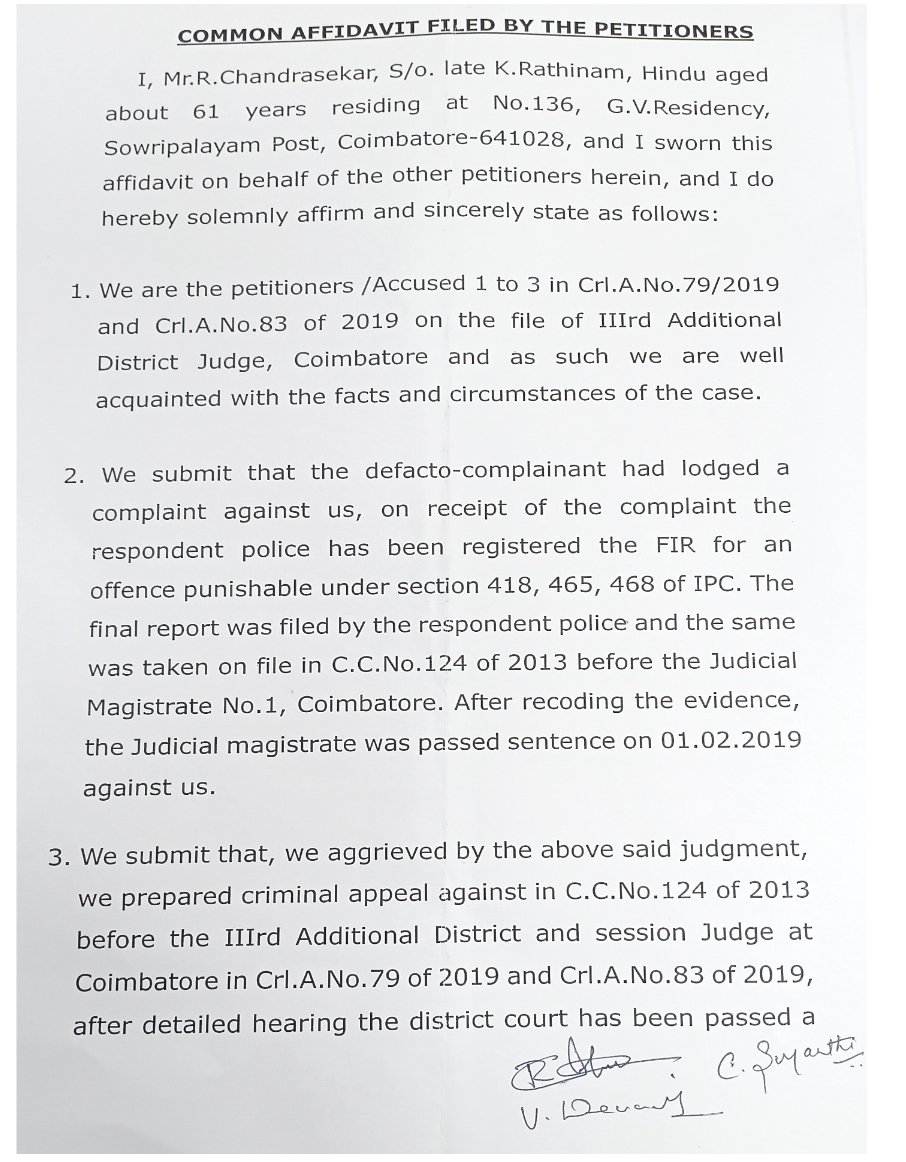
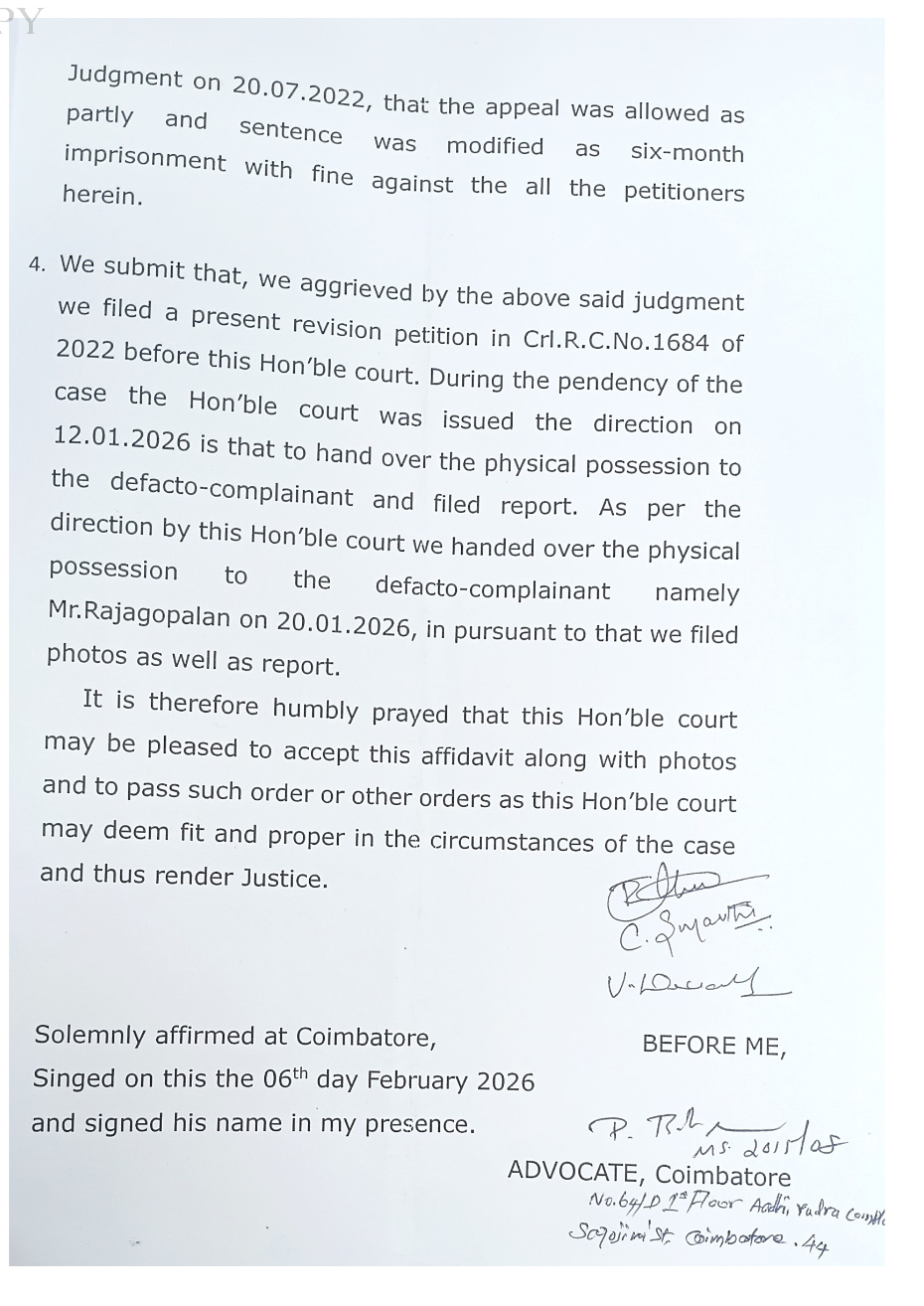
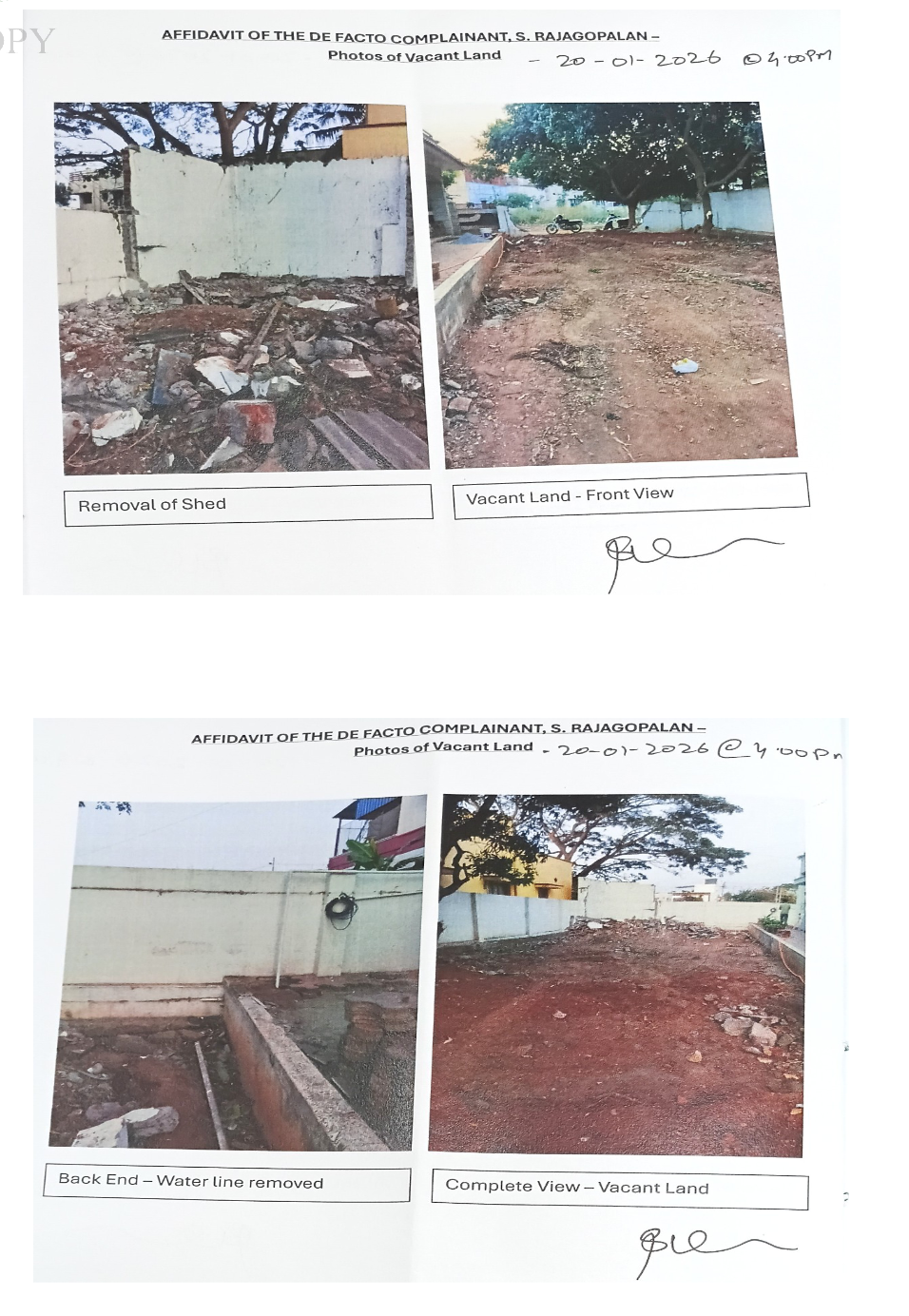
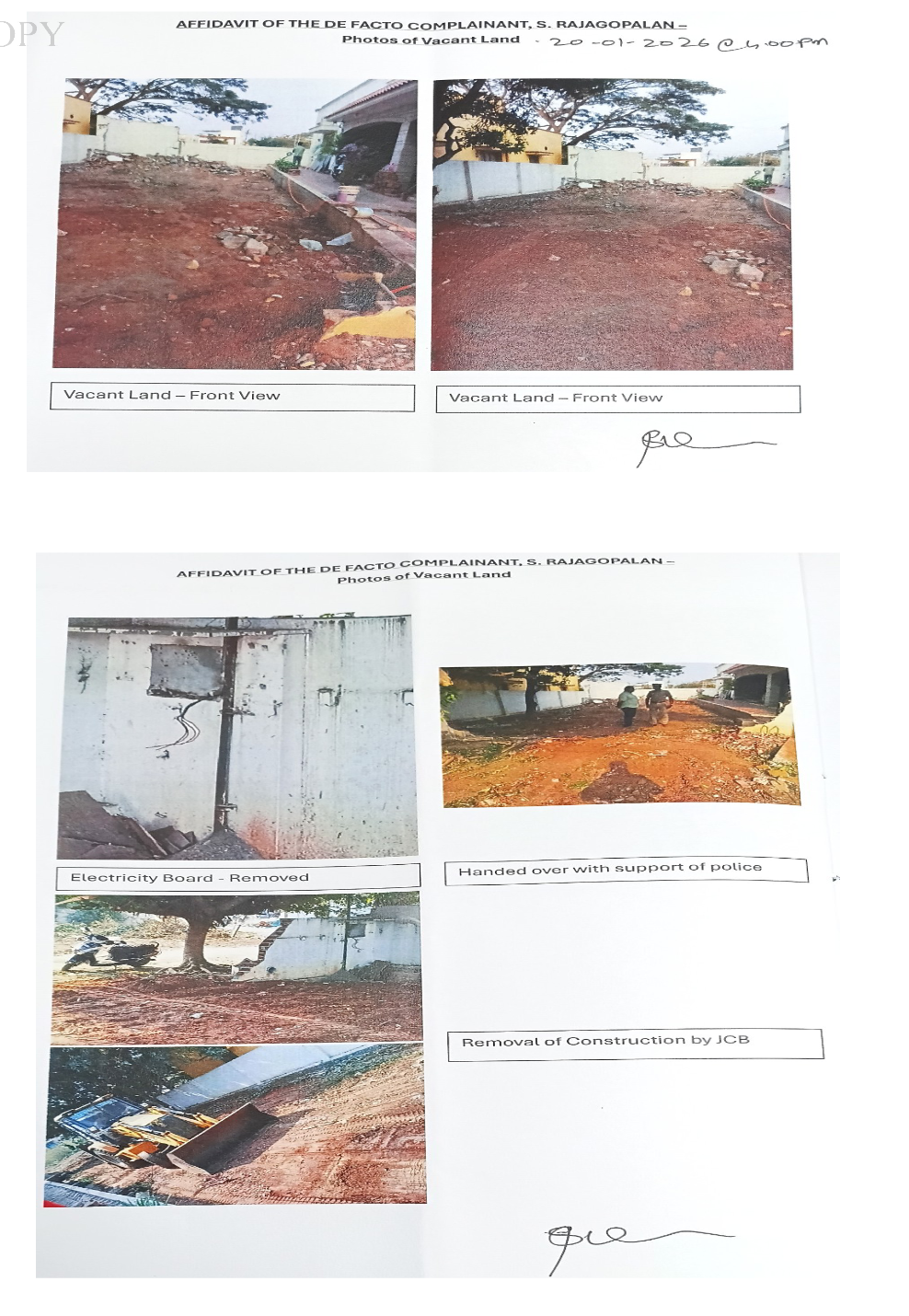
The lack of essential elements for original charges of deceit and forgery leads to a conviction modification under lesser charges.

The court affirmed the trial Judge's decision to return original sale deed documents to purported bona fide purchasers, ruling the de-facto complainant lacked established title over the property.

The power under Section 482 of Cr.P.C. should be used sparingly and with abundant caution, and criminal proceedings should not be used to settle purely civil disputes.
The validity of documents, probative value, and admissibility of documents cannot be examined at the stage of framing charges and can be addressed during trial. The defense taken by the accused canno....
Criminal liability for cheating requires proof of dishonest intent from inception, distinguishing breach of contract from criminal offence.
Criminal proceedings arising out of civil property disputes, registered documents and financial transfers should not be allowed to continue when foundational facts are absent or subsequent complaints....
Deceptive inducement to vacate premises constitutes cheating under IPC, validating criminal proceedings despite concurrent civil claims.

The court emphasized that the existence of deception at the inception of a transaction is essential for establishing an offence under Section 420 of IPC, especially regarding property disputes.

The plaintiff must prove ownership and encroachment claims effectively; mere possession does not suffice without credible evidence.



An indispensable Tool for Legal Professionals, Endorsed by Various High Court and Judicial Officers
Please visit our Training & Support
Center or Contact Us for assistance

Scan Me!
India’s Legal research and Law Firm App, Download now!


For Daily Legal Updates, Join us on :



 Back to top


