
 Back
Back





BEFORE THE MADURAI BENCH OF MADRAS HIGH COURT
K. Murali Shankar, J.
Ponsingh - Appellant
Versus
S.Rajaseljer @ Christantine Rajasekher - Respondent
CRL.A(MD).No.888 of 2022
Decided On : 19-12-2025
JUDGMENT :
K. Murali Shankar, J.
The Criminal Appeal is directed against the judgment made in C.C.No.420 of 2014, dated 17.05.2022, on the file of the Court of the Judicial Magistrate, Tiruchendur, in acquitting the respondent/accused under Section 138 of the Negotiable Instruments Act.
2. The appellant, who is the complainant, filed a complaint under Section 200 Cr.P.C., against the respondent/accused for the offence under Section 138 r/w 142 of the Negotiable Instruments Act.
3. For the sake of convenience and brevity, the parties will hereinafter be referred as per their status/ranking in the trial Court.
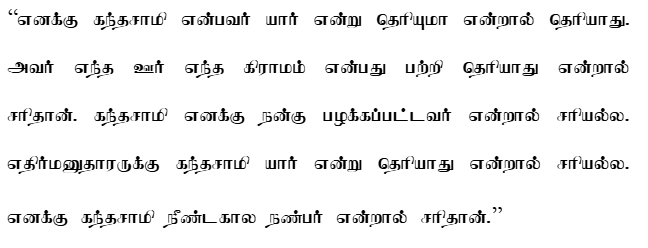
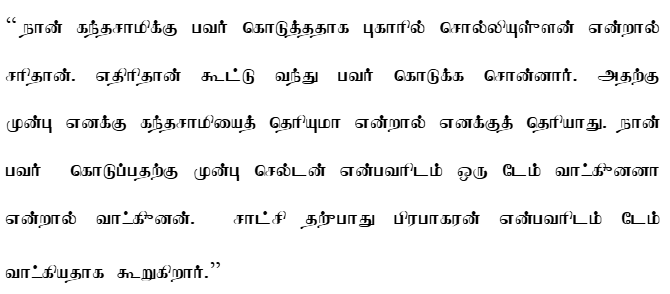
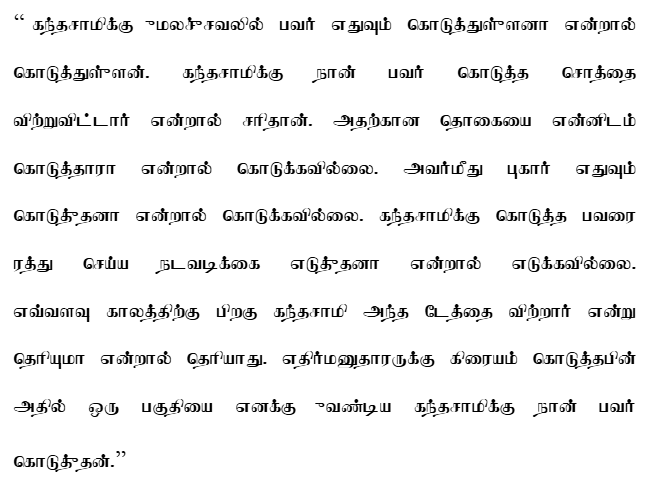
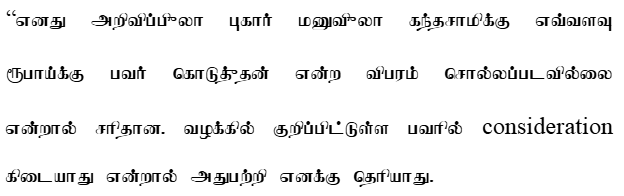
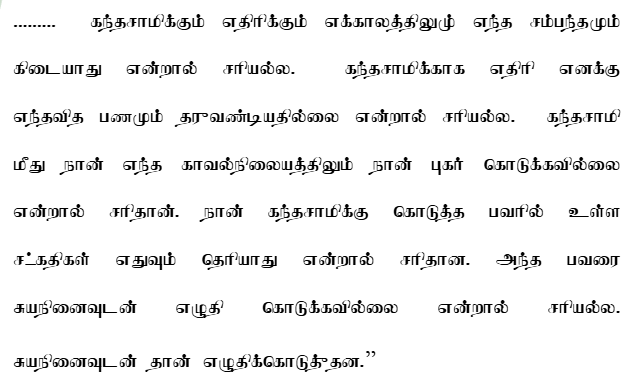
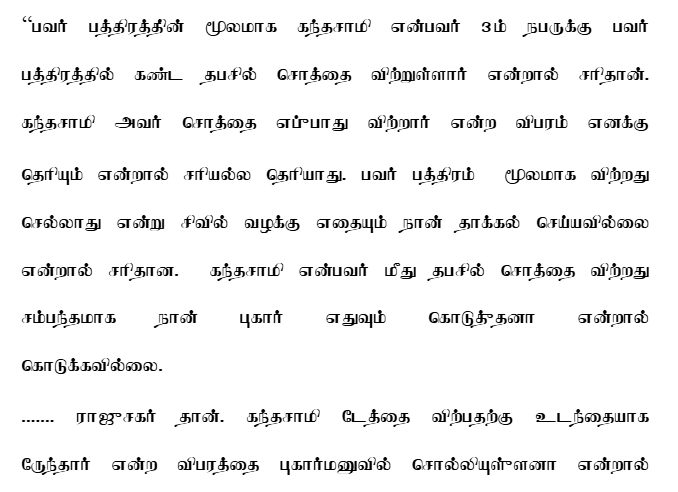
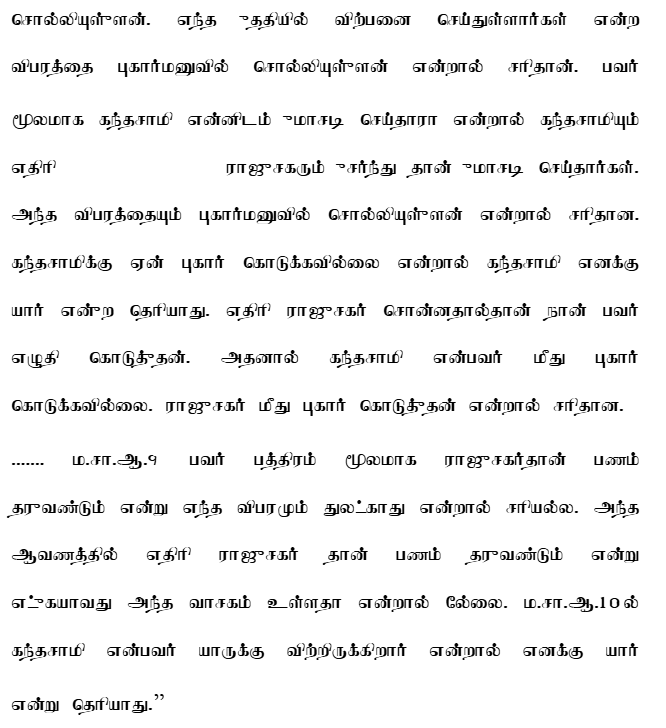
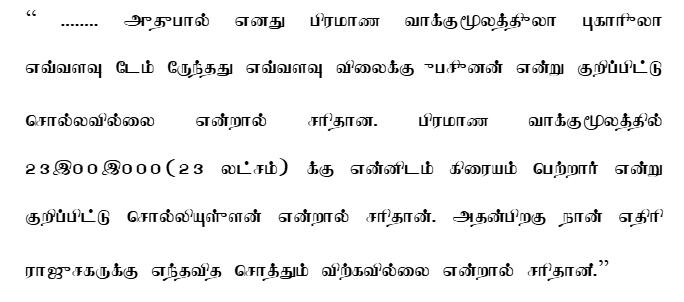
4. The case of the complainant is that the complainant sold a portion of his land in Melacheval, Tirunelveli District to the accused for Rs.23,00,000/- and at that time, the accused agreed to purchase the remaining lands of the complainant and requested the complainant to execute a power of attorney deed in favour of the accused's friend Kandasamy and further agreed to sell the lands and pay the sale price within a year. Both the complainant and the accused entered into an agreement in that regard and accordingly the complainant executed a power of attorney deed in favour of the accused's friend Kandasamy. Though the accused and the power agent Kandasamy have sold the land, the accused has not chosen to pay any amount to the complainant, despite repeated requests. The complainant made a complaint before the police station at Chennai and they requested him to approach the jurisdictional Tiruchendur police and accordingly, the complainant lodged a complaint. At the enquiry before the Tiruchendur Police, the accused agreed to settle the entire amount through cheques. Accepting the same, the complainant received the cheques dated 10.03.2014 and 10.04.2014. The complainant sent a cheque dated 10.03.2014 for collection and the same was honoured. Thereafter, he sent the cheque dated 10.04.2014 for collection and the same was returned for want of sufficient funds in the bank account of the accused. When the dishonour was informed to the accused, he requested that he will issue three cheques for Rs.5,00,000/- each and accordingly issued three cheques for Rs.5,00,000/- each dated 10.06.2014, 10.07.2014 and 10.08.2014 drawn on Tamil Nadu Mercantile Bank. The complainant sent the cheque dated 10.06.2014 for collection, but the same was returned as funds insufficient. Thereafter the complainant sent the other cheques for collection, but the same were dishonoured, as funds insufficient vide banker's memo dated 25.09.2014. Hence, the complainant sent a legal notice dated 04.10.2014 to the accused demanding to pay the amount covered by the cheque. The accused having received the legal notice sent a reply notice dated 29.10.2014 with false and untenable allegations. Since the accused has not paid the amount within the stipulated period, the complainant was constrained to file the above complaint for the offence under Section 138 r/w 142 of the Negotiable Instruments Act.
5. The learned Judicial Magistrate, upon receiving the complaint, recorded the sworn statement of the complainant and on perusing the records, upon satisfied that there existed a prima facie case, took the case on file in C.C.No. 420 of 2014 for the offence under Section 138 of the Negotiable Instruments Act and ordered for issuance of summons to the accused. After appearance of the accused, copies of the records were furnished to him under Section 207 Cr.P.C., on free of costs. When the accused was questioned about the offence alleged against him, he denied the commission of offence and pleaded not guilty.
6. During trial, the complainant examined himself as P.W.1 and exhibited 11 documents as Exs.P.1 to P.11. The accused examined two witnesses Thriu.Raguraman and Thiru.Kandasami as D.W.1 and D.W.2 respectively and exhibited 3 documents as D.1 to D.3
7. The learned Judicial Magistrate, upon considering the evidence both oral and documentary and on hearing the arguments of both si




AI
The presumption in favor of the cheque holder established under the Negotiable Instruments Act can be rebutted by the accused through a probable defense, and the prosecution must prove the existence ....
The burden lies on the complainant to prove the issuance of a cheque for a legally enforceable debt, which was not demonstrated, leading to the dismissal of the appeal.

The main legal point established in the judgment is the importance of evidence in rebutting the presumption available to the complainant under Sec. 139 of the N.I. Act and the impact of civil court j....

A drawer of a cheque is presumed liable unless they provide evidence to rebut the presumption of issuance for debt repayment, established under Sections 138 and 139 of the Negotiable Instruments Act.


The burden of proof on the accused to raise a probable defense and the standard of proof for rebutting the presumption under Section 139 of the Negotiable Instruments Act.

A drawer of a cheque may incur liability under Section 138 of the Negotiable Instruments Act unless they can sufficiently rebut the statutory presumptions of consideration and debt.
The appellate court overturned the acquittal, emphasizing the presumption of consideration under the Negotiable Instruments Act, rejecting the accused's claims due to insufficient evidence.
The main legal point established in the judgment is that a cheque issued as security for a legally enforceable debt or liability falls under Section 138 of the Negotiable Instruments Act.
The court upheld the acquittal as the complainant failed to prove the loan's existence or that the cheque was issued for legitimate debt, emphasizing the rebuttable nature of presumptions under the N....



An indispensable Tool for Legal Professionals, Endorsed by Various High Court and Judicial Officers
Please visit our Training & Support
Center or Contact Us for assistance

Scan Me!
India’s Legal research and Law Firm App, Download now!


For Daily Legal Updates, Join us on :



 Back to top


