
 Back
Back





BEFORE THE MADURAI BENCH OF MADRAS HIGH COURT
P.VELMURUGAN, L.VICTORIA GOWRI, JJ.
Petchiammal - Appellant
Versus
State, through Inspector of Police, Thenkarai Police Station – Respondent
Crl.A(MD)No.506 of 2022
Decided On : 18-12-2025
| Table of Content |
|---|
| 1. overview of the incident and charges (Para 2 , 3 , 4 , 5 , 6) |
| 2. defence arguments and prosecution rebuttal (Para 9 , 10 , 11) |
| 3. nature of provocation and mental state (Para 12 , 13 , 17 , 18) |
| 4. procedure related to mental fitness of the accused (Para 19 , 20 , 21) |
| 5. standard of proof regarding mental health (Para 25 , 26) |
| 6. final judgment and acquittal (Para 28 , 29) |
JUDGMENT :
P. VELMURUGAN J.
This criminal appeal is filed against the judgment of conviction and sentence passed by the learned Additional District and Sessions Judge, Periyakulam, in SC No.72 of 2018, dated 20/06/2022 and to set aside the same and consequently to acquit the appellant.
2. The case of the prosecution is that the accused is the mother of the deceased Alaguraja. The defacto complainant is the father of the deceased. They blessed with two male and a female children. On 29/03/2017 at about 09.00 am, the deceased Alaguraja had a quarrel at his house with his brother Sivakumar in connection with the use of laptop. The accused intervened to prevent the quarrel between her sons Alaguraja and Sivakumar. At that time, the deceased Alaguraja took a stick and beat the accused on her head and came out of the house immediately and was standing near to the thatched shed in front of his house. At that time, the accused took a sickle and repeatedly gave a cut on the head of the deceased. Due to which, he fell down and died on the spot itself.
3. On the basis of the complaint (Ex.P1) given by the defacto complainant, who is the father of the deceased, the respondent Police registered a case in Crime No.229 of 2017 for the offence punishable under Section 302 IPC. On completion of the investigation, the respondent Police laid a charge sheet before the learned Judicial Magistrate, Periyakulam and the same was taken on file as P.R.C No.6 of 2018. After completing the formalities, since the offence is triable exclusively by a Court of Session, the case was committed to the Principal District and Sessions Judge, Theni and it was taken on file as SC No.72 of 2018 and thereafter, the same was made over to the Additional District and Sessions Judge, Periyakulam, for disposal.
4. After completing the formalities under Section 207 Cr.P.C, since there were prima facie materials to frame a charge against the accused, the learned Additional District and Sessions Judge, Periyakulam, framed the charge for the offence punishable under Section 302 IPC.
5. In order to substantiate the charge against the accused, on the side of the prosecution, 14 witnesses were examined as PW1 to PW14 and 12 documents were marked as Exs.P1 to P12, besides 10 material objects were marked as MO1 to MO10.
6. When the accused was questioned under Section 313 Cr.P.C, in respect of the incriminating circumstances appearing against her from the evidence adduced by the prosecution, the accused denied the same as false. On the side of the defence, no oral or documentary evidence was adduced.
7. After completing the trial and upon hearing the arguments advanced on either side and also considering the oral and documentary evidence, the learned Additional District and Sessions Judge, Periyakulam found the accused guilty for the offence punishable under Section 302 IPC, convicted and sentenced her to undergo Life Imprisonment and to pay a fine of Rs.2,000/-, in default to undergo six months simple imprisonment.
8. Aggrieved over the same, the present Criminal Appeal is preferred by the accused, as appellant.
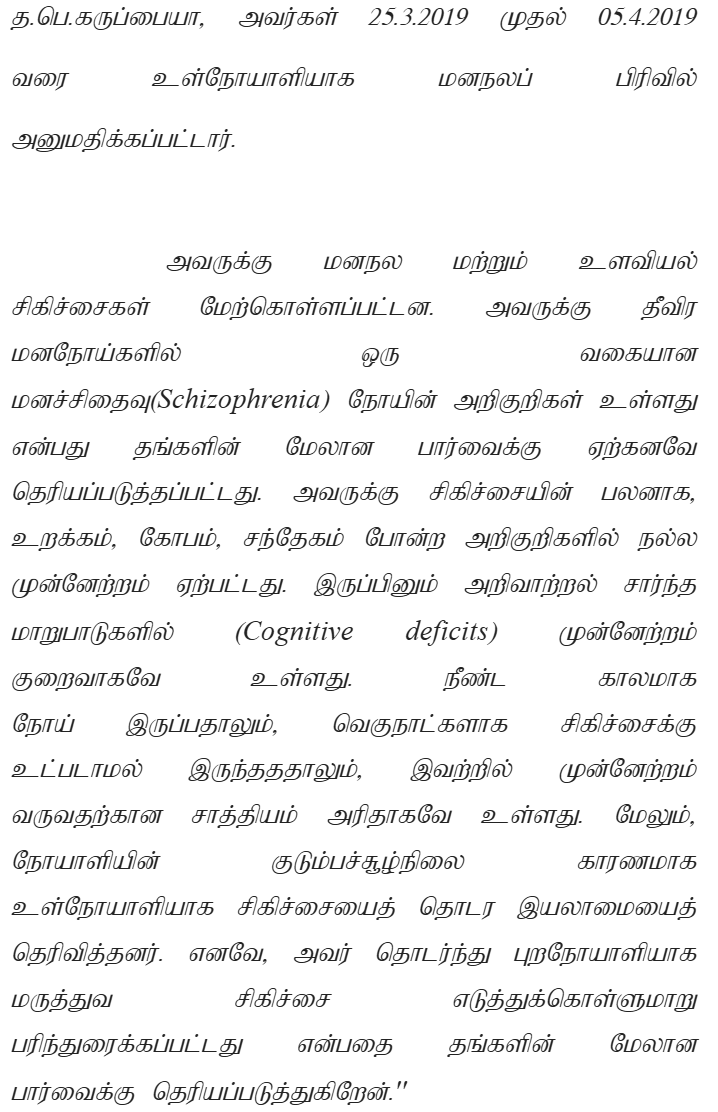
9. The learned counsel for the appellant would submit that the prosecution has not proved its case beyond all reasonable doubts; the trial Court has failed to consider the fact that the appellant is a mentally retarded person and has erred in relying upon the evidence of PW1 to PW3, which is artificial and unnatural; and the prosecution has totally suppressed the injures sustained by the accused at the time of the occurrence; PW2 has clearly deposed that during the scuffle, the appellant/accused also
The prosecution must prove the mental fitness of the accused at the time of the crime; failure to do so leads to acquittal as per Section 84 IPC.

The court upheld the conviction under Section 302 IPC since the accused was found fit to stand trial, and the defense of unsoundness of mind was not substantiated.

An accused can be exonerated if not aware of wrongfulness due to unsoundness of mind, requiring examination of circumstantial behavior surrounding the crime.

Absence of motive does not negate direct evidence of guilt in murder cases as established through testimonies and circumstantial evidence.

The absence of a clear motive does not negate a murder conviction, and the defence of insanity requires proof of incapacity to understand the nature of the act, which was not established.

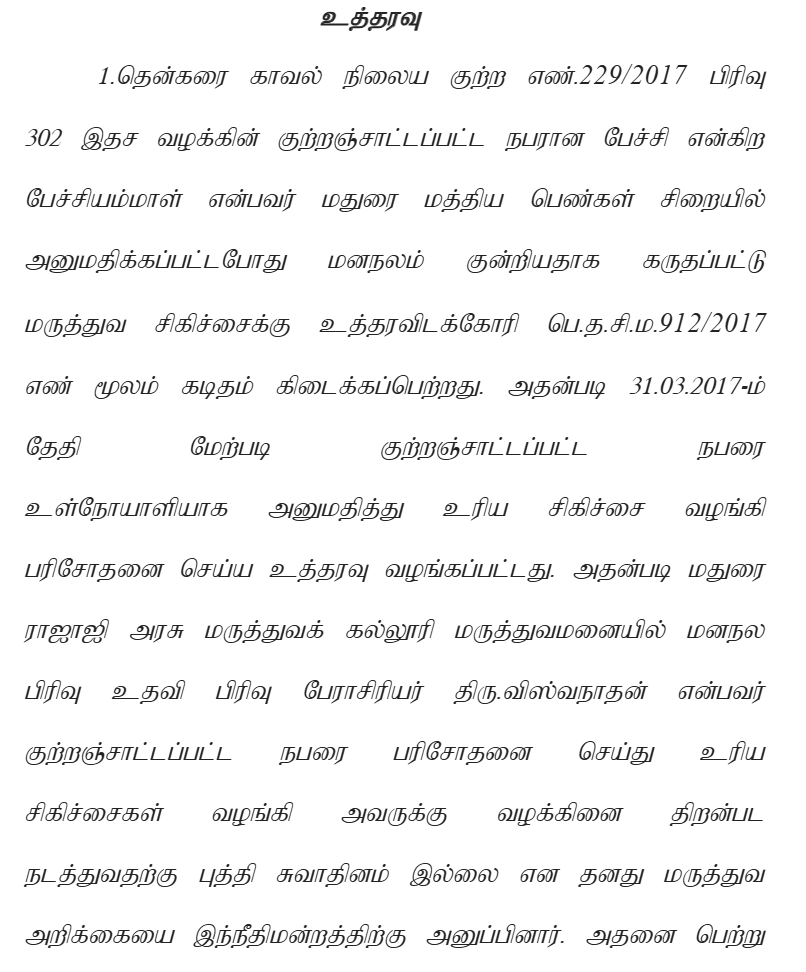
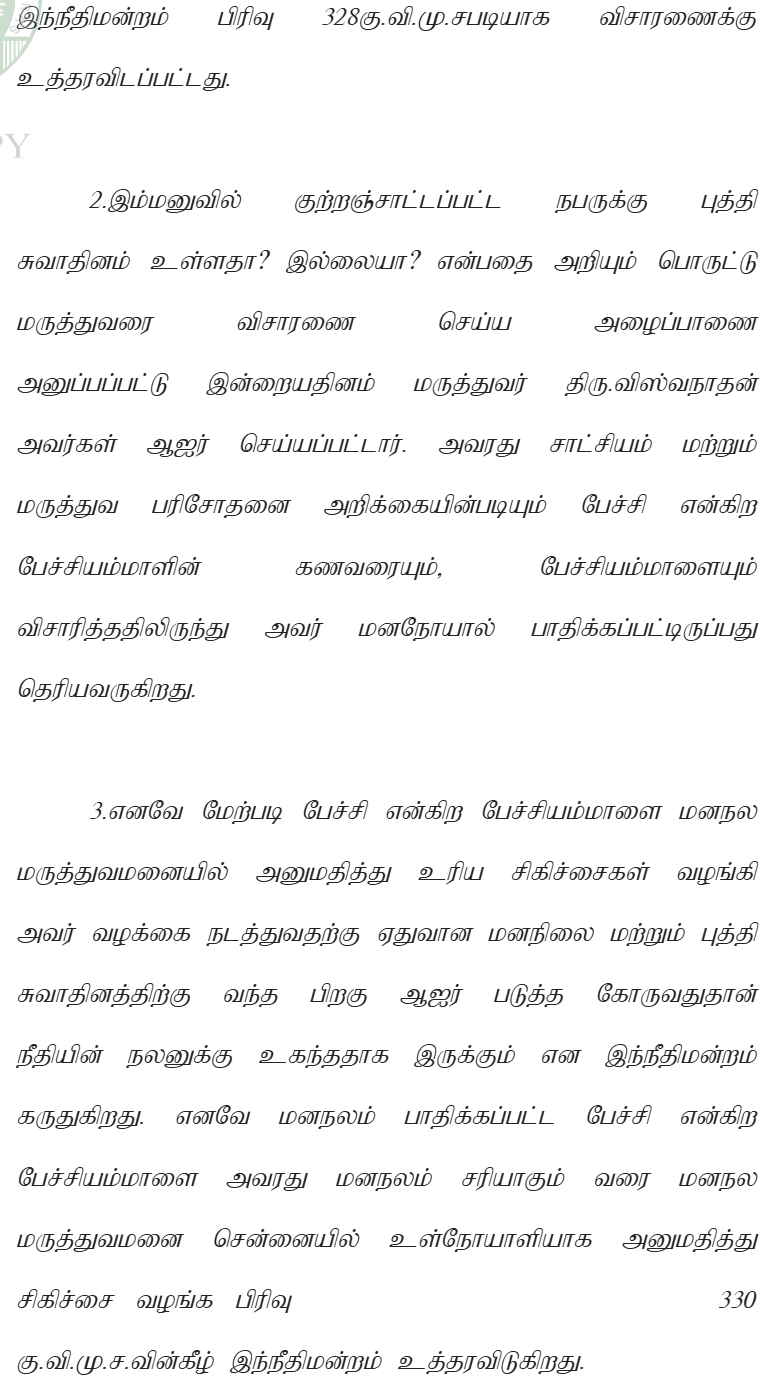
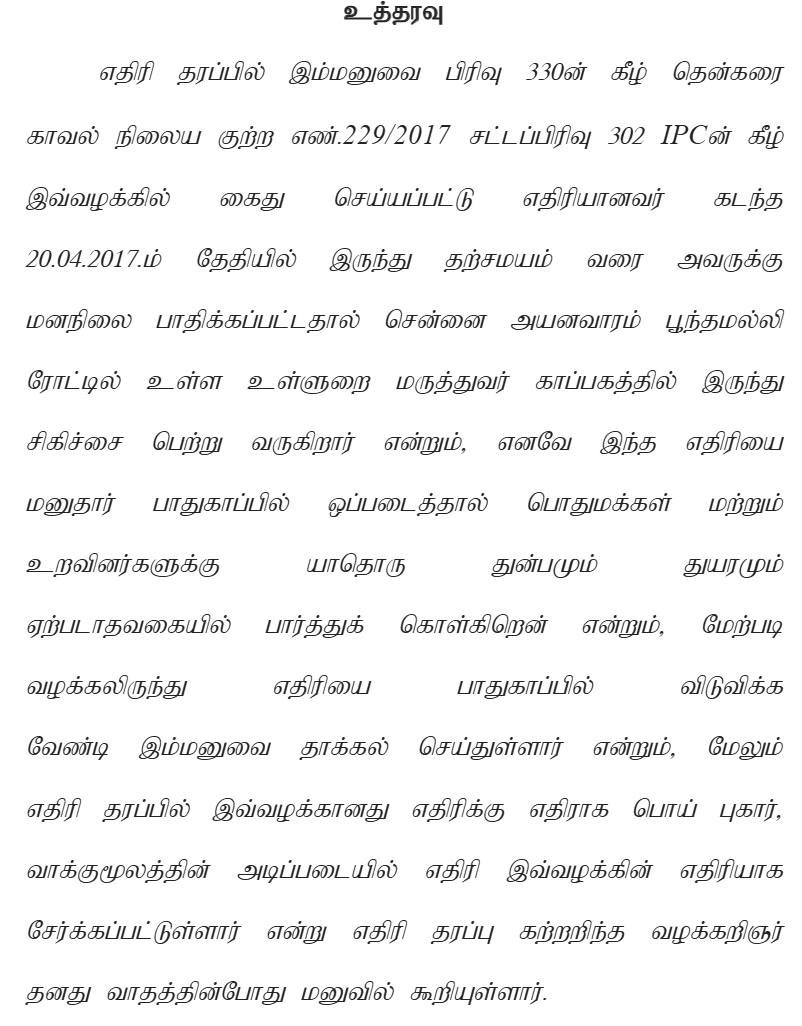
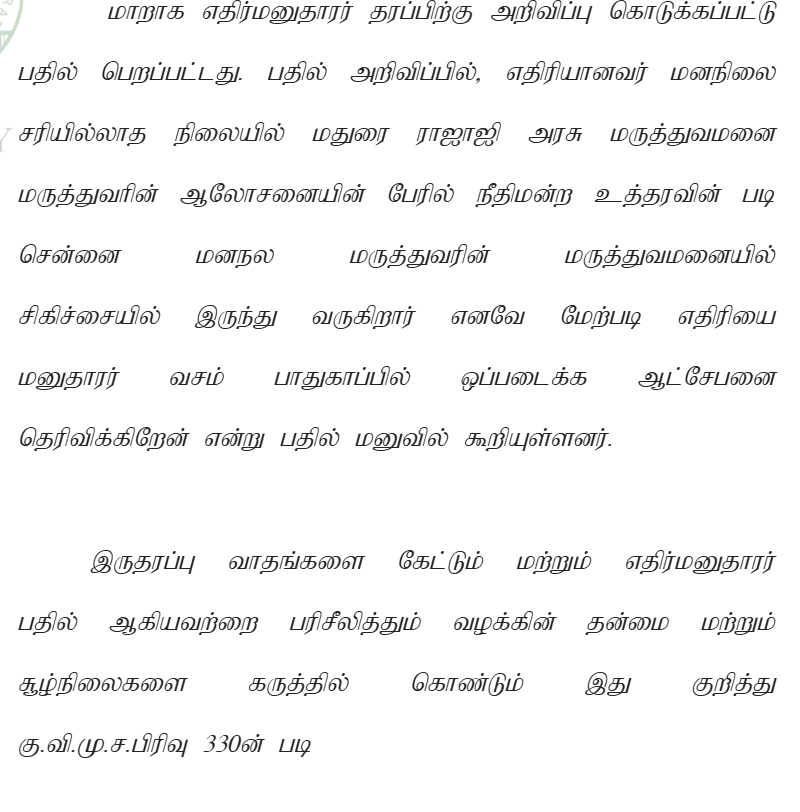
A person with a significant mental illness, at the time of the offence, may be deemed incapable of criminal responsibility under IPC Section 84.

The duty of the Investigating Officer to subject the accused to immediate medical examination and place the evidence before the court in cases of suspected mental illness, and the importance of provi....
The main legal point established in the judgment is the court's interpretation of the accused's mental state and the plea of insanity in relation to the commission of the crime. The court also emphas....
Assault with stick in sudden quarrel without premeditation falls under Exception 1 to Section 300 IPC, reducing Section 302 to 304 Part I conviction.



An indispensable Tool for Legal Professionals, Endorsed by Various High Court and Judicial Officers
Please visit our Training & Support
Center or Contact Us for assistance

Scan Me!
India’s Legal research and Law Firm App, Download now!


For Daily Legal Updates, Join us on :



 Back to top


