
 Back
Back





BEFORE THE MADURAI BENCH OF MADRAS HIGH COURT
G.K.ILANTHIRAIYAN, R.POORNIMA, JJ.
Vasudevan – Appellant
Versus
The State Represented by Inspector of Police, Bazzer Police Station – Respondent
Crl. Appeal (MD) Nos. 640, 736 of 2022
Decided On : 28-01-2026
| Table of Content |
|---|
| 1. fatal assault during a quarrel leading to death. (Para 2 , 3 , 5) |
| 2. arguments regarding intention and provocation. (Para 6 , 7) |
| 3. prosecution's failure to establish mens rea for murder. (Para 8 , 16) |
| 4. court's reliance on intention in homicide classification. (Para 20) |
| 5. modification of sentences and convictions. (Para 22 , 23 , 25) |
JUDGMENT :
G.K. ILANTHIRAIYAN, J.
1. These appeals have been filed as against the Judgment passed in S.C.No.143 of 2019, dated 07.09.2022, on the file of the learned Additional Sessions and District Court, Ramanathapuram District.
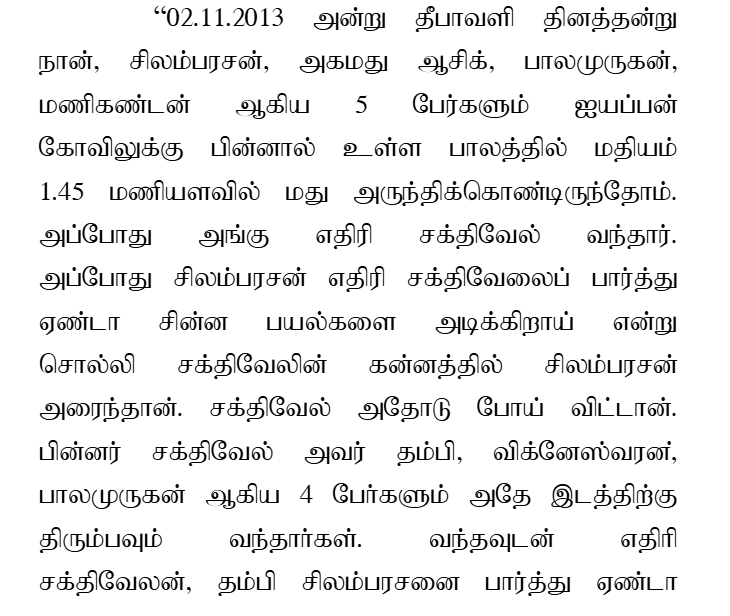
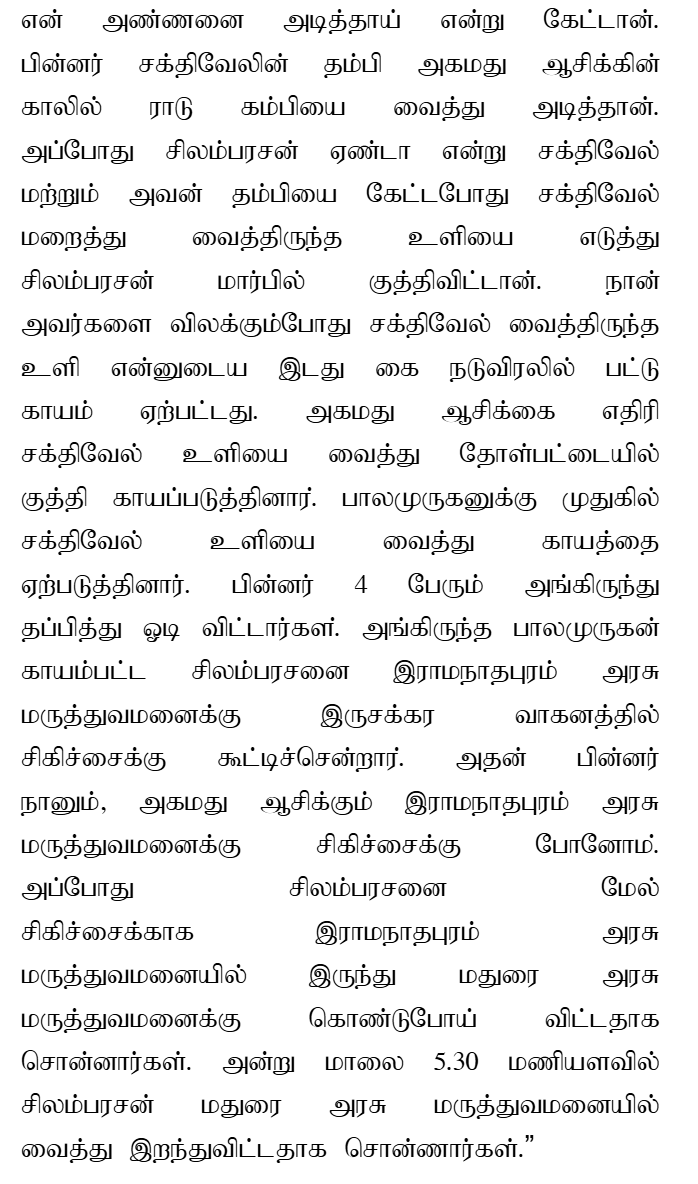
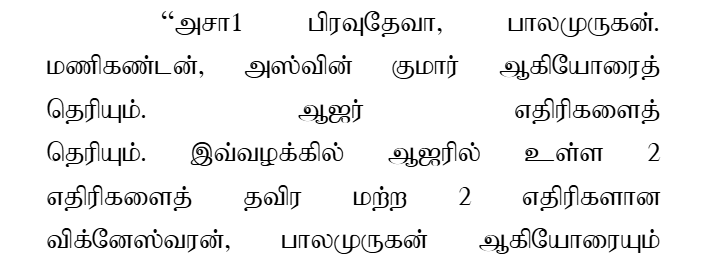
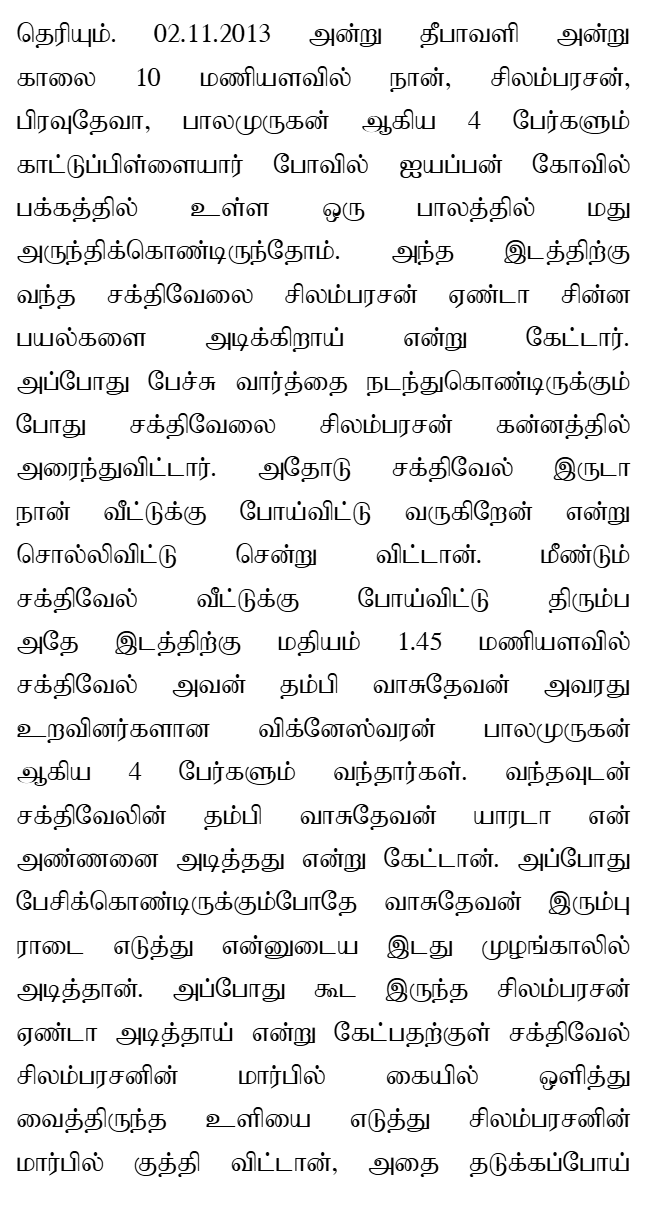
2. The case of the prosecution is that during Deepavali on 02.11.2013, while the complainant, along with his friends, was consuming liquor, there was a quarrel between A.1 and deceased with regard to previous dispute. Therefore, the deceased slapped A. 1. Immediately, A.1 left the place and returned to the scene of crime along with A.2 to A.4 in order to do away with the life of the deceased. On the same day, at about 01.45 p.m., A.2 attacked the deceased with an iron rod, while A.1 attacked the deceased with a chisel on his chest. The other accused caught hold the deceased and A.1 assaulted him, causing grievous injuries that led to the deceased’s death.
3. On the complaint, the respondent registered the F.I.R in Crime No.342 of 2013 for the offences punishable under Sections 324 and 302 of I.P.C. After completion of investigation, the respondent filed a final report and the same has been taken cognizance by the Trial Court.
4. On the side of the prosecution, in order to bring the charges to home, they examined P.W.1 to P.W.17 and Exs.P1 to P18 were marked. The prosecution produced Material Objects M.O.1 to M.O.5. On the side of the accused, no witnesses were examined and no documents were produced before the Trial Court.
5. On perusal of the oral and documentary evidence, the Trial Court found A.1 guilty for the offences punishable under Sections 302 and 324 (2 counts) of I.P.C. A.1 was sentenced to undergo Life Imprisonment and also imposed a fine of Rs.5,000/- in default, to undergo six months Simple Imprisonment for the offence punishable under Section 302 of I.P.C He was also sentenced to undergo six months Rigorous Imprisonment for each count and also imposed a fine of Rs.1,000/- for each count in default, to undergo one month Simple Imprisonment for each count for the offence punishable under Section 324 of I.P.C. The Trial Court found A.2 guilty for the offence punishable under Section 324 of I.P.C and he was also sentenced to undergo six months Rigorous Imprisonment and was also imposed a fine of Rs.1,000/- in default, to undergo one month Simple Imprisonment. The trial Court acquitted A.3 and A.4. Aggrieved by the same, the present appeals have been filed by the Accused Nos.1 and 2 as appellants.
6. The learned counsel appearing for the appellants submitted that even according to the case of the prosecution, the deceased attacked A.1 and as such, on sudden provocation A.1 attacked him with a chisel. A.2 attacked one of the injured witnesses on his leg with an iron rod. Therefore, they had no intention to do away with the life of the deceased at any point of time. Hence, the charge under Section 302 of IPC is not at all applicable to A.1. There are contradictions and discrepancies in the witnesses testimony and evidence. Further, the prosecution failed to establish the motive to attract the offence punishable under Section 302 of IPC. The prosecution also failed to prove essential ingredients of offence and the Trial Court convicted A.1 based on an extra-judicial confession statement. In order to prove any crime, mens rea is essential. Especially in the case of murder, it is the degree of intention that determines whether an act classifies as culpable homicide or murder. Therefore, since the prosecution failed to prove motive or intention, which is the essential ingredients of mens rea, it was not appropriate for the Trial Court to have convicted A.1
The court distinguished culpable homicide from murder based on intentions and provocation, identifying a lack of mens rea for a murder conviction.
The distinction between murder and culpable homicide hinges on the intention of the accused, with grave provocation leading to a conviction under Section 304 Part II instead of Section 302.

Court determined the threshold for proving intent in murder cases, emphasizing the necessity of establishing clear circumstantial evidence and distinguishing between murder and culpable homicide.

The court determined that the absence of premeditation and intent to kill qualified the act as culpable homicide under Section 304 Part II of the IPC.
A conviction for culpable homicide requires establishing intent, which was lacking in this case, leading to a revised charge under Section 304 Part II IPC.

The court established that a lack of premeditation and intent to kill can lead to a conviction under Section 304 IPC instead of Section 302 IPC in cases of sudden provocation.

The court established that sudden provocation can reduce a murder charge to culpable homicide under Section 304 if the act occurs without premeditation and in the heat of passion.

The court established that culpable homicide can be distinguished from murder based on the presence of intention and premeditation, particularly in cases of sudden provocation.
The court clarified that intention to kill is pivotal in distinguishing between murder and culpable homicide, confirming conviction under Section 304 Part II given absence of intent despite a fatal a....

The appellate court modified the conviction from Section 302 to Section 304 IPC, recognizing the absence of premeditation and intention to kill during a sudden altercation influenced by the accused's....



An indispensable Tool for Legal Professionals, Endorsed by Various High Court and Judicial Officers
Please visit our Training & Support
Center or Contact Us for assistance

Scan Me!
India’s Legal research and Law Firm App, Download now!


For Daily Legal Updates, Join us on :



 Back to top


