
 Back
Back





IN THE HIGH COURT OF JUDICATURE AT MADRAS
N. ANAND VENKATESH, J.
Vetri Maaran - Petitioner
Versus
The Chairman Central Board Of Film Certification, Films Division Complex –Respondent
WP No. 31016 of 2025 and WMP No. 34757 of 2025
Decided On : 29-08-2025
-
ORDER :
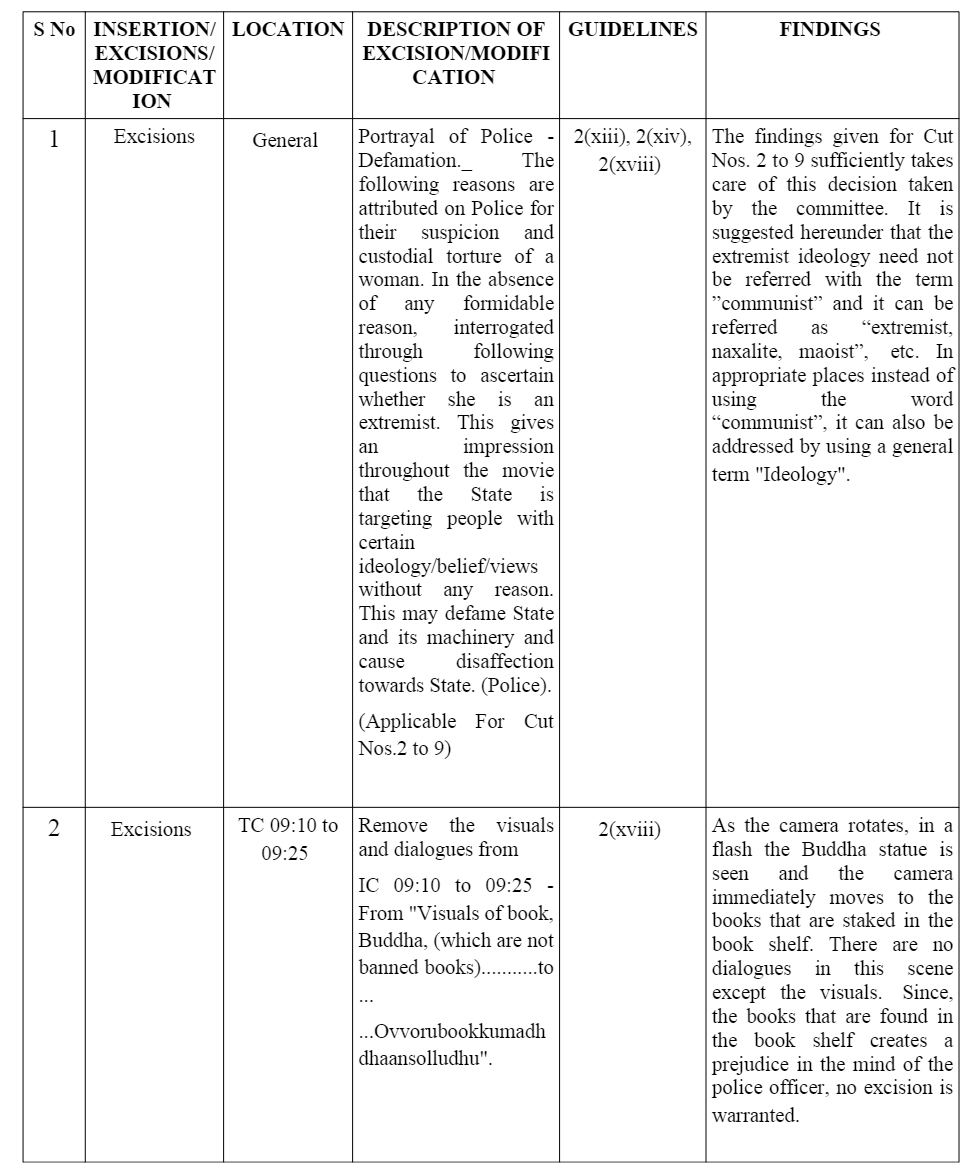
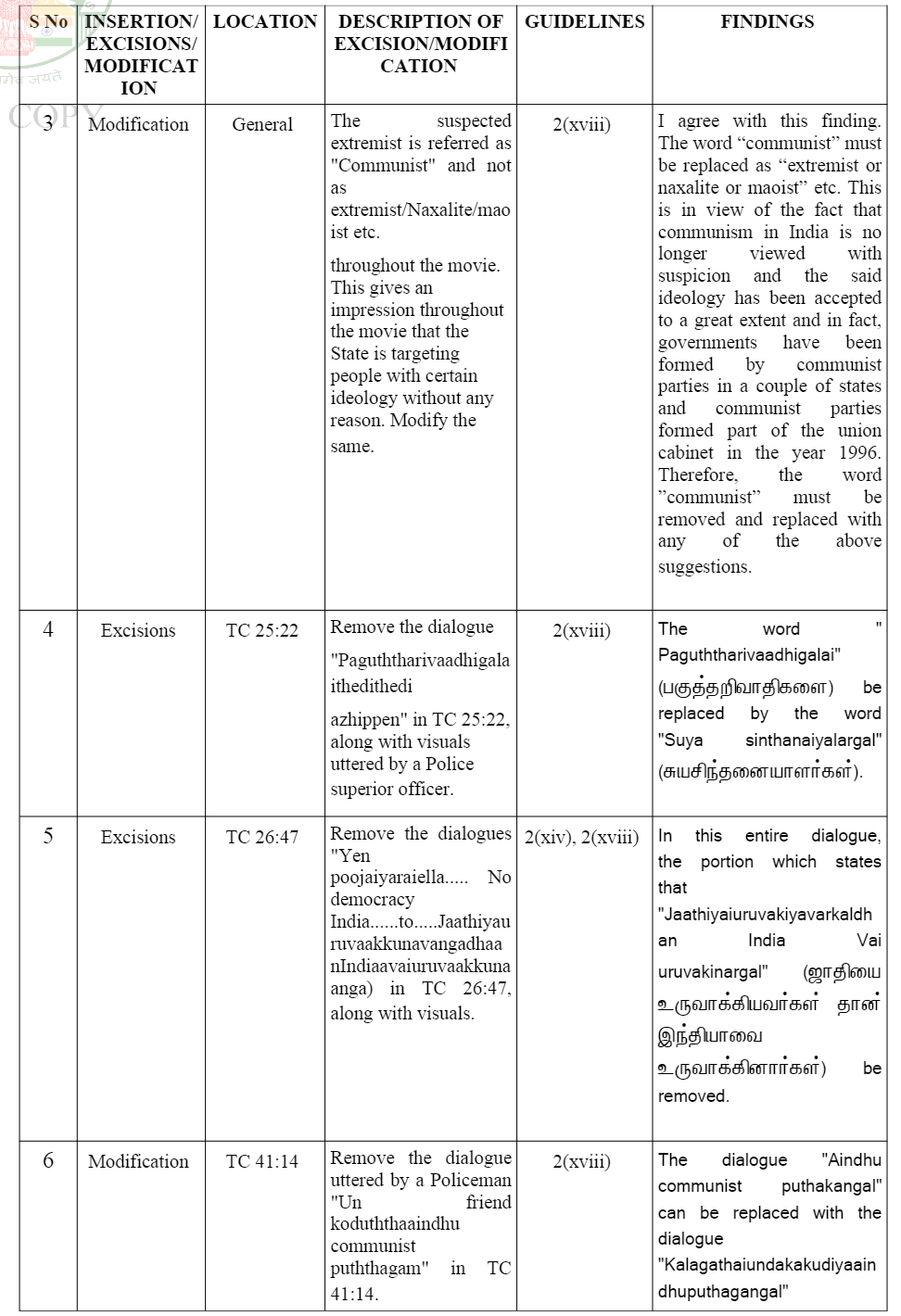
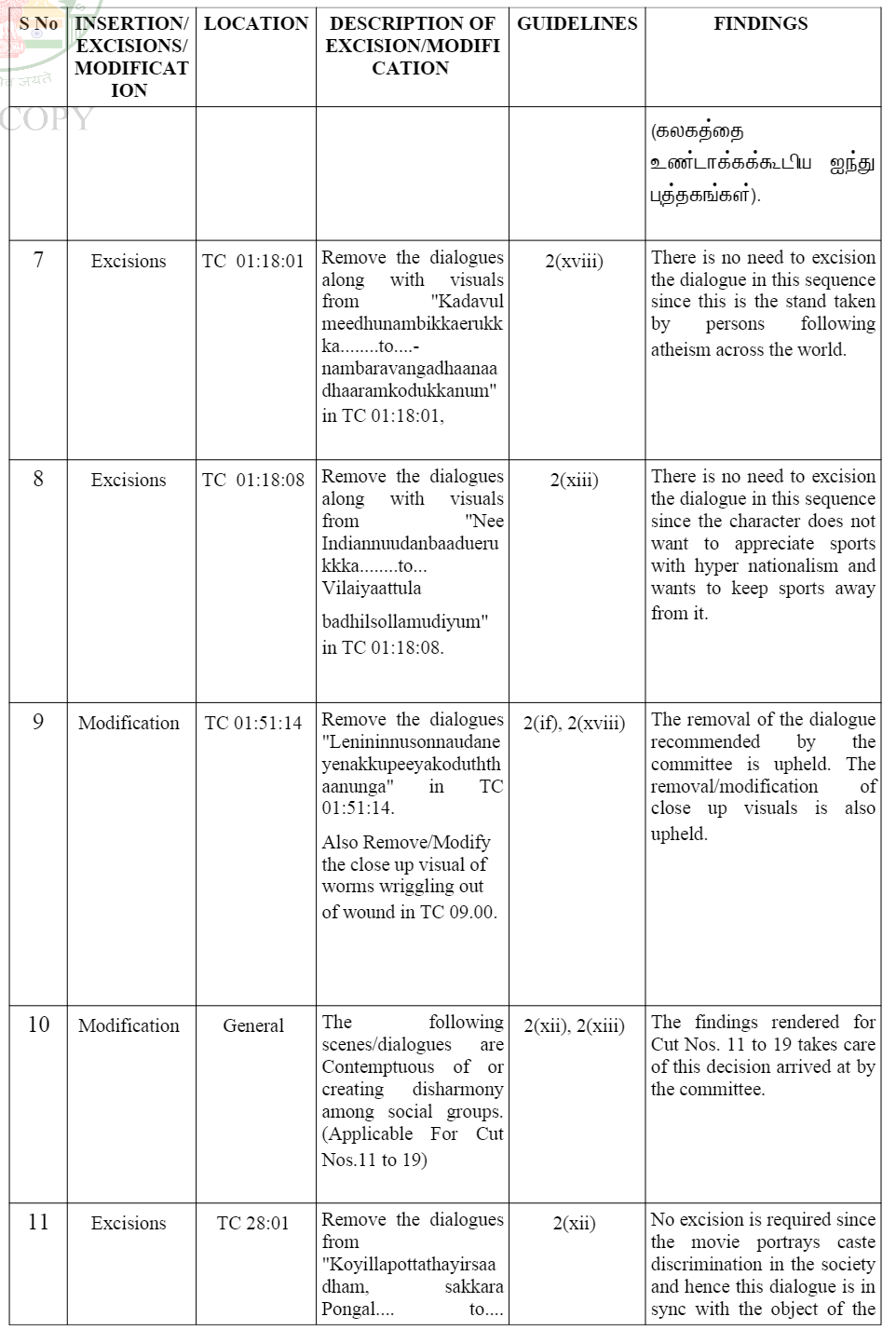
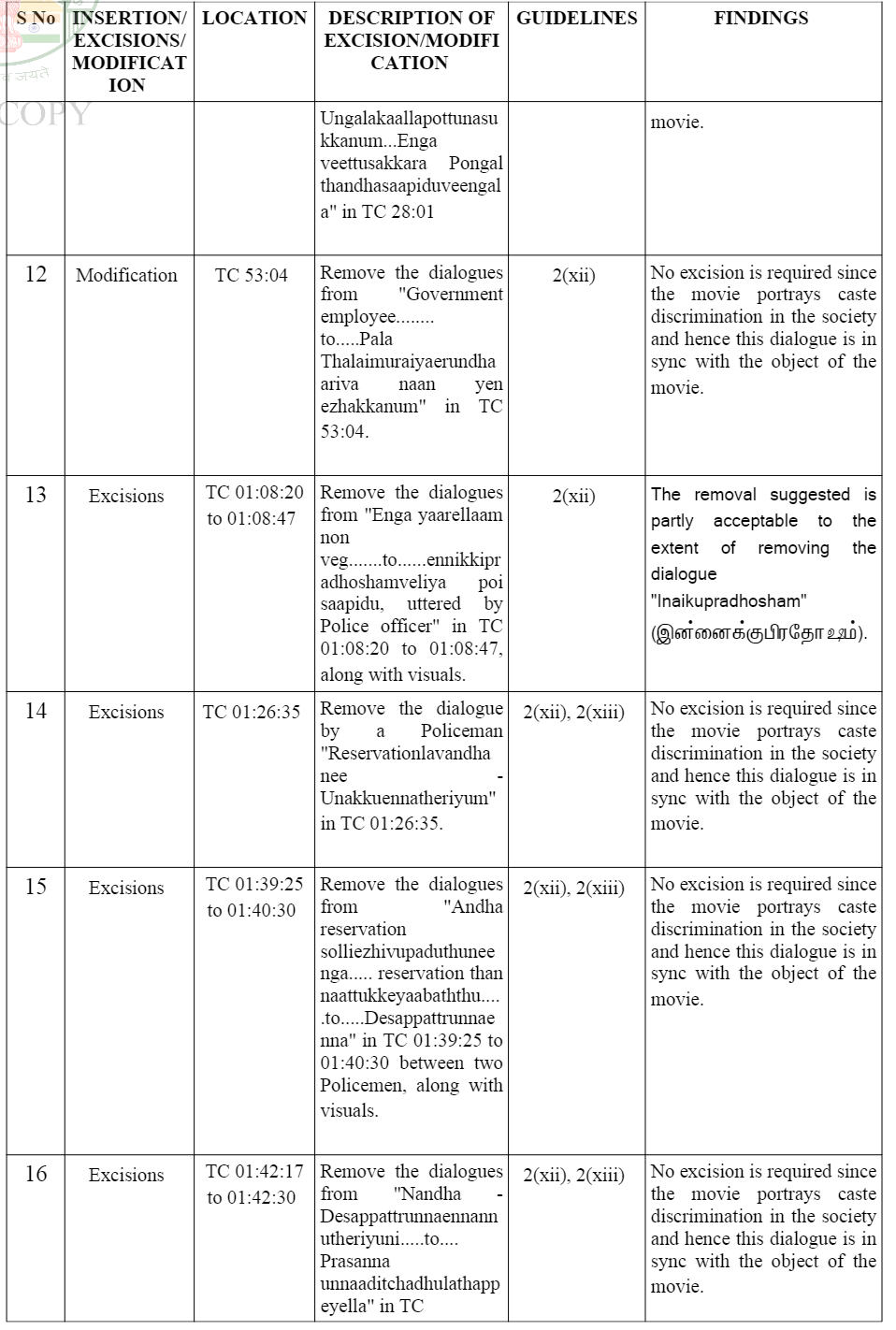
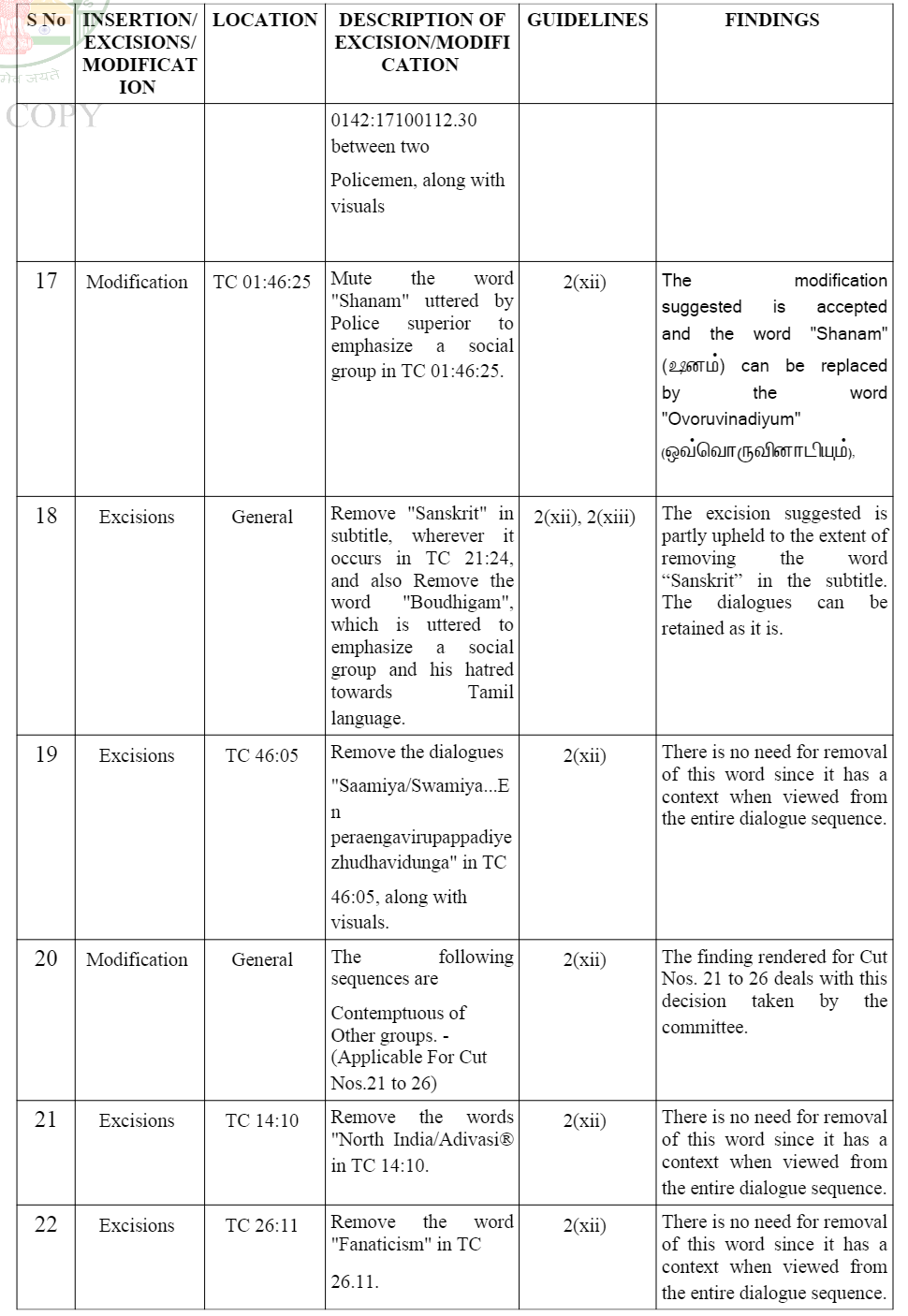
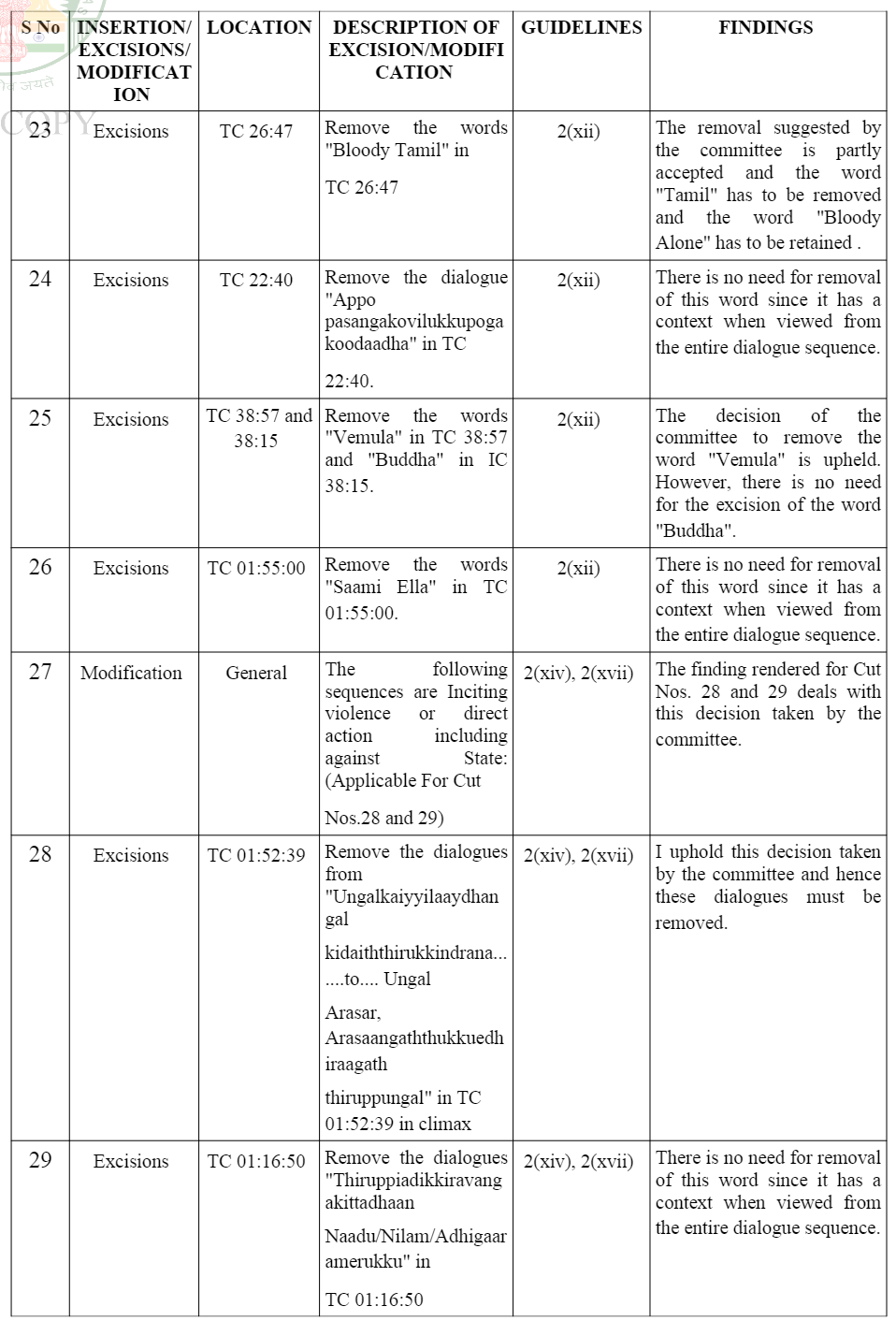
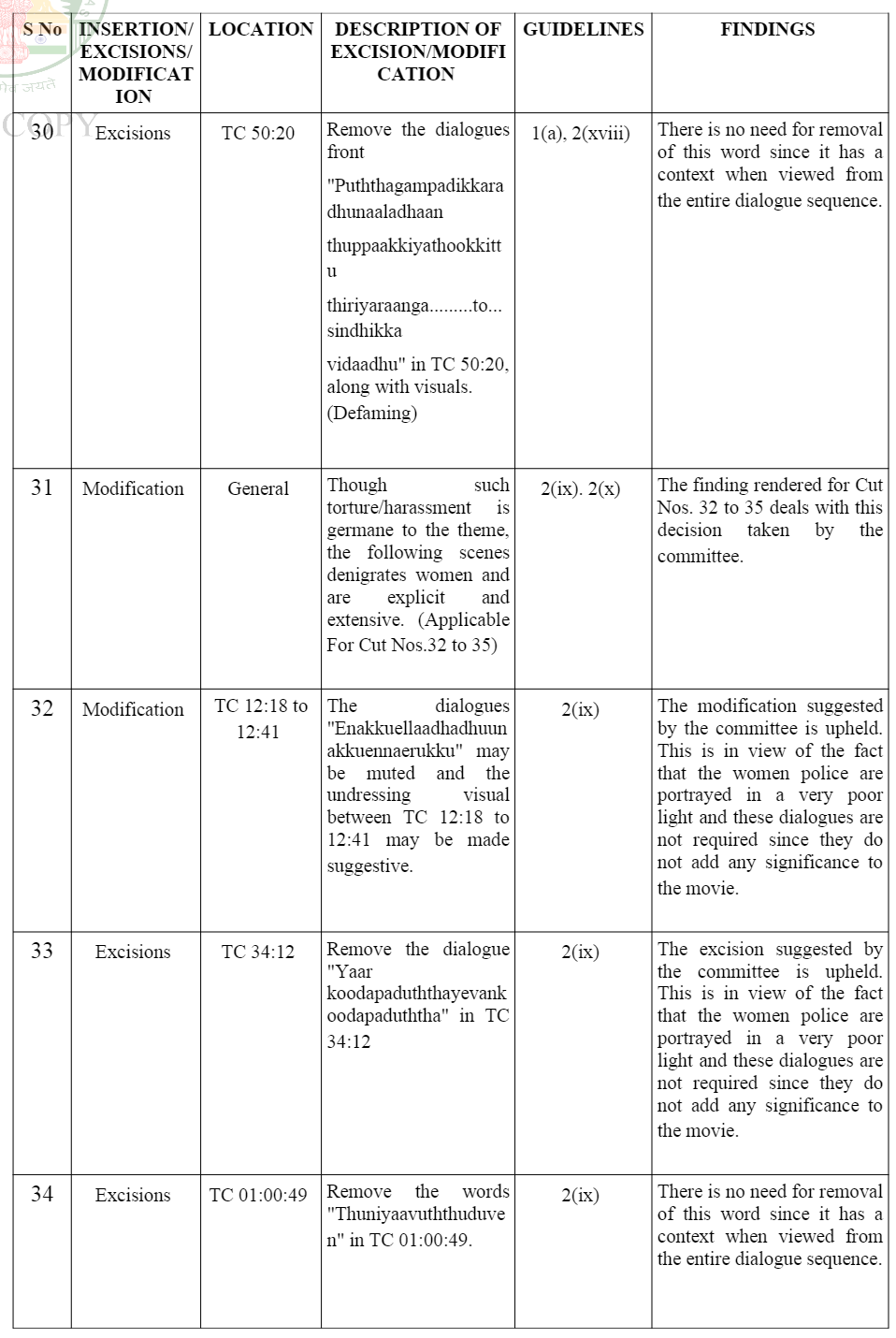
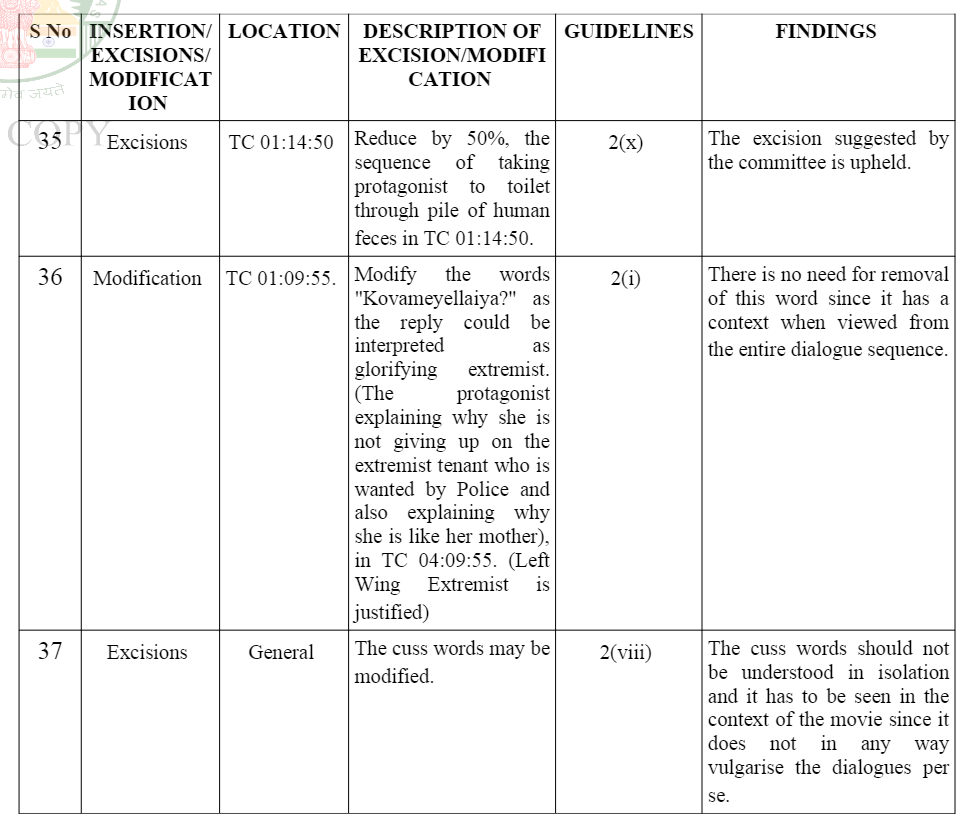
1. This writ petition, under Article 226 of the Constitution, calls into question the recommendations of the Revising Committee (the Committee) of the Central Board of Film Certification (CBFC) dated 13.06.2025, directing the petitioner to excision/modify visuals, dialogues, scenes etc., and for a consequential direction to the 1st respondent to issue appropriate certification for the movie "Manushi".
2. On an earlier occasion, the petitioner had approached this Court and filed W.P.No.18036 of 2025 for a direction to the 2nd respondent to consider and pass orders on the representation dated 29.03.2025, wherein, the petitioner had requested for re-examining the movie "Manushi". This writ petition was disposed of by an order dated 17.06.2025. The background of this case and the developments that took place can be properly appreciated by extracting the earlier order hereunder:
2. When the writ petition came up for hearing on 04.06.2025, this Court passed the following orders :
-
“ This writ petition has been filed seeking issuance of a writ of mandamus directing the second respondent to consider the representation made by the petitioner on 29.03.2025 and to issue a speaking order after re~examining the movie -Manushi- with an expert in the field.
2. Heard Mr.B.M.Subash, learned counsel for petitioner and Mr.A.Kumaraguru, learned counsel for respondents.
3. The certificate sought for by the petitioner has been refused by assigning the following reasons:
“The film is evaluated in its overall aspects. As a whole the portrayal of the movie is against the integrity of the State, contemptuous of certain Community group and defaming policies of the Government. Further the movie also stereotypes people from certain places, displays North South divide and many scenes are against the interest of the Country. Hence the Committee unanimously recommended “Refusal“ ofCertificate.”
4. Initially, such refusal was made by the Examining Committee and thereafter, it was confirmed by the Revising Committee.
5. Learned counsel appearing on behalf of the respondents submitted that if the petitioner makes necessary modification/editing by curing all those defects that were pointed out in the refusal order passed by the Screening Committee and the film is re~submitted, the same will be considered by the respondents. For this purpose, learned counsel relied upon the communication dated 21.04.2025 made to the petitioner by the second respondent.
-
6. The reasons for refusal to grant certificate for the film is broadly under five heads and they are (1)the movie is against the integrity of the State;
(2)the movie is contemptuous of certain community group;
(3)the movie defames policies of the Government;
(4)the movie also stereotypes people from certain places, which displays North South divide and;
(5)many scenes are against the interest of the country.
7. The Revising Committee would have come to such a conclusion by taking note of certain scenes and considering certain dialogues and the manner in which a particular issue is projected in the movie. Therefore, these conclusions arrived at by the Revising Committee is not subjective and such conclusions are based on facts, which are objective and which are discernible from various scenes in the movie. Therefore, if at all the petitioner has to edit scenes, dialogues etc., he must be informed about the objectionable portions in the film and only then, the petitioner can take a decision to edit those objectionable portions. If that is not spelt out in the refusal order passed by the Revising Committee, the movie maker will be groping in darkness without knowing as to which scenes and dialogues will have to be edited.
8. In view of the above, the second respondent must intimate the petitioner the objectionable portions/dialogues in the movie and the scenes in which it is portrayed. In the alternative, the petitioner can be permitted to view the movie along with the officials and such objectionable portions/scenes can b
Artistic expression in film must be balanced with state interests in censorship, ensuring compliance with statutory guidelines without undermining fundamental rights guaranteed under Article 19(1)(a)....

Artistic freedom of expression under the Cinematograph Act must be upheld, and censorship must consider the overall social message of a film without imposing undue restrictions.

The Court held that the Revising Committee is required to assign reasons while granting 'U' certificate to a film with excisions and that no reasons were assigned by the Revising Committee in this ca....


Point of law : Movie – Foul language - freedom of speech and expression to every citizen as per Article 19 (1)(a) of the Constitution of India. But the above types of critics will be doing an injusti....

The judgment emphasizes the creative freedom of filmmakers in addressing social issues and the responsibility to depict the overall message of the film in determining its permissibility. It also high....

The court's decision emphasized the limited scope of intervention under Article 226 of the Constitution of India in film certification matters and highlighted the availability of remedies under the C....

The authority to refer a film to a Revising Committee exists only before a certification decision is made; post-approval actions are without jurisdiction.
The court emphasized that failure to challenge a decision undermines writ petition maintainability, highlighting the necessity of procedural fairness in legal proceedings.



An indispensable Tool for Legal Professionals, Endorsed by Various High Court and Judicial Officers
Please visit our Training & Support
Center or Contact Us for assistance

Scan Me!
India’s Legal research and Law Firm App, Download now!


For Daily Legal Updates, Join us on :



 Back to top


