
 Back
Back





BEFORE THE MADURAI BENCH OF MADRAS HIGH COURT
R. POORNIMA, J.
Edwin David – Appellant
Versus
Lawrence – Respondent
S.A.Nos.1649 of 2003 and 237 of 2004 and C.M.P.Nos.1448 & 7508 of 2004
Decided On : 01-06-2026
| Table of Content |
|---|
| 1. procedural background and consolidation of matters involving the same transaction. (Para 1 , 2 , 3 , 4) |
| 2. contentions regarding validity of gift deeds, capacity of the donor, and possession. (Para 5 , 6 , 7 , 8 , 9) |
| 3. formulation of substantial questions of law regarding gift validity and procedural bars. (Para 10 , 11 , 12) |
| 4. court's findings on the genuineness of the gift deeds based on conduct and evidence. (Para 13 , 15 , 16 , 17 , 18 , 19 , 20 , 21) |
| 5. legal requirements for gift revocation, limitation of suits, and proof of execution. (Para 22 , 23 , 24 , 25 , 26 , 27 , 28 , 29) |
| 6. final orders affirming the validity of the gift and disposing of the appeals. (Para 30 , 31) |
JUDGMENT :
R. POORNIMA, J.
1.S.A.No.1649 of 2003 has been filed against the judgment and decree passed in A.S.No.208 of 1997, dated 07/03/2003 by the Subordinate Court, Padmanabhapuram, confirming the judgment and decree, dated 22/07/1997 passed in O.S.No.673 of 1995 by the Additional District Munsif, Eraniel, whereas S.A.No.237 of 2004 has been filed against the judgment and decree passed in A.S.No.140 of 2002, dated 22/09/2003 by the District Judge, Kannniyakumari at Nagercoil, reversing the judgment and decree, dated 19/10/2001 passed in O.S.No.78 of 1997 by the Subordinate Judge, Padmanabapuram.
2. O.S.No.673 of 1995 was filed by one Lawrence and another, for permanent injunction against the defendants 1 to 3. The first defendant is her father, the second defendant is the brother and the third defendant is another sister of the 1st plaintiff. The suit was decreed as prayed for by the plaintiffs. Against which, the defendants filed appeal in A.S.No.208 of 1997 before the Subordinate Court, Padmanabhapuram, but the same was dismissed on 07/03/2003 by confirming the judgment and decree, dated 22/07/1997 passed in O.S.No.673 of 1995 by the Additional District Munsif, Eraniel. Against which, S.A No.1649 of 2003 was filed by first defendant as appellant.
3. O.S.No.78 of 1997 was filed by Edwin David, the father of the 1st plaintiff in OS No.673 of 1995 with a prayer to cancel the gift deeds, dated 17/02/1987 executed in favour of Smt.Lawrence and to declare his title and to deliver the possession and also sought for permanent injunction. The suit was dismissed by the Trial court, dated 19/10/2001. Against which, the plaintiff filed an appeal in AS No.140 of 2002, before the District Judge, Kanyakumari @ Nagercoil, which was allowed by the first appellate court, dated 22/09/2003 thereby setting aside the judgment and decree of the trial court. Against which, SA No. 237 of 2004 was filed by the defendant in OS No.78 of 1997.
4. Since both the second appeals arising out of the same transaction and the parties also same, this Court is inclined to render a common judgment.
5. The case of the plaintiff in O. S.No.673 of 1995 and O.S .No.78 of 1997 in brief:-
Based on the facts narrated, the submissions available to Lawrence, settlee, summarised below:
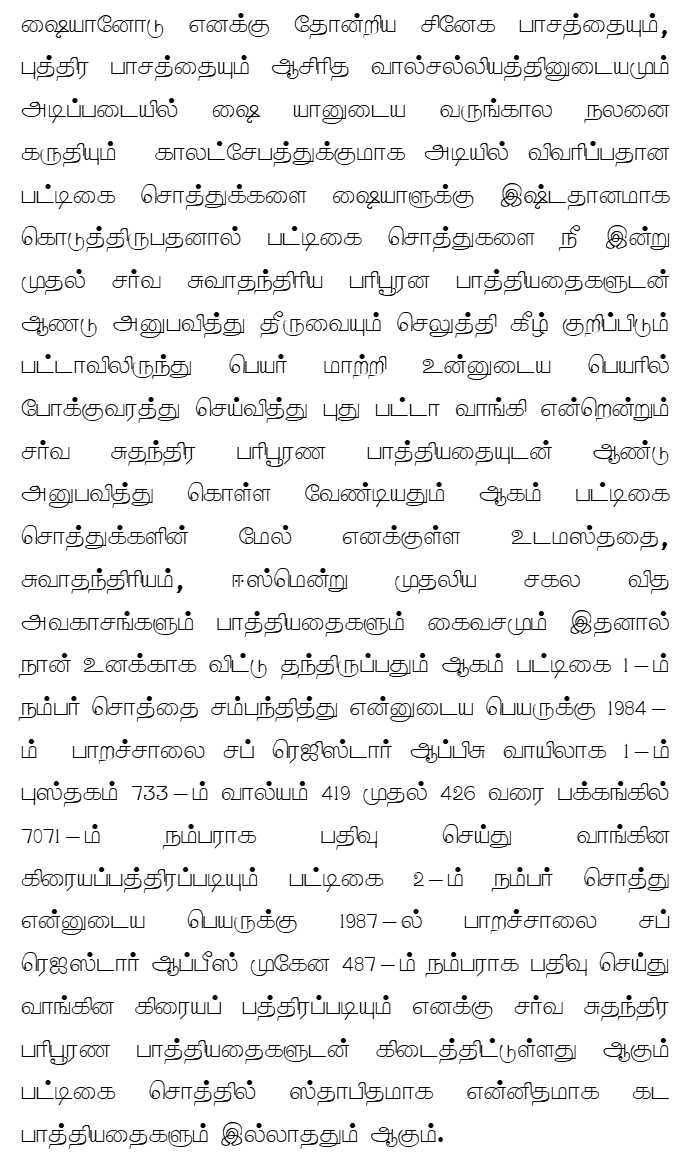
Exs.A2 to A4 gift deeds were executed in 1987 by her father Tr.Edwin David and were accepted by the donee. The recitals themselves disclose delivery of possession. Further Exs.A21 to A29 letters allegedly written by Edwin David acknowledge the execution of the settlements in favour of Lawrence for her maintenance, thereby supporting the genuineness of the transactions. In the revocation deed, Edwin David did not plead that the settlements were obtained by undue influence or that he was mentally unsound. But the stated reason was alleged failure of maintenance and want of alternative property. No medical records or independent evidence were produced to establish his mental incapacity at the time of execution.
6. On the very same day, Edwin David executed other transactions (Exs.A6 and A7), indicating that he was capable of understanding and executing documents.
7. A completed gift cannot ordinarily be revoked unilaterally except in circumstances recognized by Section 126 of the Transfer of Property Act. If E

A completed gift deed cannot be unilaterally revoked under Section 126 of the Transfer of Property Act without proof of fraud or coercion, and claims of mental incapacity are defeated by evidence of ....

The cancellation of a gift settlement deed is invalid if the donor reserves no right to revoke it, and the burden of proving absence of undue influence lies on the beneficiary.

A registered gift deed cannot be unilaterally revoked; cancellation requires judicial intervention to be valid.

Unilateral cancellation of a registered gift deed is invalid without specific grounds for revocation under law, reaffirming 'possession follows title'.


The revocation of a settlement deed must be justified under the legal provisions, and the court will consider evidence and legal principles to determine the validity of such revocation.


The court ruled that a gift deed requires valid execution, while stating possession need not be transferred for validity, and that unprobated wills are valid in specific jurisdictions under the India....



An indispensable Tool for Legal Professionals, Endorsed by Various High Court and Judicial Officers
Please visit our Training & Support
Center or Contact Us for assistance

Scan Me!
India’s Legal research and Law Firm App, Download now!


For Daily Legal Updates, Join us on :



 Back to top


