1. Judicial review of Speaker's order dismissing disqualification petition under Tenth Schedule for alleged defection. (Para 2 , 4 )
 Back
Next 


2026 Supreme(Telangana) 364
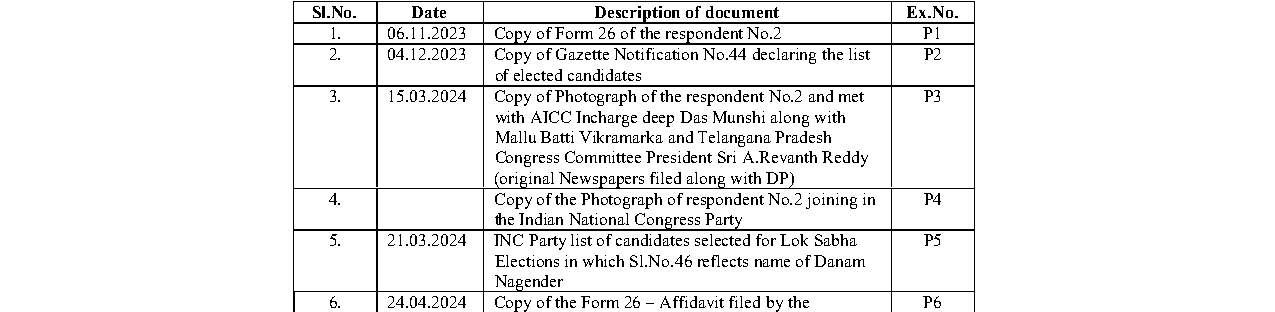
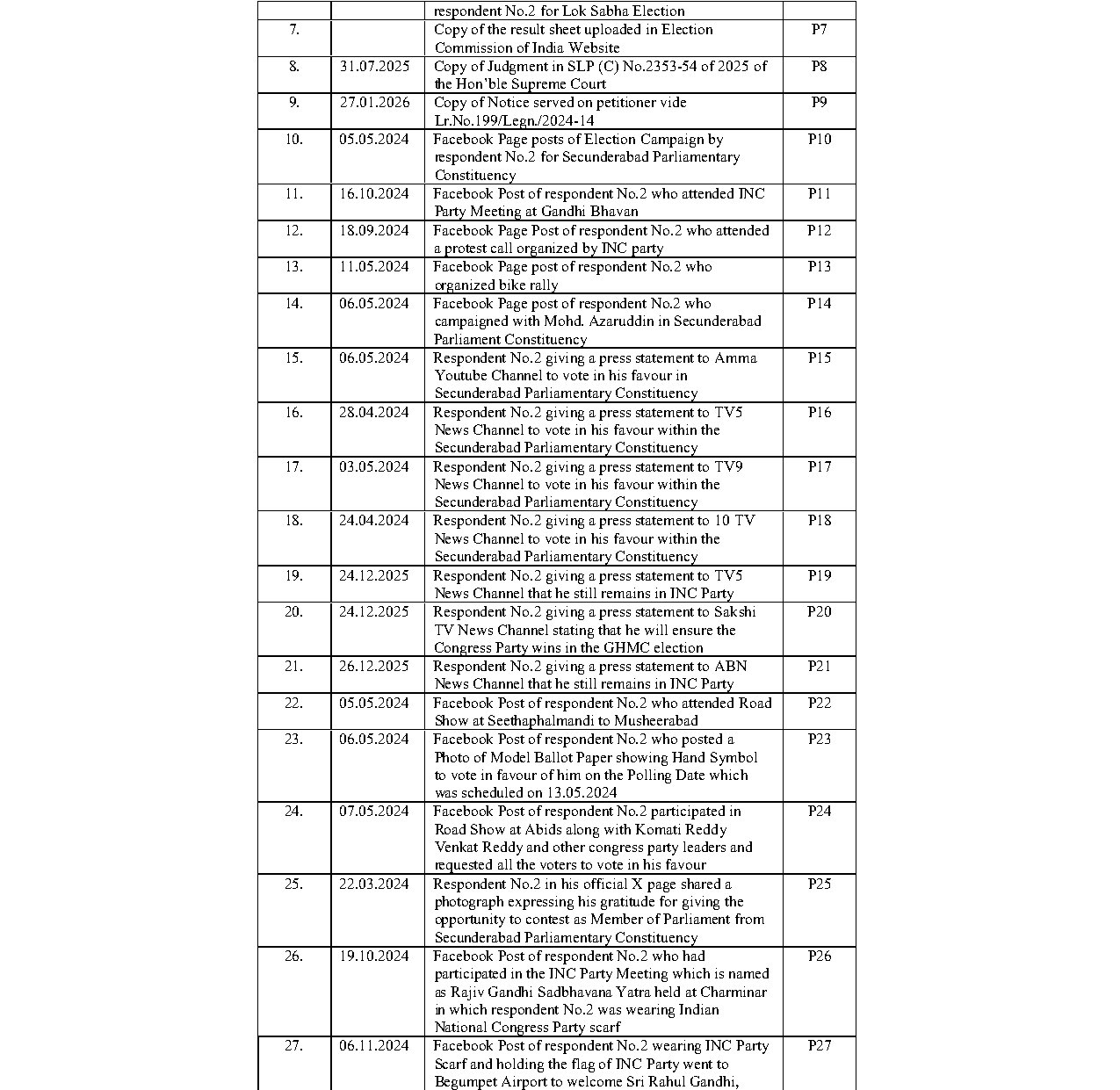
IN THE HIGH COURT FOR THE STATE OF TELANGANA AT HYDERABAD
Aparesh Kumar Singh, C.J., G.M.Mohiuddin, J.
Alleti Maheshwar Reddy - Petitioner
Versus
The Hon’ble Speaker-cum-Tribunal under the Tenth Schedule to the Constitution of India, Telangana Legislative Assembly at Hyderabad, Telangana, Presided by the Speaker and another - Respondents
Writ Petition Nos.8409 and 8647 of 2026
Decided On : 18-09-2026
Important Points
Contesting elections on another party's ticket constitutes "voluntarily giving up membership" under Paragraph 2(1)(a) of the Tenth Schedule. The Speaker's jurisdiction extends to such external conduct, and procedural rules for disqualification petitions are directory, not mandatory, and cannot defeat the constitutional mandate.
Subject
Constitutional Law - Anti-Defection Law
Act Referred
Members of Telangana Legislative Assembly Disqualification on Ground of Defection Rules : R.6, R.6(6), R.6(7), R.7
CONSTITUTION OF INDIA : Art.191, Art.191(1), Art.191(2), Art.226, Art.32
BHARATIYA SAKSHYA ADHINIYAM : S.80, S.81
HARYANA PANCHAYATS RAJ ACT : S.176
CIVIL PROCEDURE CODE : O.6 R.15(4)
CONSTITUTION OF INDIA : Art.191, Art.191(1), Art.191(2), Art.226, Art.32
BHARATIYA SAKSHYA ADHINIYAM : S.80, S.81
HARYANA PANCHAYATS RAJ ACT : S.176
CIVIL PROCEDURE CODE : O.6 R.15(4)
Headnote
(A) Constitution of India - Article 191(2) and Tenth Schedule - Paragraph 2(1)(a) and 2(1)(b) - State Legislative Assembly (Disqualification on Ground of Defection) Rules - Rules 3, 6, and 7 - Law of Evidence - Presumptions as to Gazettes - Disqualification of a member of the House - Contesting Parliamentary elections on another party's ticket - Voluntarily giving up membership - The Speaker's jurisdiction under the Tenth Schedule is not confined to conduct within the House; contesting elections on another party's ticket amounts to voluntarily giving up membership under Paragraph 2(1)(a) (Paras 20, 21, 23). Condonation by the political party is relevant only under Paragraph 2(1)(b) regarding voting or abstaining, and not under Paragraph 2(1)(a) (Paras 26, 41). Procedural rules for filing disqualification petitions are directory in nature and cannot be used to defeat the substantive constitutional mandate of the Tenth Schedule (Paras 44, 47). Public documents and Gazettes are presumed genuine (Paras 33, 34).
(B) Judicial Review - Scope - Decisions of the Speaker acting as a Tribunal under the Tenth Schedule are amenable to judicial review on grounds of violation of constitutional mandates, mala fides, non-compliance with rules of natural justice, and perversity (Paras 14, 15).
Facts of the case:
An elected member of the State Legislative Assembly filed nomination as a candidate for another party in the Parliamentary elections and campaigned against the original party. The Speaker dismissed the disqualification petition on the grounds that the conduct was outside the House, lacked sufficient evidence in the form of certified copies, and the petition had procedural verification defects.
Findings of Court:
The Speaker's decision was perverse and violated constitutional mandates. Contesting elections on another party's ticket constitutes voluntarily giving up membership. Procedural defects in the petition are curable as the rules are directory.
Issues: Whether the decision of the Speaker is vitiated on the grounds of judicial review and whether the member incurred disqualification in terms of Paragraph 2(1)(a) of the Tenth Schedule.
Ratio Decidendi: The court held that contesting parliamentary elections on another party's ticket is a clear act of voluntarily giving up membership of the original party. The Speaker's jurisdiction extends to such external conduct. Procedural rules cannot override the constitutional objective of preventing defection.
Result: Writ petitions allowed; impugned decision set aside; respondent declared disqualified from 23.04.2024 and the seat rendered vacant.
Legal Category Hierarchy
-
constitutional law
- tenth schedule
- disqualification of members
- practice and procedure
Advocates Appeared:
For the Petitioner: Learned Senior Counsel Sri K.Vivek Reddy representing Sri Naraparaju Avaneesh
For the Respondent: Sri A.Tulsi Raj Gokul, Learned Senior Counsel Sri A.Venkatesh, representing Sri K.V.Rusheek Reddy
For the Petitioner: Learned Senior Counsel Sri K.Vivek Reddy representing Sri Naraparaju Avaneesh
For the Respondent: Sri A.Tulsi Raj Gokul, Learned Senior Counsel Sri A.Venkatesh, representing Sri K.V.Rusheek Reddy
Table of Contents
2. Whether contesting parliamentary election on another party's ticket constitutes voluntarily giving up party membership, disputed by respondent. (Para 5 , 6 , 7 , 8 , 9 , 10 , 11 )
3. Speaker's finding that jurisdiction is confined to conduct within House is perverse and violates constitutional mandate. (Para 20 , 23 , 25 , 41 , 55 )
4. Contesting election as candidate of another party amounts to voluntarily giving up membership under Paragraph 2(1)(a), Tenth Schedule. (Para 21 , 56 , 71 , 75 )
5. Writ petitions allowed; Speaker's orders set aside; respondent disqualified from date of filing nomination as INC candidate. (Para 79 )
6. What is the scope of judicial review of a Speaker's decision under the Tenth Schedule?
Judicial review is permissible on grounds of violation of constitutional mandate, mala fides, non-compliance with natural justice, and perversity. (Para 14 , 15 )
7. Does contesting a parliamentary election on another party's ticket constitute 'voluntarily giving up membership' under Paragraph 2(1)(a) of the Tenth Schedule?
Yes, such conduct amounts to voluntarily giving up membership of the original political party, even without formal resignation. (Para 21 , 26 , 72 )
8. Are the procedural rules under the Disqualification Rules mandatory or directory?
The rules are directory; procedural defects do not invalidate a disqualification petition or defeat the constitutional mandate of the Tenth Schedule. (Para 44 , 47 , 75 )
9. What is the date from which disqualification for defection takes effect?
Disqualification relates back to the date of the act constituting defection, such as filing nomination as a candidate of another party. (Para 58 , 59 , 60 )
10. Can a political party's silence or condonation of conduct cure a disqualification under Paragraph 2(1)(a) of the Tenth Schedule?
No, condonation is relevant only under Paragraph 2(1)(b) for voting against party whip, not for voluntarily giving up membership under Paragraph 2(1)(a). (Para 26 , 74 )
ORDER:
Aparesh Kumar Singh, CJ.
Learned Senior Counsel Sri K.Vivek Reddy, representing learned counsel Sri Naraparaju Avaneesh appears for the petitioner in W.P.No.8409 of 2026.
Learned Senior Counsel Sri Gandra Mohan Rao, representing learned counsel Sri S.Santosh Kumar, appears for the petitioner in W.P.No.8647 of 2026.
Learned counsel Sri A.Tulsi Raj Gokul appears for respondent No.1 in W.P.Nos.8409 and 8647 of 2026.
Learned Senior Counsel Sri A.Venkatesh, representing learned counsel Sri K.V.Rusheek Reddy, appears for respondent No.2 in W.P.No.8409 of 2026.
Learned Senior Counsel Sri Gourav Agrawal, representing learned counsel Sri K.V.Rusheek Reddy, appears for respondent No.2 in W.P.No.8647 of 2026.
2. The decision of the Hon’ble Speaker-cum-Tribunal under the Tenth Schedule to the Constitution of India, Telangana Legislative Assembly at Hyderabad (hereinafter referred to as, ‘the Hon’ble Speaker’), passed in Disqualification Petition Nos.4 of 2024 and 1 of 2024, dated 11.03.2026 is the subject matter of these writ petitions.
Facts in W.P.No.8409 of 2026:
3. W.P.No.8409 of 2026 has been preferred by an elected Member of the Telangana Legislative Assembly (MLA) from a political party – Bharatiya Janata Party (BJP). The Hon’ble Speaker by the impugned order 11.03.2026 has dismissed the Disqualification Petition No.4 of 2024 filed by the petitioner on 01.07.2024 seeking a declaration that the respondent No.2 is disqualified from continuing as a Bharat Rashtra Samithi (BRS) party MLA. The relevant facts pleaded and borne from record are as under:
4. In December, 2023, respondent No.2 was elected as an MLA representing BRS party from 60-Khairatabad Constituency. In the said election, he has contested against the candidate nominated by the Indian National Congress (INC) party. On 23.04.2024, respondent No.2 filed his nomination as a candidate set up by the INC party for the 2024 Lok Sabha elections, 08-Secunderabad Parliament Constituency. Respondent No.2 campaigned against the BRS party candidate from the Secunderabad Constituency and ultimately he lost the 2024 Lok Sabha elections. The petitioner, therefore filed the Disqualification Petition before the Hon’ble Speaker on 01.07.2024 seeking a declaration that respondent No.2 was disqualified from continuing as a BRS party MLA as he has voluntarily given up his membership of the BRS party by contesting in the Parliamentary elections against the BRS party and on behalf of the INC party. There was extensive delay in disposing of the disqualification petition. Finally on 31.07.2025, vide judgment in Civil Appeal arising out of SLP (C) Nos.2353-54 of 2025, the Hon’ble Supreme Court directed the Hon’ble Speaker to decide the disqualification petition within three months ( Padi Kaushik Reddy vs. the State of Telangana , 2025 INSC 912). On 11.03.2026, the Hon’ble Speaker dismissed the disqualification petition. The same has been made subject matter of challenge on 17.03.2026.
Submissions of learned Senior Counsel Sri K.Vivek Reddy, representing learned counsel Sri Naraparaju Avaneesh, appearing for the petitioner in W.P.No.8409 of 2026:
5. Learned Senior Counsel submits that the Hon’ble Speaker has opined that disqualification petition has to be based on the conduct within the House. The Speaker’s jurisdiction under the Tenth Schedule is confined to the conduct within the House. The conduct outside the House is only relevant if such conduct destabilises BRS’s strength or functioning in the House. That respondent No.2’s conduct of contesting elections from a different party did not amount to voluntarily giving up BRS membership under the Tenth Schedule. That respondent No.2 continued to be a BRS member because respondent No.2 never formally resigned from the BRS and did not enrol as a member of the INC party. He continued to sit with the BRS party and complied with BRS whips and has faced no disciplinary action and BRS party has condoned his conduct. That the documents relied upon by the petitio