
 Back
Back





HIGH COURT OF JUDICATURE AT ALLAHABAD
SAUMITRA DAYAL SINGH, TEJ PRATAP TIWARI, JJ.
Nadeem - Appellant
Versus
State of U.P. – Respondent
Criminal Appeal No. 580 of 2019, Criminal Appeal No. 3056 of 2015
Decided On : 11-08-2025
| Table of Content |
|---|
| 1. outline of factual background, procedural history, and conviction details. (Para 1 , 2 , 3 , 4 , 5 , 6) |
| 2. parties' contentions regarding proportionality of sentence and judicial discretion. (Para 7 , 8 , 9 , 10 , 11 , 12 , 13 , 14 , 15) |
| 3. statutory requirements for sentencing and foundational case law on aggravating/mitigating factors. (Para 16 , 17 , 18 , 19 , 20 , 21 , 22 , 23 , 24 , 25 , 26 , 27 , 28 , 29) |
| 4. necessity for structured judicial reasoning and proportionality in sentencing to avoid harsh results. (Para 30 , 31 , 32 , 33 , 34 , 35 , 36 , 37 , 38) |
| 5. application of a balancing test between identified aggravating and mitigating circumstances to determine sentence. (Para 39 , 40 , 41 , 42 , 43 , 44 , 45 , 46 , 47 , 48) |
| 6. final determination of sentence based on balancing factors and formal disposal of appeal. (Para 49 , 50 , 51 , 52 , 53) |
JUDGMENT :
1. Heard Sri Rajiv Lochan Shukla alongwith Sri Shashank Pandey and Sri Abhishek Shukla learned counsel on behalf of appellant-Khursheed, Sri Umesh Singh learned counsel for the appellant-Nadeem and Sri Vikas Goswami learned AGA-I for the State.
2. Present appeal arises from judgment and order dated 26.06.2015 passed by Sri Akhilesh Dubey Additional Sessions Judge/Fast Track Court, J.P. Nagar, in Sessions Trial No. 403 of 2011 ( State Vs. Khursheed and others), whereby the appellants as also the co-accused Amit have been convicted for offence under Section 395/120B, 397/120B IPC and sentenced for life together with fine Rs. 50,000/- each, with default sentence of two years simple imprisonment. They have also been convicted for offence under Section 412 IPC and sentenced to ten years rigorous imprisonment together with fine Rs. 25,000/- each with default sentence of one year simple imprisonment. Also, they have been convicted under Section 25 Arms Act and sentenced to two years rigorous imprisonment together with fine Rs. 2000/- and default sentence of two months - in Sessions Trial No. 401 of 2011 ( State Vs. Nadeem ) and 402 of 2011 ( State Vs. Khursheed ). The appellants have been acquitted in Sessions Trial No. 400 of 2011 for offence under Section 147, 148, 307/149 IPC and in Sessions Trial No. 404 of 2011 for the offence under Sections 395, 397 IPC.
3. Three appeals are listed before us today. One by the appellant- Nadeem (Criminal Appeal No. 580 of 2019), second by the co- accused Amit (Criminal Appeal No. 2936 of 2015) and third by the appellant-Khursheed (Criminal Appeal No. 3056 of 2015). At the outset, learned counsel for the appellant Nadeem and Khursheed have stated, they are not pressing their appeals against the order of conviction. They have confined their submissions on the point of sentence awarded, to those accused. Sri Anil Mehrotra learned counsel appearing for the third appellant-Amit stated, he would be pressing that appeal on merits, against conviction. Accordingly, we have heard Criminal Appeal No. 580 of 2019 ( Nadeem Vs. State of U.P. ) and Criminal Appeal No. 3056 of 2015 ( Khursheed Vs. State ) only. Criminal Appeal No. 2936 of 2015 ( Amit Vs. State ) is detagged from this batch. That appellant is on bail. That appeal may be listed on its own turn.
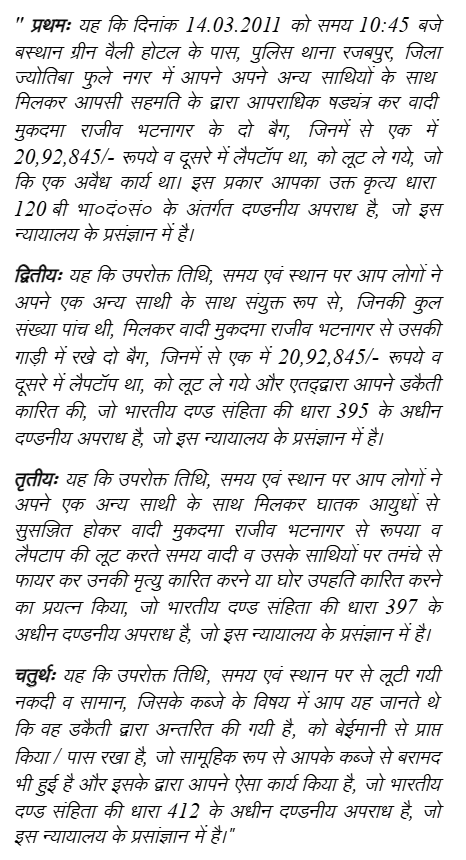
4. On the issue of sentence, it may only be noted that the present appellants were charged as below:
Common charges against the appellants Khursheed, Nadeem and co-accused Amit:
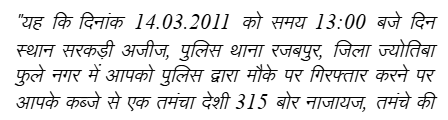
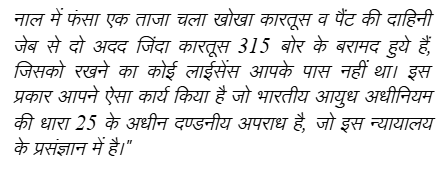
Additional charge against the appellant Khursheed (Sessions Trial No. 402 of 2011):
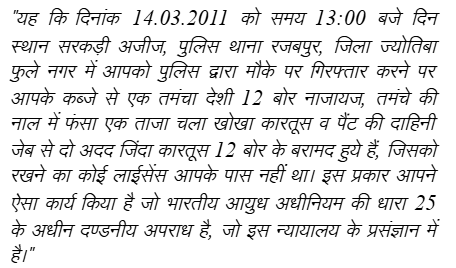
Additional charge against the appellant Nadeem (Sessions Trial No. 401 of 2011):
5. As noted above, the appellants have been convicted for offences for which they were charged in Sessions Trial No. 403 of 2011, 402 of 2011 and 401 of 2011. At the same time, it may be noted, the appellants have been acquitted of charges framed in Sessions Trial Nos. 400 of 2011 and 404 of 2011.
6. Thus, the charge found proven against the appellants is of committing dacoity with use of deadly weapon, namely firearm. In that they committed dacoity and lo
AI



An indispensable Tool for Legal Professionals, Endorsed by Various High Court and Judicial Officers
Please visit our Training & Support
Center or Contact Us for assistance

Scan Me!
India’s Legal research and Law Firm App, Download now!


For Daily Legal Updates, Join us on :



 Back to top


