
 Back
Back





IN THE HIGH COURT OF DELHI AT NEW DELHI
C. HARI SHANKAR, OM PRAKASH SHUKLA, JJ.
K K Bansal - Appellant
Versus
Koninklijke Philips Electronics Nv - Respondent
RFA(OS)(COMM) 17 of 2018, CM APPL. 31483 of 2018, CM APPL. 26137 of 2023, CM APPL. 38867 of 2023, CM APPL.38868 of 2023 & CM APPL. 66350 of 2024, RFA(OS)(COMM) 18 of 2018, CM APPL. 31488 of 2018, CM APPL. 25194 of 2023, CM APPL. 38819 of 2023, CM APPL. 38820 of 2023 & CM APPL. 66349 of 2024
Decided On : 18-05-2026
| Table of Content |
|---|
| 1. framework for establishing standard essential patents (seps) (Para 1 , 2 , 3 , 4 , 5 , 6 , 7 , 8 , 9) |
| 2. methods for proving patent infringement in seps (Para 10 , 11 , 12 , 13 , 14) |
| 3. frand licensing obligations and disclosure requirements for sep holders (Para 15 , 16 , 17 , 18 , 19 , 20 , 21 , 22 , 23 , 24 , 25) |
| 4. background of the specific patent dispute and appellate issues (Para 26 , 27 , 28 , 29 , 30 , 31 , 32 , 33 , 34 , 35 , 36 , 37) |
| 5. rival contentions and nature of decoded technology in dvd players (Para 38 , 39 , 40 , 41 , 42 , 43 , 44 , 45 , 46 , 47) |
| 6. determining essentiality of suit patent to industry standards (Para 48 , 49 , 50 , 51 , 52 , 53 , 54 , 55 , 56) |
| 7. proving infringement through evidence and product-to-claim mapping (Para 57 , 58 , 59 , 60 , 61) |
| 8. adjudication of damages based on frand royalty rates (Para 62 , 63 , 64) |
| 9. appellate arguments regarding patent exhaustion and evidence sufficiency (Para 65 , 66 , 67 , 68) |
| 10. determining scope and identification of the patented product (Para 69 , 70 , 71 , 72 , 73 , 74 , 75 , 76 , 77 , 78 , 79 , 80 , 81 , 82) |
| 11. criteria for proving sep essentiality via expert evidentiary standards (Para 83 , 84 , 85 , 86 , 87 , 88 , 89 , 90 , 91 , 92 , 93 , 94 , 95 , 96 , 97 , 98) |
| 12. necessity of direct mapping and best evidence for infringement (Para 99 , 100 , 101 , 102 , 103 , 104 , 105 , 106 , 107 , 108 , 109 , 110 , 111 , 112 , 113 , 114 , 115 , 116 , 117 , 118 , 119 , 120 , 121) |
| 13. application of the international doctrine of patent exhaustion (Para 122 , 123 , 124 , 125 , 126 , 127 , 128 , 129 , 130 , 131 , 132 , 133 , 134 , 135 , 136 , 137 , 138 , 139 , 140 , 141 , 142 , 143 , 144 , 145) |
| 14. adjudication of royalty rates and damage calculation methodology (Para 146 , 147 , 148 , 149 , 150 , 151 , 152 , 153 , 154 , 155 , 156 , 157 , 158 , 159 , 160 , 161 , 162 , 163 , 164 , 165 , 166 , 167) |
| 15. final appellate decision set aside earlier decree for lack of proof (Para 168 , 169 , 170 , 171) |
JUDGMENT :
C. HARI SHANKAR, J.
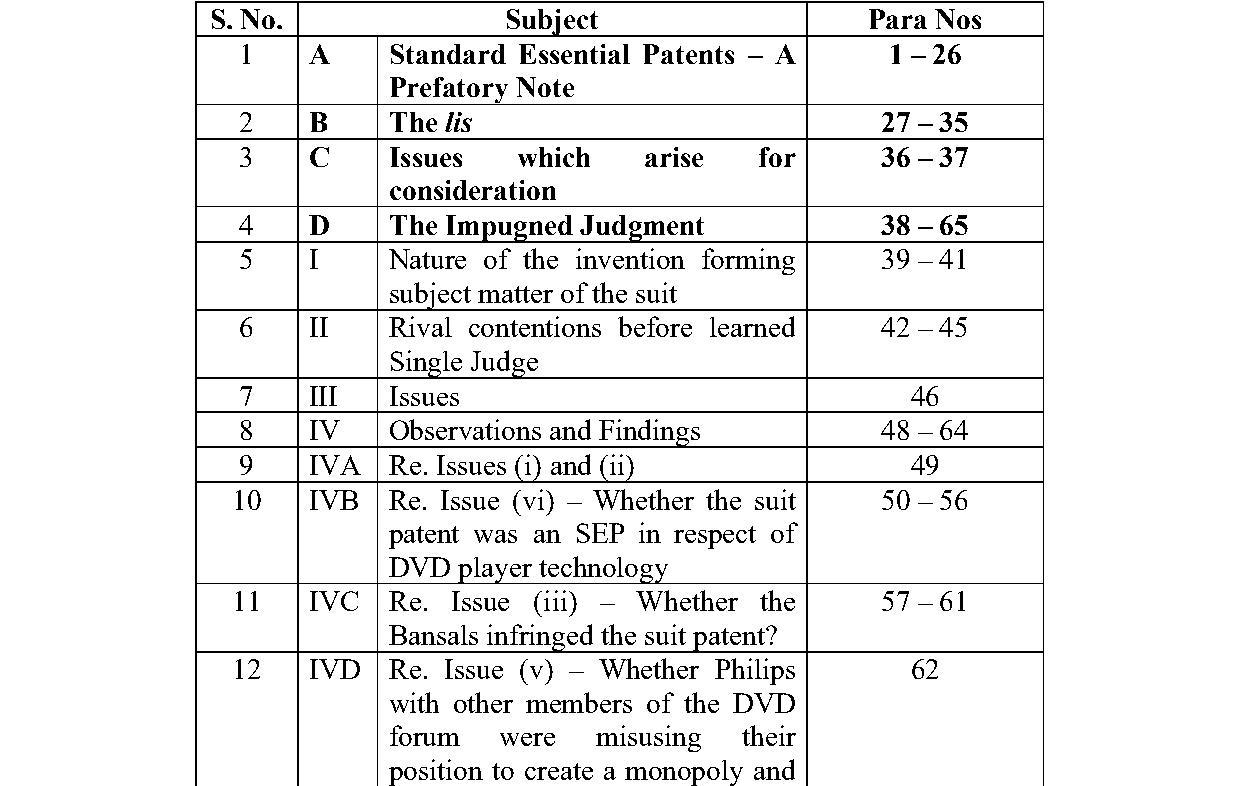
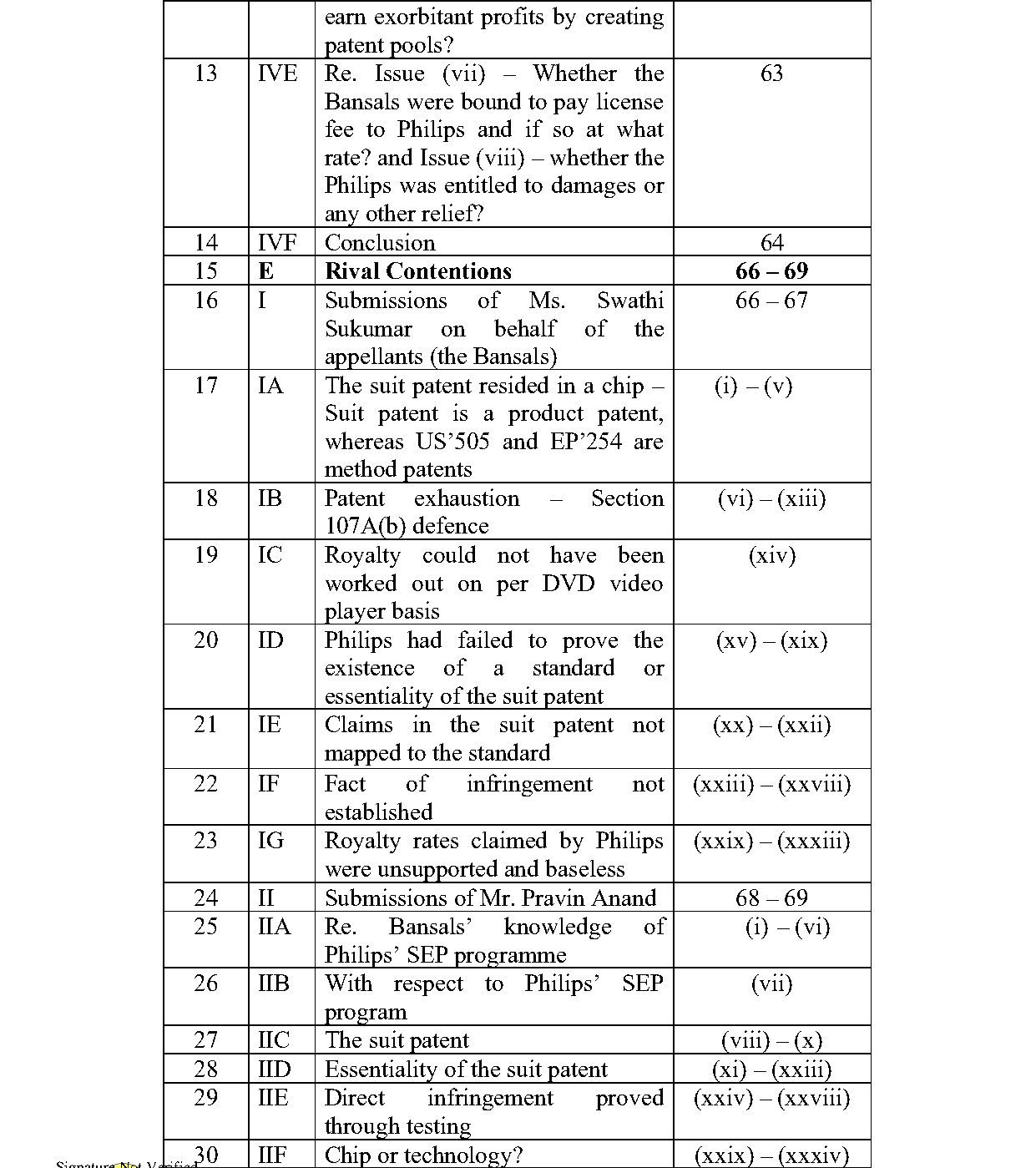
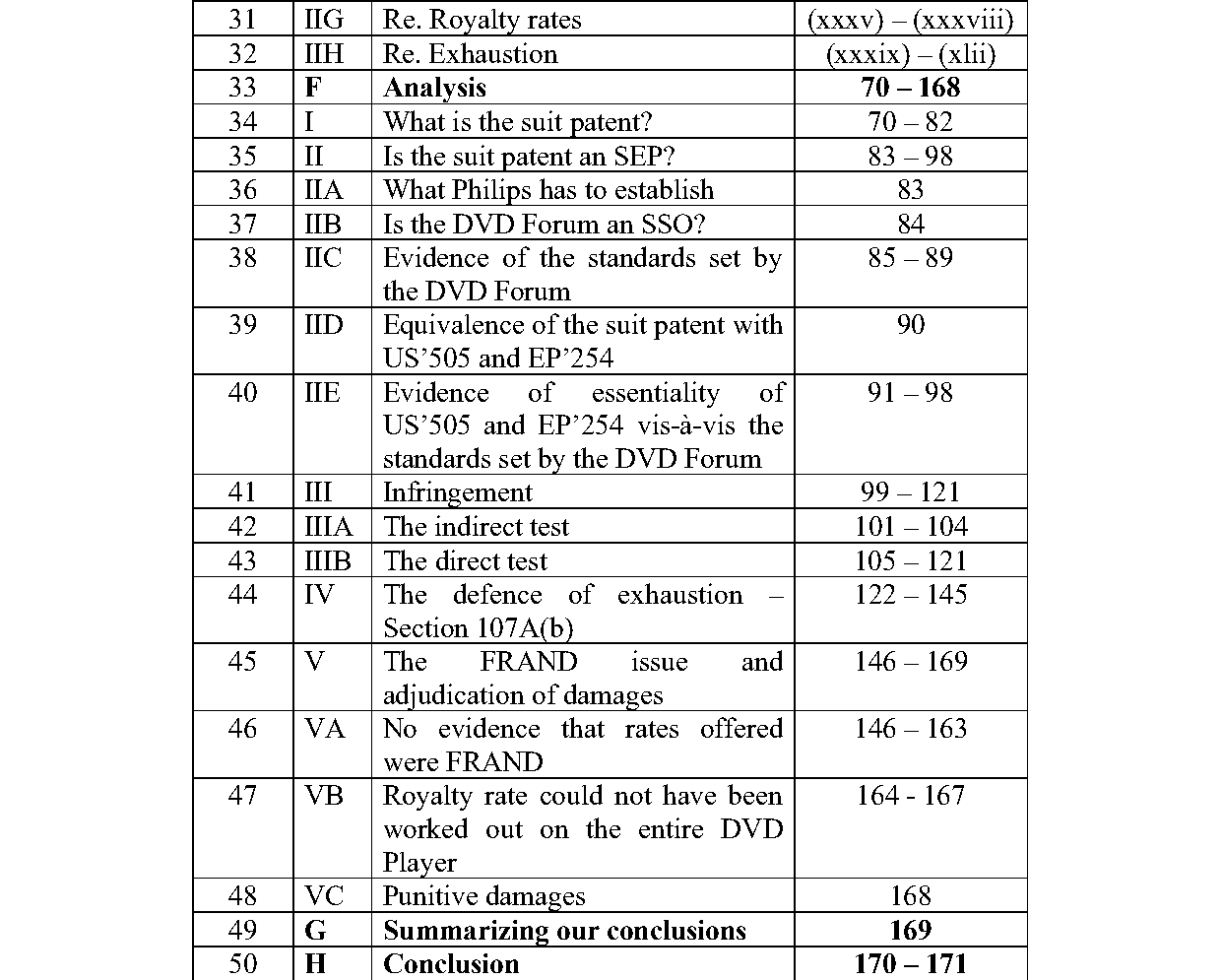
Facilitative Index to the Judgment A. Standard Essential Patents – A Prefatory Note
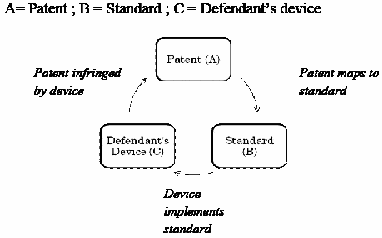
1. Standard Essential Patents [“SEPs” hereinafter] are strange and complex creatures. Infringement litigation, involved SEPs, is delicate and involved. For a plaintiff, who claims to be the holder of an SEP, to establish infringement and claim damages from a defendant, he has to first establish that his patent is an SEP; thereafter, that the defendant’s product infringes his patent; that he is willing to offer use of the patent to the defendant on licence at terms which are fair, reasonable and non-discriminatory, “FRAND” and that the defendant is not willing to take a licence on those terms, i.e. that the defendant is an “unwilling licencee”. It is only thereafter that a Court can compel a defendant to take a licence at the terms offered by the plaintiff, or at other FRAND terms as may be fixed by the Court, and injunct the defendant from using the plaintiff’s SEP in default.
2. Each of these steps is more complex than the other.
3. To demonstrate that his patent is an SEP, a plaintiff has to establish the existence of a standard, set by a Standard Setting Organization, “SSO” hereinafter. The SSO must certify the standard to be essential for operating a particular technology.
4. The categories of standards, and their importance, and the concept of “essentiality” were thus explained by a Division Bench of this Court in Intex Technologies (India) Ltd v. Telefonaktiebolaget L.M. Ericsson, 2023 SCC OnLine Del 1845 (DB)
“39. Since Standard Essential Patent is a relatively new species of patent, it is necessary to define it as well as propound the test of infringement in such cases and explain the importance of standards.
40. A standard in simple terms is a prescribed list of features or technical specifications in relation to a particular technology. The purpose of the standard is to ensure that every product manufactured as per the standard has certain common d


AI



An indispensable Tool for Legal Professionals, Endorsed by Various High Court and Judicial Officers
Please visit our Training & Support
Center or Contact Us for assistance

Scan Me!
India’s Legal research and Law Firm App, Download now!


For Daily Legal Updates, Join us on :



 Back to top


