
 Back
Back





IN THE HIGH COURT OF KERALA AT ERNAKULAM
A.BADHARUDEEN, J.
T.G. Venugopal S/o Gopala Pillai – Appellant
Versus
State of Kerala – Respondent
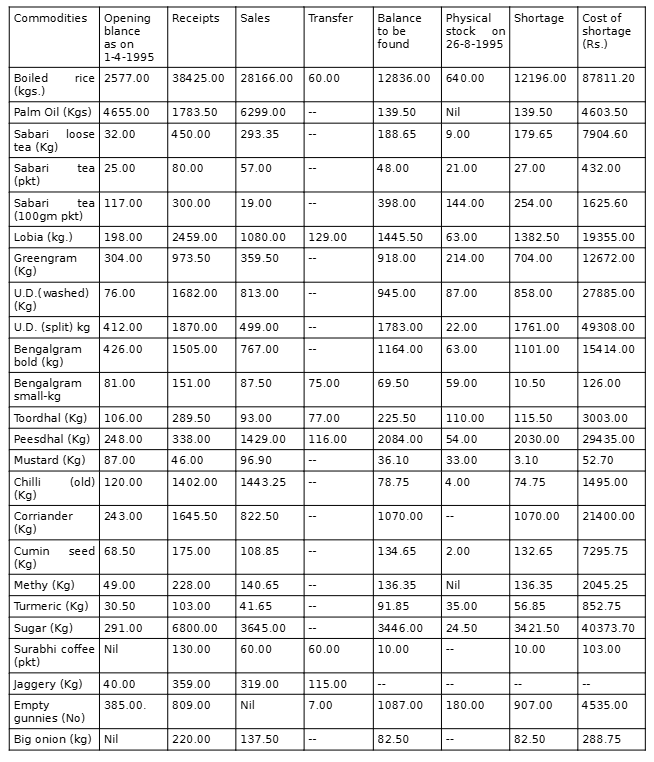
Crl. Appeal No. 864 of 2011
Decided On : 23-02-2026
| Table of Content |
|---|
| 1. factual overview of allegations and sentencing. (Para 1 , 4 , 5 , 6) |
| 2. arguments challenging admissibility of evidence. (Para 7 , 8 , 9 , 10 , 12 , 13) |
| 3. court's analysis of evidence and witness testimonies. (Para 11 , 15 , 16 , 17 , 18 , 19 , 20) |
| 4. discussion on the status of documentary evidence. (Para 31 , 32 , 34) |
| 5. final decision on conviction and sentencing. (Para 38 , 39 , 40) |
JUDGMENT :
A. BADHARUDEEN, J.
1. The 1st accused in C.C. No.36/2008 on the the Court of the Enquiry Commissioner and Special Judge, Kottayam, has filed this appeal, under Section 374 (2) of the Code of Criminal Procedure, 1973 [hereinafter referred as ‘Cr.P.C.’ for short], challenging the conviction and sentence imposed by the Special Judge, against him as per the judgment dated 07.05.2011. The State of Kerala, represented by the Special Public Prosecutor is arrayed as the respondent herein.
2. Heard the learned senior counsel for the appellant and the learned Special Public Prosecutor, in detail. Carefully gone through the verdict under challenge, the evidence available and also the decisions placed by both sides.
3. Parties in this appeal shall be referred as ‘accused’ and ‘prosecution’, hereafter.
4. The prosecution alleges commission of offences punishable under Sections 13 (1)(d) read with 13(2) of the Prevention of Corruption Act, 1988 [hereinafter referred as ‘P.C. Act, 1988 for short] and under Section 477A and 120B of the Indian Penal Code [hereinafter referred as ‘IPC’ for short], by the 1st and 2nd accused. The speci the prosecution is that, accused Nos.1 and 2, while working in the Kerala State Civil Supplies Corporation, Maveli Store, Edathua, hatched conspiracy during the month of April, 1995, with dishonest intention to obtain undue pecuniary advantage to themselves and to cause corresponding loss to the State Exchequer (i.e. Civil Supplies Corporation Ltd.) misappropriated commodities worth Rs.3,59,545.05 owned by the Civil Supplies Corporation by falsifying the records of the Maveli Store, Edathua in between the period from 01.04.1995 to 24.06.1995.
5. After framing charge for the offences punishable under Sections 13 (2) read with 13(1)(c) and 13(1)(d) of the P.C. Act, 1988 and under Sections 120B and 477A of the IPC, the Special Court recorded evidence and completed trial. During trial, PWs 1 to 20 were examined and Exts.P1 to P48 were marked on the side of the prosecution. Ext.D1 was marked through PW7 on the side of the accused.
6. On appreciation of evidence, the Special Court found that the 2nd accused was not guilty for the o punishable under Section 13 (2) of the P.C. Act, 1988 and under Section 477A of IPC and he was acquitted for the said offences. However, the Special Court found that the 1st accused was guilty for the offences punishable under (2) read with 13(1)(c) and 13(1)(d) of the P.C. Act, 1988 and under Section 477A of IPC. Accordingly, the 1st accused was convicted for the said offences and sentenced as under:
“The 1st accused is convicted under section 13(2) r/w. section 13(1)(c) and (d) of the Prevention of Corruption Act, 1988 and sentenced to undergo simple imprisonment for two years and a fine of Rs.4,00,000/- (Rupees four lakhs only), in default to undergo simple imprisonment for six months. The 1st accused is also convicted under section 477A IPC and sentenced to undergo simple imprisonment for one year. The sentences of imprisonment shall run concurrently.”
7. While assailing the verdict impugned, the first point raised by the learned senior counsel for the 1st accused/appellant is that, in this matter, the entire prosecution case rests on Exts.P1 and P2 documents and according to him, Ext.P1 is the copy of inspection report for the period between 01.04.1995 to 26.08.1995. Similarly, Ext.P2 is the attested copy of trading particulars/inspection report for the period from 01.04.1995 to 26.08.1995. According to the learned senior counsel, the originals of Exts.P1 and P2 were not tendered in evide

The court affirmed the conviction for misappropriation under the Prevention of Corruption Act and modified the sentence for the accused, highlighting the admissibility of secondary evidence.

The court upheld the conviction for misappropriating public funds while emphasizing the admissibility of secondary evidence when originals are unproduced, leading to a sentence modification based on ....
The court confirmed the conviction under the Prevention of Corruption Act, emphasizing the admissibility of public documents and secondary evidence in proving misappropriation.
Public servants found guilty of misappropriating funds by fabricating documents in a criminal conspiracy, invoking sections of the Prevention of Corruption Act and IPC.
Public servants must not misuse their position; misappropriation established through evidence confirms legal accountability under the Prevention of Corruption Act and IPC.
Public servants misappropriating funds and failing to remit them can be convicted under the PC Act and IPC. The absence of documentation does not exempt accountability for the misappropriation.
The court confirmed the conviction for misappropriation and corruption, establishing that the accused alone managed funds, while her confessions were voluntary and credible.

The admissibility of certified copies of public documents does not equate to proof of the truth of their contents; such truth must be established through oral evidence.
Public servants are criminally liable for misappropriation of entrusted property through forgery, supported by identification of handwriting, fulfilling requirements of the Prevention of Corruption A....

The prosecution must prove the accused's knowledge and intent in theft cases. Lack of evidence regarding the accused's knowledge of the stolen property can lead to acquittal.



An indispensable Tool for Legal Professionals, Endorsed by Various High Court and Judicial Officers
Please visit our Training & Support
Center or Contact Us for assistance

Scan Me!
India’s Legal research and Law Firm App, Download now!


For Daily Legal Updates, Join us on :



 Back to top


