
 Back
Back





BEFORE THE MADURAI BENCH OF MADRAS HIGH COURT
K. MURALI SHANKAR, J.
A. Asalaiyammal - Appellant
Versus
P. Vellaikalai, (Died) - Respondent
S.A.(MD)No.17 of 2026 and C.M.P.(MD)No.535 of 2026
Decided On : 26-02-2026
JUDGMENT :
K. MURALI SHANKAR, J.
The Second Appeal is directed against the judgment and decree made in A.S.No.32 of 2017 dated 17.06.2022 on the file of the Additional Subordinate Court, Dindigul, confirming the judgment and decree passed in O.S.No.189 of 2010 dated 15.02.2017 on the file of the Principal District Munsif Court, Dindigul.
2. The appellants are the plaintiffs. They filed the above suit claiming permanent injunction restraining the respondents / defendants and their men from in any manner interfering with the plaintiffs' peaceful possession and enjoyment of the suit property. The defendants filed their written statement and contested the suit.
3. For the sake of convenience and brevity, the parties hereinafter will be referred to as per their status / ranking in the trial Court.
4. The learned Principal District Munsif, Dindigul, after framing necessary issues and after full trial, passed a judgment and decree dated 15.02.2017 dismissing the suit. Aggrieved by the dismissal of the suit, the plaintiffs preferred an appeal in A.S.No.32 of 2017 and the learned Additional Subordinate Judge, Dindigul, upon considering the materials available on record and on hearing the arguments of both the sides, passed the impugned judgment and decree dated 17.06.2022 dismissing the appeal and thereby confirming the judgment and decree of the trial Court. Challenging the dismissal of the first appeal, the plaintiffs have preferred the present Second Appeal.
5. At the outset, it is necessary to refer the mandate of Hon'ble Supreme Court for High Courts in deciding the second appeal under Section 100 of the Civil Procedure Code, given in the case of Gurnam Singh (dead) by LRs., and others Vs. Lehna Singh (dead) by LRs. reported in AIR 2019 SC 1441, that the jurisdiction of the High Court in an appeal under Section 100 of the Code of Civil Procedure is strictly confined to the case involving substantial question of law and the relevant passage is extracted hereunder:
“18. Before parting with the present judgment, we remind the High Courts that the jurisdiction of the High Court, in an appeal under Section 100 of the CPC, is strictly confined to the case involving substantial question of law and while deciding the second appeal under Section 100 of the CPC, it is not permissible for the High Court to re-appreciate the evidence on record and interfere with the findings recorded by the Courts below and/or the First Appellate Court and if the First Appellate Court has exercised its discretion in a judicial manner, its decision cannot be recorded as suffering from an error either of law or of procedure requiring interference in Second Appeal. We have noticed and even as repeatedly observed by this Court and even in the case of Narayanan Rajendran v. Lekshmy Sarojini, (2009) 5 SCC 264, despite the catena of decisions of this Court and even the mandate under Section 100 of the CPC, the High Courts under Section 100 CPC are disturbing the concurrent findings of facts and/or even the findings recorded by the First Appellate Court, either without formulating the substantial question of law or on framing erroneous substantial question of law.”
6. The Hon'ble Supreme Court in the case of Chandrabhan Vs. Saraswati and others reported in 2022 SCC OnLine SC 1273 has specifically held that right of appeal is not automatic and right of appeal is conferred by statute and when statute confers a limited right of appeal restricted only to cases which involve substantial questions of law, it is not open to the High Court to sit in appeal over the factual findings arrived at by the First Appellate Court and the Hon'ble Supreme Court summarized the principles relating to Section 100 C.P.C., which are as follows;
“(i) An inference of fact from the recitals or contents of a document is a question of fact. But the legal effect of the terms of a document is a question of law. Construction of a document involving the application of any principle of law, is also a question
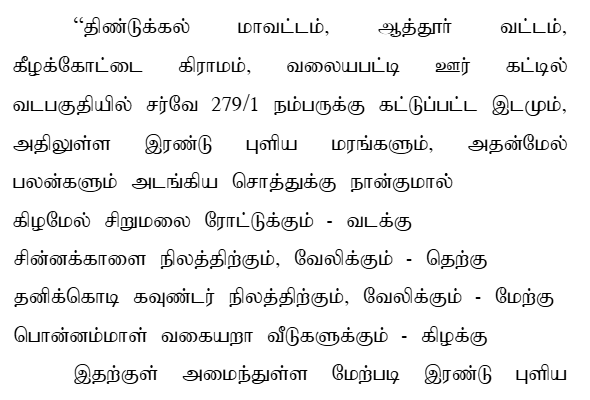
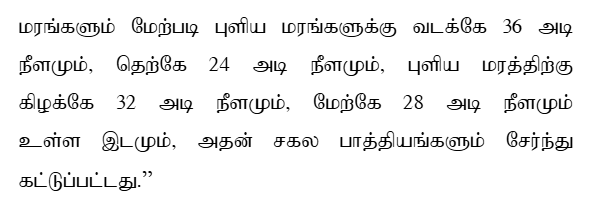


High Court's jurisdiction under Section 100 is limited to substantial questions of law, preventing interference with concurrent factual findings unless substantial issues arise.
The High Court's jurisdiction in second appeals is limited to substantial questions of law; factual findings by lower courts are upheld unless exceptional circumstances exist.
The High Court's jurisdiction under Section 100 CPC is limited to substantial questions of law, not to disturb factual findings by lower courts without valid grounds.

The court's decision was based on the finding that the plaintiff had encroached on the defendant's land and failed to prove their case. The court also held that there was no substantial question of l....



An indispensable Tool for Legal Professionals, Endorsed by Various High Court and Judicial Officers
Please visit our Training & Support
Center or Contact Us for assistance

Scan Me!
India’s Legal research and Law Firm App, Download now!


For Daily Legal Updates, Join us on :



 Back to top


