
 Back
Back





IN THE HIGH COURT OF JUDICATURE AT MADRAS
MOHAMMED SHAFFIQ, J.
M/s. L.G.Balakrishnan & Bros. Limited, Represented by its Chief Financial Officer - Petitioner
Versus
Commisioner of GST & Central Excise, Coimbatore Division – Respondent
W.P.No.33773 of 2018
Decided On : 23-03-2026
| Table of Content |
|---|
| 1. procedural timeline of eou de-bonding and the disputed excise duty rebate claim. (Para 1 , 2 , 3) |
| 2. legal interpretation of section 5a(1a) regarding absolute vs. conditional duty exemptions. (Para 4 , 5 , 6 , 7 , 8) |
| 3. analysis of notification no.24/2003 categorizing eou-based exemption as conditional. (Para 9 , 10 , 11) |
| 4. conditional exemptions allow manufacturers to opt out of the benefit to claim rebate. (Para 12 , 13) |
ORDER :
MOHAMMED SHAFFIQ, J.
The present writ petition has been filed challenging impugned Revision Order No.202/2018-CX(SZ)/ASRA/MUMBAI dated 24.07.2018 passed by second respondent.
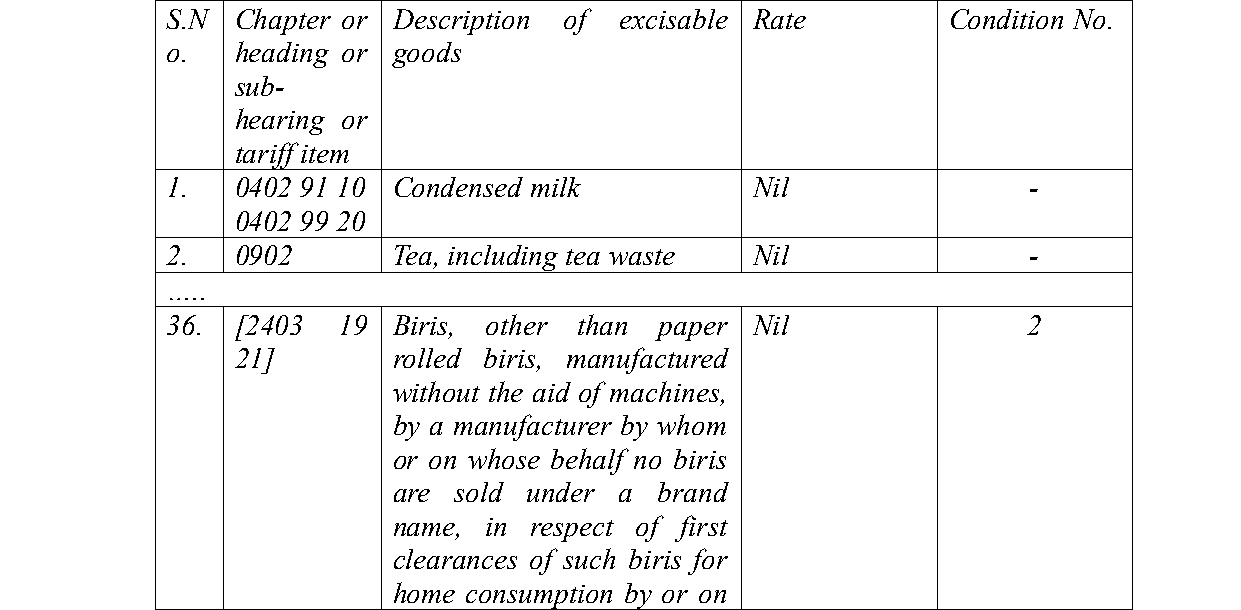
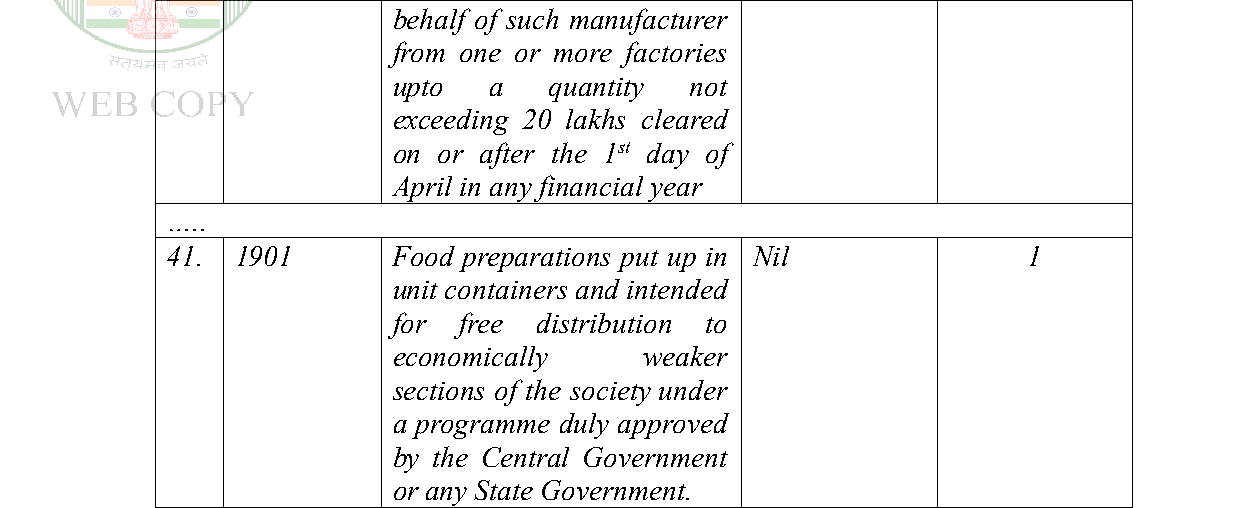
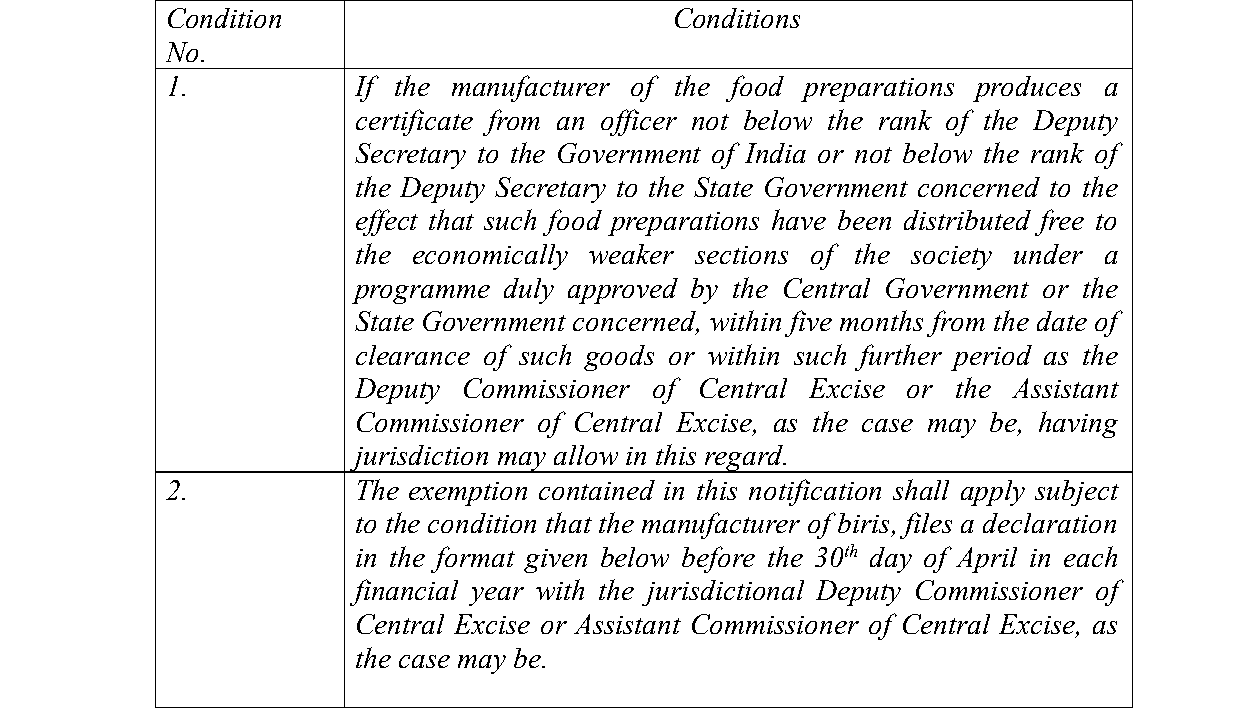
2. The question that arises for consideration in this writ petition is as to whether exemption granted vide Notification No.24 of 2003-CE dated 31.03.2003 is conditional or absolute for the purposes of Section 5A(1A) of the Central Excise Act.
3. Brief facts:
3.1. Petitioner was 100% Export Oriented Unit, (hereinafter referred to as EOU), manufacturing parts of motor vehicles classified under Tariff sub-heading number 8708. Petitioner was granted Letter of Permission (LoP) to operate as an EOU vide Development Commissioner’s letter dated 12.04.2006 subject to terms and conditions, which inter alia includes:
a) The unit shall export its entire production for a period of 5 years from the date of commencement of production. The unit would have the option to renew its EOU status or opt out of the scheme as per the Industrial Policy in force (Clause i);
b) The unit shall achieve positive Net Foreign Exchange Earning as prescribed in the EOU scheme for a period of 5 years (Clause ii);
c) The LoP shall be valid for 3 years from its date of issue within which the petitioner shall implement the project. The LoP shall automatically lapse if application for extension of validity is not made before the end of the said period (Clause vi).
3.2. At the end of 5 year period i.e. 11.04.2011, petitioner opted to withdraw from EOU Scheme and submitted a letter dated 12.04.2011 to Development Commissioner requesting de-bonding of EOU. An “in-principle” approval for de- bonding was granted by Development Commissioner vide letter dated 21.07.2011. Petitioner paid an amount of Rs.33,27,725/- on 31.05.2011 towards excise duty pertaining to goods lying in stock as on 31.05.2011 and received no due certificate from Excise Department on 23.11.2011. A Final Exit Order dated 16.12.2011 came to be issued by Assistant Development Commissioner of MEPZ.
3.3. It is submitted by petitioner that in the meanwhile on 03.06.2011, petitioner intimated Assistant Commissioner of Central Excise, Coimbatore that excise duty on goods manufactured for export will henceforth be cleared on payment of excise duty under claim for rebate. Exports were then made on payment of duty under claim of rebate by utilizing Cenvat credit. After final exit order, petitioner filed their claim for rebate sometime in April 2012. Show cause notice came to be issued proposing to deny rebate claim filed by petitioner inter alia on the following grounds.
a) Final exit order, effecting de-bonding was only issued on 16.12.2011, till which date petitioner would continue to be 100% EOU, despite the fact that an in-principle approval was granted sometime in July 2011.
b) Importantly, in terms of Notification No.24/2003-CE dated 31.03.2003, all excisable goods manufactured in a 100% EOU are exempt from the whole of excise duty. The exemption in terms of the above notification is absolute thus in terms of Section 5A(1A) of the Central Excise Act, 1944, manufacturer of such excisable goods shall not pay duty on such goods and option is not available to such manufacturers to remit the duty and claim the benefit of rebate/refund.
3.4. Petitioner submitted its reply on various dates including 31.08.2012, 18.01.2013 and 08.03.2013 inter alia submitting that 100% EOU license expired on 11.04.2011 and petitioner ceased to be a 100% EOU since 11.04.2011, thus exemption vide Notification No.24/2003-CE dated

AI


The condition requiring irrevocable Letters of Credit for export duty exemption does not apply to exporters who do not utilize this mechanism, ensuring compliance with constitutional rights.

Interest and penalty cannot be levied on late payment of duty that is exempted under the Central Excise Act, as no liability arises for such payments.

The main legal point established in the judgment is that the exemption notification must be strictly construed and defined according to legislative intendment.

The judgment established the need for strict compliance with exemption or concession provisions and highlighted the applicability of central excise duty on waste/scraps.

Every action of the executive government, including exercise of its power to grant or withdraw tax exemption, should be suffused with public interest. The government must provide relevant and suffici....

The court affirmed that strict adherence to exemption conditions under the Customs Act is crucial, and mere documentation without actual value addition does not suffice to qualify for duty exemptions....



An indispensable Tool for Legal Professionals, Endorsed by Various High Court and Judicial Officers
Please visit our Training & Support
Center or Contact Us for assistance

Scan Me!
India’s Legal research and Law Firm App, Download now!


For Daily Legal Updates, Join us on :



 Back to top


