Back
Back





2026 Supreme(Raj) 128
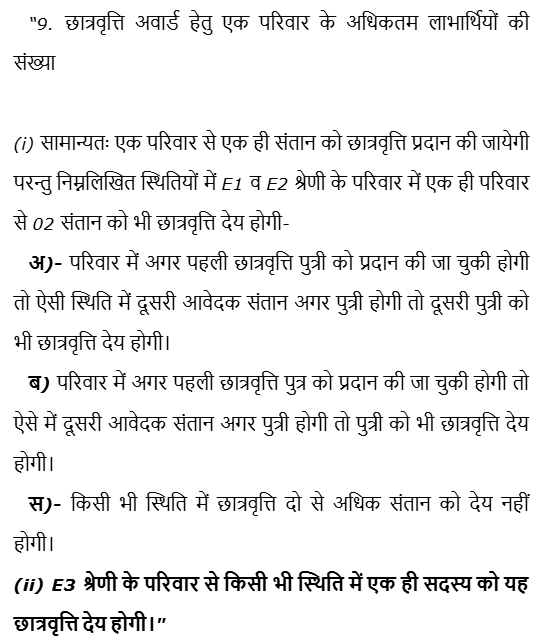
HIGH COURT OF JUDICATURE FOR RAJASTHAN BENCH AT JAIPUR
Anuroop Singhi, J.
Devendra Kumar Kothari S/o Shri Sundar Lal Kothari - Petitioner
Versus
State Of Rajasthan, Through Additional Chief Secretary, Department Of College Education, Directorate Of College Education - Respondents
S.B. Civil Writ Petition No. 336 of 2026
Decided On : 15-01-2026
For the Petitioner: Dr. Abhinav Sharma, Ms. Puja Sharma, Mr. Akshay Verma, Mr. Vishal Choudhary
For the Respondent: Mr. S.S. Naruka, AAG with Ms. Ritika Naruka, Ms. Gunjan Vaid
The rejection of a scholarship application due to a family member's prior award is arbitrary, violating the scheme's intent to promote education.
Headnote:(A) Swami Vivekananda Scholarship for Academic Excellence Scheme - Clause 9(ii) - Rejection of scholarship application based on prior scholarship awarded to the applicant's wife was found arbitrary and unjustifiable - Court emphasized that such interpretation defeats the scheme's intent to promote education. (Paras 2, 11, 12)
(B) Legal interpretation of family dynamics in scholarship eligibility. (Para 11)
Facts of the case:
The petitioner challenged the rejection of his son's scholarship application on the ground that a prior scholarship granted to his wife disqualified him for eligibility. The petitioner argued that this interpretation was unjust and did not consider the familial context of scholarship awarding.
Findings of Court:
The court ruled that the rejection of the application was arbitrary and that the intent of the scholarship scheme is to support deserving candidates, regardless of prior awards given to family members.
Issues: Whether the prior scholarship awarded to the applicant's wife disqualified him from receiving a scholarship under the scheme?
Ratio Decidendi: The court held that prior scholarship awards should not render an applicant ineligible post-marriage and emphasized a purposive interpretation of eligibility criteria.
Result: Writ petition allowed; respondents directed to reconsider the application.
| Table of Content |
|---|
| 1. petitioner's grievance regarding scholarship rejection. (Para 1) |
| 2. arguments highlighting the alleged arbitrariness of rejection. (Para 2 , 3 , 4 , 5 , 10) |
| 3. court's reasoning on the interpretation of the scholarship eligibility. (Para 6 , 7 , 8 , 9 , 11 , 12) |
| 4. ruling quashing rejection and directing reconsideration. (Para 13) |
| 5. final order allowing the writ petition. (Para 14 , 15) |
ORDER :
ANUROOP SINGHI, J.
1. The present writ petition has been filed by the petitioner being aggrieved by the communication dated 19.12.2025, vide which the application of the petitioner’s son – Mr. Prakhar Kothari (applicant), seeking grant of scholarship under the Swami Vivekananda Scholarship for Academic Excellence Scheme (hereinafter referred to as “the Scholarship Scheme”), has been rejected by the respondents.
2. Learned counsel for the petitioner, Mr. Abhinav Sharma submits that the rejection of the application filed by the applicant vide order dated 19.12.2025 is without any reasoning which is evident from the perusal of the said communication, however, it was only when the petitioner approached the respondent – Authority that he was communicated that the sole reason for rejection of the application was the grant of Scholarship to the wife of the applicant, i.e. petitioner’s daughter-in-law under the Scholarship Scheme prior to her marriage with the applicant.
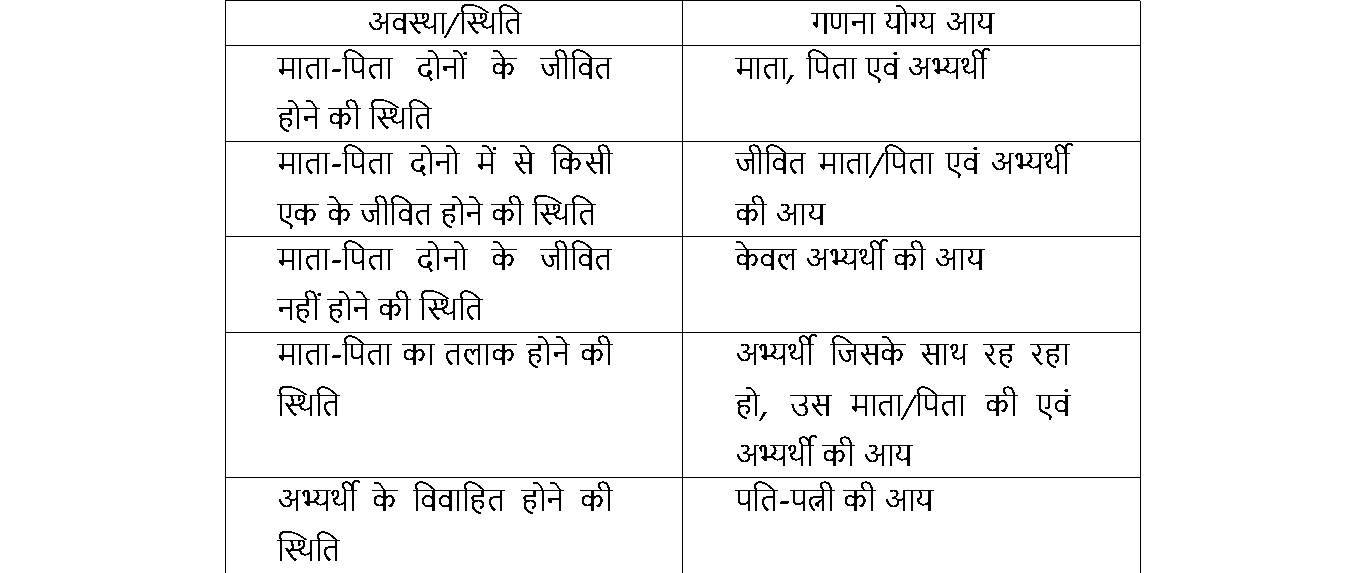
To clarify, the ground for rejection is that, since Ms. Aarushi Asawa, who is wife of the applicant and daughter-in-law of the petitioner, received scholarship on 09.09.2022, prior to her marriage with the applicant – Mr. Prakhar Kothari, considering the condition No.9(ii) of the Scholarship Scheme dated 20.08.2025, the applicant is not eligible for being considered for the scholarship.
3. Learned counsel submits that the said disqualification is per se arbitrary and unjustified. Learned counsel submits that the respondents have failed to rightfully consider the clause 9(ii) of the Scholarship Scheme, as though the said clause provides that under the E-3 Category only one member of the family is eligible to receive the scholarship under any circumstances, however, the said clause will not exclude the applicant as when the scholarship was awarded to the wife of the applicant, she was not a member of the family of the applicant. Learned counsel further submits that a welfare scheme, under no circumstances can be read in such a manner so as to deprive an eligible candidate from such benefit and that too for no fault of his. Learned counsel further submits that he has disclosed all the facts, more particularly with respect to the award of scholarship to the applicant’s wife on 09.09.2022, the marriage of the applicant on 01.04.2023 and the fact that no such benefit under the Scholarship Scheme has been taken by any member of the family post 01.04.2023.
4. Accordingly, it is prayed that the respondents deserve to be directed to consider the application of the applicant under the Scholarship Scheme and the rejection of the application vide order dated 19.12.2025 be held to be bad in law.
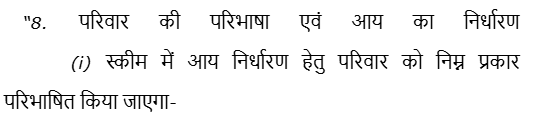
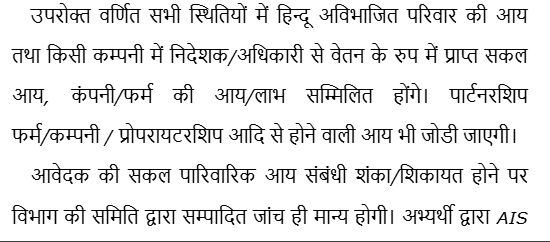
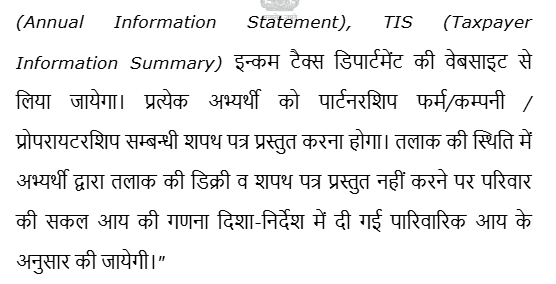
5. E-converso, Mr. S.S. Naruka, learned Additional Advocate General, submits that the Scholarship Scheme, though undisputedly is beneficial in nature, however, cannot be expanded beyond the condition stipulated therein and any scholarship to an applicant can be awarded only upon fulfillment of the prescribed eligibility criteria provided. Learned counsel submits that it is not disputed that the applicant falls within the E-3 Category and stands duly covered by clauses 8(i) read with clause 9(ii) of the Scholarship Scheme. As per clause 8(i)(v), if a wife has already received the benefit of the scholarship prior to marriage, then after marriage, the family is restricted to the husband and wife only, and the husband shall not be eligible for the scholarship and thus, once it is not disputed that Ms. Aarushi Asawa, wife of the applicant, has already availed the benefit of the Scholarship Scheme,