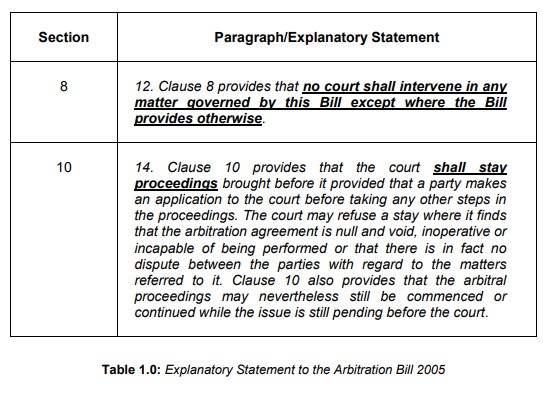
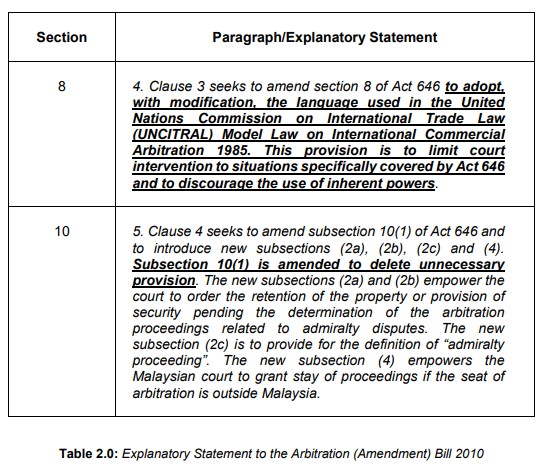
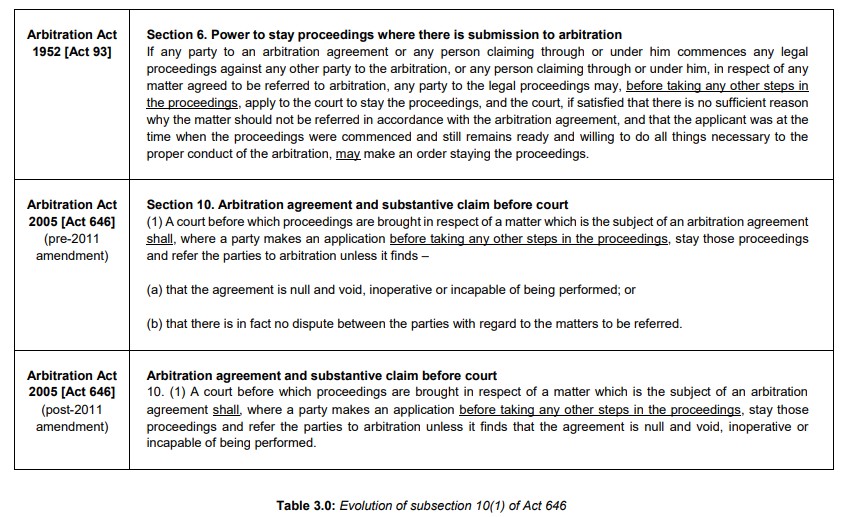
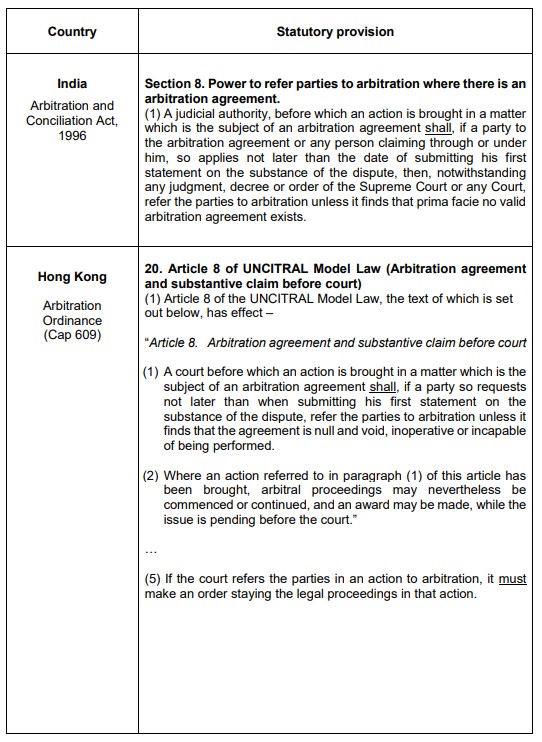
1. Professional engineering services dispute — Suit commenced despite arbitration agreement — Application for stay of proceedings under Section 10(1), Arbitration Act 2005. (Para 9 , 10 , 11 , 12 , 13 , 14 , 15 , 16 )
 Back
Next 





2026 MarsdenLR 899
FEDERAL COURT PUTRAJAYA
AHMAD TERRIRUDIN MOHD SALLEH, FCJ
UNIVERSITI MALAYA – Appellant
Versus
ESA JURUTERA PERUNDING SDN BHD – Respondent
[Civil Appeal No: 01(i)-20-07-2024(W)]
Important Points
Requests for extension of time to file a Defence by consent and the service of a Notice to Produce Documents are peripheral actions that do not constitute 'steps in the proceedings' under the Arbitration Act 2005, provided they do not evince an unequivocal intention to abandon arbitration.
Subject
Arbitration - Stay of Proceedings
Act Referred
Arbitration Act 2005: S.10(1), S.9
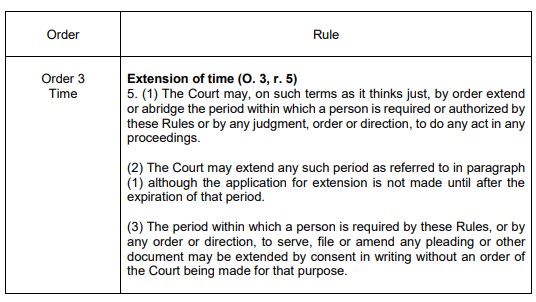
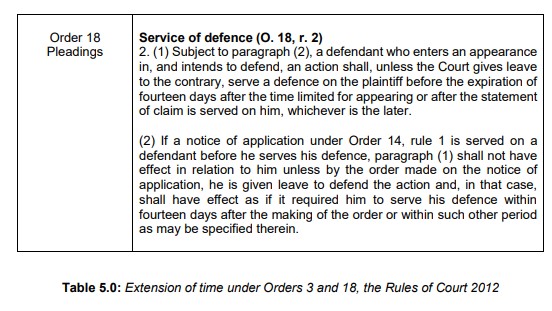
Rules of Court 2012: O.24 R.10, O.3 R.5(3), O.18 R.2(1), O.24 R.11
University of Malaya Act 1961
Registration of Engineers Act 1967
Water Services Industry Act 2006
Water Services Industry (Planning, Design and Construction of Sewerage Systems and Septic Tanks) Rules 2013
Street, Drainage and Building Act 1974: S.70(27)(f)
Fire Services Act 1988: S.33
Arbitration Act 1952: S.6
Rules of the High Court 1980
Headnote
(A) Arbitration Act 2005 - Section 10(1) - Rules of Court 2012 - Order 24 Rule 10, Order 3 Rule 5(3), and Order 18 Rule 2(1) - Stay of proceedings in favour of arbitration - Determination of whether certain conduct amounts to "taking any other steps in the proceedings" - The phrase "before taking any other steps in the proceedings" requires a holistic assessment to determine if there is an "unequivocal intention" to proceed with the suit and abandon the right to arbitration (Paras 110, 118) - A request for an extension of time to file a Defence obtained via extra-judicial agreement or consent does not constitute a step in the proceedings (Para 67) - Peripheral applications or actions that do not touch on the merits of the substantive dispute do not constitute steps in the proceedings (Para 110(e))
(B) Burden of proof - The burden of showing that a defendant has taken steps in the proceedings lies squarely on the plaintiff (Paras 56, 122) - Reservation of rights is a relevant indication but not the sole determinant; the overall conduct of the party must be evaluated in the factual matrix of the case (Paras 98, 99)
Facts of the case:
An engineering consultant was appointed by a university for a construction project. Following a dispute, the university commenced a writ action. The consultant entered an appearance, requested two extensions of time to file a Defence through correspondence and consent, and served a Notice to Produce Documents Referred to in Pleadings. Subsequently, the consultant applied for a stay of proceedings to refer the matter to arbitration pursuant to the arbitration clause in the agreement. The High Court dismissed the stay application, but the Court of Appeal allowed the appeal.
Findings of Court:
The requests for extensions of time and the service of the Notice to Produce Documents were reasonable, made in good faith to ascertain the nature of the agreement and the claims, and did not evince an unequivocal intention to submit to the court's jurisdiction.
Issues: Whether a request for extension of time to file a Defence and the service of a Notice to Produce Documents Referred to in Pleadings pursuant to Order 24 Rule 10 of the Rules of Court 2012 amount to a "step in the proceedings" under Section 10(1) of the Arbitration Act 2005.
Ratio Decidendi: The court ruled that extra-judicial requests for extensions of time and peripheral actions, such as a Notice to Produce Documents, which do not engage the merits of the dispute, do not constitute "steps in the proceedings." Such actions do not demonstrate an unequivocal intention to abandon the right to arbitrate, especially when viewed holistically and in light of the pro-arbitration statutory policy intended to minimize judicial intervention.
Result: Appeal dismissed.
Legal Category Hierarchy
Petitioner Advocates:Karen Lee Foong Voon,See Yen Lin ,Respondent Advocate: Anantha Krishnan,Ragumaren Gopal,Darryl Ragumaren,Farhanah Jahn
Table of Contents
2. Whether requests for extension of time to file Defence and service of Notice to Produce Documents constitute steps in proceedings precluding a stay for arbitration. (Para 17 , 18 , 19 , 20 , 21 , 22 )
3. Pro-arbitration policy mandates minimal judicial intervention; determining steps in proceedings requires a holistic assessment of a party's unequivocal intention to submit to court jurisdiction. (Para 28 , 29 , 30 , 31 , 32 , 33 , 34 , 35 , 36 , 37 , 38 , 39 , 40 , 41 , 42 , 43 , 44 , 45 , 46 , 47 , 48 , 49 , 50 , 51 , 52 , 53 , 54 , 55 , 56 , 57 , 58 , 59 , 60 , 61 , 62 , 63 , 64 , 65 , 66 , 67 , 68 , 69 , 70 , 71 , 72 , 73 , 74 , 75 , 76 , 77 , 78 , 79 , 80 , 81 , 82 , 83 , 84 , 85 , 86 , 87 , 88 , 89 , 90 , 91 , 92 , 93 , 94 , 95 , 96 , 97 , 98 , 99 , 100 , 101 , 102 , 103 , 104 , 105 , 106 , 107 , 108 , 109 , 110 , 112 , 113 , 114 , 115 , 116 , 117 , 118 , 119 , 120 , 121 , 122 , 123 , 124 , 125 , 126 , 127 , 128 , 130 , 132 , 133 , 134 , 135 , 136 )
4. Requests for extension of time by consent and service of Notice to Produce Documents are peripheral actions not evidencing an unequivocal intention to abandon arbitration. (Para 129 , 131 , 137 )
5. Appeal dismissed — Decision of the Court of Appeal affirmed. (Para 138 )
6. Does a request for an extension of time to file a Defence constitute a step in the proceedings under Section 10(1) of the Arbitration Act 2005?
Not if obtained by extra-judicial consent. It only constitutes a step if pursued judicially through a formal court application resulting in a formal order, which implies an unequivocal intention to defend the action in court and abandon arbitration. (Para 67 , 129 )
7. Does serving a Notice to Produce Documents Referred to in Pleadings under Order 24 rule 10 constitute a step in the proceedings?
No. Such notices are peripheral and investigative, intended to ascertain the nature of the claim and the agreement. They do not touch on the substantive merits of the dispute or evidence an unequivocal intention to abandon arbitration. (Para 110 , 131 )
8. How is the unequivocal intention to submit to court jurisdiction determined in stay applications?
Through a holistic assessment of the party's overall conduct within the factual matrix of the case, rather than a mechanical exercise focusing solely on the presence or absence of a reservation of rights clause. (Para 109 , 118 , 120 , 124 )
9. Are broad grounds of judgment from the Federal Court binding on lower courts?
Yes, provided the ratio decidendi can be clearly discerned from those broad grounds. They operate as binding precedent for the purposes of the principle of stare decisis. (Para 104 , 105 )
JUDGMENT
Judgment
A. Introduction
[1] Appeals concerning judicial determination of application for a stay of proceedings and the construction of "before taking any other steps in the proceedings" under subsection 10(1) of the Arbitration Act 2005 [Act 646] generally follow a familiar pattern. Where a Plaintiff who has agreed to arbitrate nevertheless commences proceedings in Court, the Defendant will ordinarily be entitled to seek a stay of the proceedings in favour of arbitration, provided the application is made before delivering any pleadings or taking any other steps in the proceedings. Our Courts have treated the legislative amendment to Act 646 as reflecting Parliament's intention to that effect.
[2] In other words, the right to a stay and to arbitrate will be lost, and the Defendant may be deemed to have abandoned its right for arbitration if it, prior to making an application for a stay, takes any other steps in the proceedings in response to the Plaintiff's substantive claim. However, as demonstrated in our jurisdiction, certain conduct by a Defendant does not amount to taking steps in the proceedings. The Court's task then turns to whether the Defendant's conduct in question constitutes, figuratively speaking, a misstep or step too far. A relevant consideration is whether the Defendant has reserved its position as to the Court's jurisdiction in its correspondence with the Plaintiff or the Court, or in any application before the Court. Further, it is necessary to consider whether such an act engages the merits of the dispute, and whether it constitutes an interlocutory application by the Defendant from which a formal order is expected to be issued by the Court.
[3] In the present appeal, it is not readily apparent on the face of s 10(1) of Act 646 whether (i) a request for an extension of time to file a Defence and (ii) the service of a Notice to Produce Documents Referred to in the Pleadings pursuant to O 24 r 10 of the Rules of Court 2012 [P.U.(A) 205/2012], amount to steps in the proceedings. The attribution of meaning to undefined phrases in a statute presents no easy task. Denning LJ in Seaford Court Estates Ltd v. Asher [1949] 2 KB 481 (CA) rightly pointed out at p 498 as follows:
"Whenever a statute comes up for consideration it must be remembered that it is not within human powers to foresee the manifold sets of facts which may arise, and, even if it were, it is not possible to provide for the main terms free from all ambiguity. The English language is not an instrument of mathematical precision. Our literature would be much the poorer if it were. This is where the draftsmen of Acts of Parliament have often been unfairly criticized. A judge, believing himself to be fettered by the supposed rule that he must look to the language and nothing else, laments that the draftsmen have not provided for this or that, or have been guilty of some or other ambiguity. It would certainly save the judges trouble if Acts of Parliament were drafted with divine prescience and perfect clarity. In the absence of it, when a defect appears a judge cannot simply fold his hands and blame the draftsman. He must set to work on the constructive task of finding the intention of Parliament, and he must do this not only from the language of the statute, but also from a consideration of the social conditions which gave rise to it, and of the mischief which it was passed to remedy, and then he must supplement the written word so as to give "force and life" to the intention of the legislature."
[Emphasis Added]
Admittedly, existing local precedents on relatively similar issues may hint at an answer, such that some may have regarded the matter as settled. The factual context of the present appeal, however, suggests otherwise. For ease of reference, we shall refer to the parties as they were in the High Court.
[4] The wisdom embodied in this Court's previous rulings provides the scaffolding for our approach to the prese