Back
Back





2024 Supreme(All) 1308
IN THE HIGH COURT OF ALLAHABAD
Kshitij Shailendra, J.
Rajvir Singh- Appellant
Versus
Randhir Singh – Respondent
Second Appeal No. - 439 of 2009
Decided On : 22-10-2024
Advocate Appeared:
For the Appellant : M.K. Gupta, M.K. Upadhyay, Pradeep K Bhardwaj, R.D. Tiwari, Satendra Kumar Singh, Shashwat Kishore Chaturve, Suresh Chandra Varma
For the Respondent: A.K. Mehrotra, Nishant Mehrotra, Pranjal Mehrotra, Swetashwa Agarwal
IMPORTANT POINT
The validity of a registered sale deed is presumed unless strong evidence of fraud or intoxication is presented, and claims of limitation must be substantiated.
Headnote:
(A) Transfer of Property Act, 1882 - Section 54 - Limitation Act, 1963 - Section 17 - Cancellation of sale deed - Plaintiff alleged execution of sale deed under intoxication and fraud - Both courts found execution valid, with payment of consideration established - Suit dismissed as barred by limitation. (Paras 1, 4, 32)
(B) Evidence Act, 1872 - Sections 91, 68 - Presumption of execution of registered documents - Strong presumption attached to registered sale deed unless rebutted by cogent evidence - Plaintiff failed to establish intoxication or fraud. (Paras 21, 32)
Facts of the case:
Plaintiff and defendant, real brothers, co-owned agricultural land. Plaintiff claimed he was intoxicated during execution of sale deed in favor of defendant, which was denied by defendant. (Paras 2, 3)
Findings of Court:
Courts upheld validity of sale deed, finding no evidence of fraud or intoxication, and ruled suit was barred by limitation. (Paras 32)
Issues: Whether sale deed was executed under fraud and undue influence; whether suit was barred by limitation. (Paras 7)
Ratio Decidendi: Courts found plaintiff's claims of intoxication and fraud unsubstantiated, emphasizing the presumption of validity for registered documents. (Paras 32)
Result: Second appeal dismissed.
JUDGMENT :
Kshitij Shailendra, J.
THE APPEAL
1. This is plaintiff’s second appeal assailing concurrent judgments, whereby his suit for cancellation of registered sale deed dated 24.03.2004 has been dismissed and civil appeal arising therefrom has also failed.
PLAINT CASE
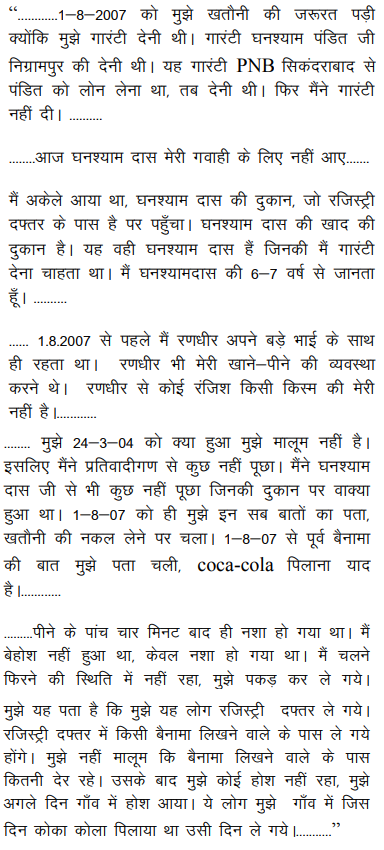
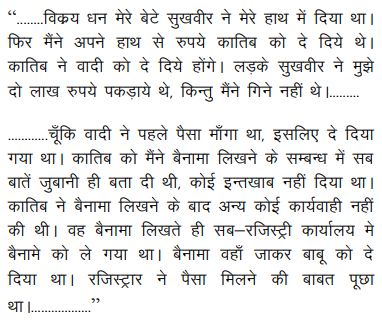
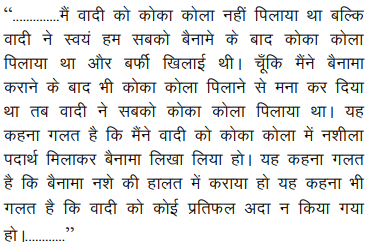
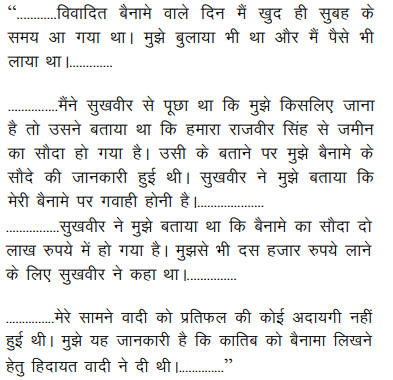
2. The plaintiff and defendant, who are real brothers, were owners to the extent of 1/3rd share each in agricultural land covered by Gata No. 1231/1 measuring 0.6930 hectares situated at Village Sikandrabad Dehat, Pargana and Tehsil Sikandrabad, District Bulandshahr. Remaining 1/3rd share was that of third brother, namely, Jai Singh. When, on 01.08.2007, plaintiff felt need of Khatauni, on obtaining copy thereof, he came to know that his name was expunged from the records and in its place, the defendant’s name was recorded. Certified copy of the sale deed was applied for and obtained on 01.08.2007 itself, on perusal whereof the plaintiff came to know about execution of a sale deed dated 24.03.2004. As regards the date, it is stated that on 24.03.2004, the plaintiff, on account of some personal work, had gone to Sikandrabad where he met his elder brother (defendant) alongwith Jogendra Singh and Veeru. The defendant offered the plaintiff with Coca-cola and having drunken the same, the plaintiff fell in the state of inebriation and tipsiness and his brain stopped working. He gained consciousness on the next day and did not remember anything about 24.03.2004. The sale deed was alleged to have been executed as a result of deceit and alleging that the defendant did not pay sum of Rs. 2,00,000/- (rupees two lacs) as alleged sale consideration; sale deed was got executed in the state of plaintiff being under intoxication; it was not as per his free will; witness Veeru is related to the defendant and the other witness too being under influence of the defendant, all had colluded; plaintiff being an issueless person, had executed a registered Will dated 16.12.2003 in favour of defendant’s sons and, therefore, there was no occasion for executing the sale deed.
DEFENSE IN WRITTEN STATEMENT
3. The written statement admitted the shares as described in the plaint, but the sale deed was defended as having been duly executed without any coercion and after making payment of Rs.2,00,000/- (rupees two lacs) as sale consideration. The incident of 24.03.2004 as described by the plaintiff, particularly the plea of intoxication etc., was denied, and it was alleged that the plaintiff had taken loan towards business of truck and he being in need of money, sold the property to the defendant, discharged his financial liability and also got him medically treated.
TRIAL PROCEEDINGS AND THE DECISION
4. The plaintiff appeared as PW-1 with no other witness, whereas Jogendra Singh and Veeru, witnesses to the disputed sale deed, appeared as DW-2 and DW-3 with the defendant as DW-1. The trial court, after discussing oral and documentary evidence, dismissed the suit with cost by judgment and order dated 30.05.2008. It discussed oral testimony of PW-1 that he was working in P.A.C. and left the job in 1969 and was also engaged in truck business. As regards plea of intoxication, the trial court observed that if the incident as alleged was correct, the plaintiff, under natural circumstances, would have asked his defendant-brother about the incident as, according to him, he gained his consciousness next day. The offer of Coca-Cola was shown to have been made at the shop of one Ghanshyam from whom also no enquiry was made and the plaint was silent about it. The trial court also recorded that the plaintiff had signed the sale deed on 24.03.2004 and, therefore, if, according to him, after intake of Coca-cola his condition had become so pity that he was not even able to move properly and that he was not in his senses in the office of Sub-Registrar, it was wholly unnatural that he could put his signatures on the sale deed. The trial court compared the signatures of the plaintiff on the order sheet, plaint as well as