Searching Case Laws & Precedent on Legal Query!
Scanned Judgements…!



Searching Case Laws & Precedent on Legal Query!
Scanned Judgements…!
Witness Refusal to Sign Depositions - When witnesses refuse to sign recorded depositions, courts may still proceed with the trial, relying on other evidence or testimonies. For example, courts have recorded depositions without signatures and have explained the contents to witnesses to ensure their understanding, especially in cases involving illiterate or deaf witnesses. ["AKSHAY OJHA Vs STATE OF ODISHA - Orissa"], ["2025 0 Supreme(Ker) 2624"], ["
SCHOKMAN v. SISISENA et al.
"]Court's Discretion and Procedures - Courts have the authority to record depositions even if witnesses do not sign or refuse to sign, provided they follow proper procedures such as reading the deposition aloud and explaining it to the witness. Courts may also use alternative methods like sign language with interpreters for witnesses who cannot read or write. ["2022 Supreme(Online)(Kar) 35527"], ["2025 0 Supreme(Ker) 2624"], ["
SCHOKMAN v. SISISENA et al.
"]Use of Alternative Recording Methods - When witnesses refuse to sign, courts can record depositions on oath, explain the contents, and ensure witnesses understand their statements. Video conferencing or recording on commission are also permissible if witnesses are unavailable. ["2023 0 Supreme(Cal) 830"], ["2025 0 Supreme(Ker) 2624"], EVIDENCE PROCEDURE REFERENCES
Implications for Evidence and Trial Integrity - Courts emphasize the importance of establishing that depositions are properly read, explained, and understood, regardless of signatures. Failure to obtain signatures does not invalidate depositions if procedural safeguards are followed. Courts also have the discretion to permit witnesses to be examined or re-examined at later stages or via alternative methods. ["
MUSAFER v. WIJEYSINGHE
"], ["AKSHAY OJHA Vs STATE OF ODISHA - Orissa"], ["2025 0 Supreme(Raj) 190"]Analysis and Conclusion:Courts can proceed with recorded depositions even when witnesses refuse to sign, provided they follow proper procedures such as explaining the deposition, ensuring understanding, and recording the process. They may also use alternative methods like sign language, video conferencing, or examination on commission. The key is maintaining the integrity of the evidence and ensuring witnesses' rights are protected. Proper judicial discretion and adherence to procedural safeguards are essential to uphold the validity of depositions recorded without signatures.
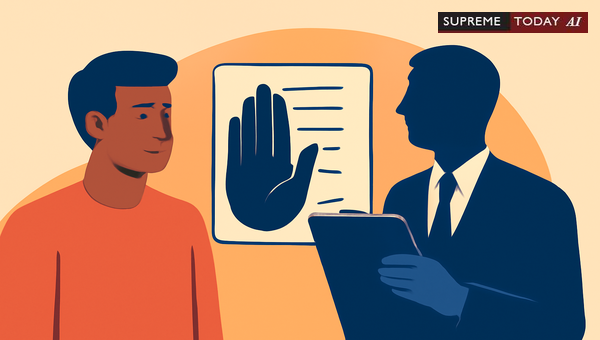
In high-stakes legal battles, the plays a pivotal role in establishing facts and ensuring justice. But what happens when a witness refuses to sign their deposition? Does the accused have specific rights in this scenario? The question, Depositions of Witness before Court does Accused have a Right, often arises in Indian courts, touching on procedural fairness under the , and the .
This blog post delves into the legal framework governing witness depositions, the implications of refusals to sign, available court remedies, and the accused's position. Drawing from key statutes, case law, and judicial precedents, we provide a comprehensive overview. Note: This is general information based on Indian law and should not be considered specific legal advice. Consult a qualified lawyer for your case.
Depositions are formal statements recorded by witnesses before a court or authorized officer. Under , the court must read the deposition back to the witness, correct any mistakes, and direct the witness to sign it. The judge or presiding officer also signs to authenticate it. This dual signature creates a under , where a document purporting to be signed by a public officer is presumed genuine unless proven otherwise. 1987 0 Supreme(Ker) 345
The accused, as a party to the proceedings, has a vested interest in the accuracy and admissibility of these depositions, as they form crucial evidence. However, the primary obligation to sign lies with the witness, and courts prioritize substantive justice over procedural technicalities.
Courts bear the responsibility to verify depositions for accuracy. If a witness identifies errors, the court corrects them—even against opposition—and directs signing. This process safeguards the record's reliability, benefiting all parties, including the accused. 1987 0 Supreme(Ker) 345
A witness's refusal to sign is typically treated as a , not a fatal flaw, if the deposition is otherwise properly recorded and authenticated. Courts have held that such refusals do not automatically vitiate proceedings, provided signatures can be obtained later or the record is reliable. 1975 0 Supreme(Del) 119 1966 0 Supreme(AP) 281
For the accused, this means depositions without signatures may still be admissible if taken under judicial supervision. In one case, depositions signed by witnesses but not the judge were upheld due to overall . 1975 0 Supreme(Del) 119
Refusal can even attract penalties under the if the witness defies a court direction, underscoring the seriousness of non-cooperation. 1987 0 Supreme(Ker) 345
In disciplinary inquiries, a party's refusal to sign proceedings (e.g., during defense witness examination) was not deemed fatal, as the record and representation by counsel sufficed. 2015 0 Supreme(Del) 66 Petitioner’s presence is shown when defence witnesses were examined and for reasons unknown petitioner refused to sign the proceedings.
Indian courts wield discretionary powers to remedy such issues, ensuring —a fundamental right under .
The presiding judge can mandate the witness to sign post-correction, even if initially refused. This upholds without undue delay. 1987 0 Supreme(Ker) 345
Under , courts may recall witnesses sparingly to clarify or re-examine depositions. This is invoked for truth ascertainment or irregularity correction, not routine use. 1987 0 Supreme(Ker) 345 1966 0 Supreme(AP) 281
Courts exhaust all means to secure evidence. For elusive witnesses, allows commissions or video-conferencing. In a murder trial, the directed issuance of commission after the prematurely closed prosecution evidence: The duty of the court to exhaust all means to ensure relevant evidence is brought on record, including the issuance of commission for examination of witnesses... 2022 0 Supreme(J&K) 524
Prosecution efforts to examine 13 witnesses despite challenges highlight courts' insistence on completing evidence. 2022 0 Supreme(J&K) 524
Unsigned depositions remain admissible if properly supervised. In appeals against acquittal, courts meticulously reviewed depositions: We have examined very carefully depositions of witnesses as well as the evidence recorded by the learned . No perversity warranted interference. 2015 0 Supreme(Bom) 140 2014 0 Supreme(Bom) 2211
Refusals often intersect with broader trial fairness. In a case involving medical examination refusal and magistrate-recorded statements, multiple witnesses were examined despite challenges, emphasizing procedural continuity.
AKSHAY OJHA Vs STATE OF ODISHA
Forced signing allegations were raised but countered by examining 21 witnesses, showing courts' focus on overall evidence. 2023 Supreme(Online)(MAD) 39569 They also compelled her to sign in the blank papers. When the defacto complainant refused to sign... prosecution has examined 21 witnesses...
In transfer petitions, concerns over deposition quality (e.g., vital questions unanswered) underscore the accused's right to fair argument: On , the petitioner was not prepared to argue the case as he was aware that arguing the case on the basis of the depositions recorded by the would ruin his case. 2019 0 Supreme(Ker) 819
Disciplinary contexts reinforce that refusals do not undermine proceedings if opportunities were provided. 2021 Supreme(Online)(KER) 3817
False depositions or forged recoveries are scrutinized, but natural witness evidence holds if credible. 2015 0 Supreme(All) 197
| Remedy | Legal Basis | When Applicable ||--------|-------------|-----------------|| Direct Signing | Order 18 Rule 5 CPC | Initial refusal or errors 1987 0 Supreme(Ker) 345 || Witness Recall | | Clarification needed 1987 0 Supreme(Ker) 345 || Commission/Video | | Absent witnesses 2022 0 Supreme(J&K) 524 || Admissibility | Evidence Act S.80 | Supervised recording 1975 0 Supreme(Del) 119 |
While the accused does not have a direct right to control witness depositions, Indian law robustly protects their interest in fair, authentic evidence. Courts prioritize justice over technicalities, employing remedies like directing signatures, recalls, and alternative recordings. Cases affirm that refusals or irregularities seldom invalidate proceedings if substantive fairness prevails. 1975 0 Supreme(Del) 119 1966 0 Supreme(AP) 281
Stay informed, but for personalized guidance—especially in ongoing trials—engage a legal expert promptly. Understanding these nuances empowers better navigation of court processes.
References:- 1987 0 Supreme(Ker) 345 1975 0 Supreme(Del) 119 1985 0 Supreme(Gau) 21 1966 0 Supreme(AP) 281 2022 0 Supreme(J&K) 524 2015 0 Supreme(Del) 66 2015 0 Supreme(Bom) 140 2014 0 Supreme(Bom) 2211
Last updated: Current insights from Indian jurisprudence.
#WitnessDeposition #IndianCourtLaw #AccusedRights


Police sent me to medical but I refused to be examined. Police also took me to Barbil Court and produced me before Magistrate, who recorded my statement. ... It is further submitted that in the meantime ten witnesses have been examined in course of trial and all the independent Page 2 of 3 witnesses including the ... Upon hearing Mr.Mohapatra, learn....

It is recorded in the enquiry report that petitioner has attended the enquiry on all dates but refused to sign on the depositions given by the prosecution witnesses ... On behalf of the Department, as many as 22 witnesses have been examined as P.W.1 to P.W.22. ... and also refused to cross-examine them. ... In addition, she has refused#....

They also compelled her to sign in the blank papers. When the defacto complainant refused to sign the accused persons scolded her in filthy language and also beaten her. ... That apart prosecution has examined 21 witnesses inorder to prove the occurrence. ... 6.The learned counsel for the petitioner would submit that though there are some discrepancies in the depositions of....

It is necessary to enable the appellate court to know whether the interpretation of the sign is correct or not. ... In case the witness is not able to read and write, his statement can be recorded in sign language with the aid of interpreter, if found necessary. ... When a deaf and dumb person is examined in the court, the court has to exercise due caution and take care....
They could easily record the information, explain it to the deponents and get them to swear to their depositions and sign them. ... They could then produce the witnesses and the Magistrate would act wisely in explaining the depositions to the witnesses and seeing that they stand by them and he could make a record of what, he has done. ... There a, witness was taken before a Magistrate, who ....
it were admitted by reading that evidence in the presence of the witnesses when the accused came before the Court and stood his trial. ... Proctor Rodrigo in withdrawing from the case when the postponement was refused. These undersirable tactics-they are no less-are becoming somewhat frequent. I had occasion recently to comment on a similar incident in a case from the Magistrate's Court at Point Pedro. ... Evidence i....

It was found therein that though the Court has the discretion to allow a party to appear as a witness at a later stage, the imperative mandate is that a party shall always be examined before his witnesses are examined. ... The High Court relying on the provisions of Order 18 Rule 3-A CPC observed that normal and healthy practice which is adopted by the trial court is, to call upon the pa....

It is contended that the prosecution was able to have got recorded depositions of 13 witnesses and the prosecution despite the strenuous efforts has not been successful in securing the presence of the other witnesses and even the learned court below issued notices and warrants for securing the presence ... and as per the evidence on record, the prosecution has failed to establish the guilt against them an....

were allowed to be examined and that their depositions have not been recorded by the second respondent. ... That apart, in Ext.P5, the Government has recorded that enough opportunity had been given to the petitioner to examine and cross examine the witnesses and that Ext.P3 has been settled on the basis of the “depositions” from such witnesses. ... The petitioner, thro....

to such payment, the learned trial Court shall give one last opportunity to the petitioner to cross-examine the witnesses of the defendants on the next date. ... had sought an adjournment on that date because of his ill health, but the learned trial Court has wrongly observed in the order-sheet that the petitioner has refused to lead evidence. ... has tried to make false averments in the application filed before the learne....

On 25.9.2019, the petitioner filed an application before the trial court seeking adjournment of the hearing of the matter for the purpose of filing a transfer petition. On 25.09.2019, the petitioner was not prepared to argue the case as he was aware that arguing the case on the basis of the depositions recorded by the trial court would ruin his case. After getting the certified copies of the depositions, when the defence lawyer perused them, it came to his notice that, many of the vital questi....

Police papers and recovery memo are forged and false. The witnesses have made false depositions before the court.

Petitioner’s presence is shown when defence witnesses were examined and for reasons unknown petitioner refused to sign the proceedings. The argument that the Inquiry Officer pressurized the petitioner to amend the letter requisitioning the documents is baseless and meaningless because the writ petitioner was represented through a defence assistant and it is unbelievable that the Inquiry Officer pressurized the petitioner to amend the letter requisitioning the documents.

8. We have examined very carefully depositions of witnesses as well as the evidence recorded by the learned trial Court. Consequently, the present Appeal against acquittal being devoid of merit and substance, stands dismissed. We do not notice any perversity in the reasoning of the learned trial Court to warrant interference in an Appeal against acquittal.

We do not notice any perversity in the reasoning of the trial Court to warrant any interference in an appeal against acquittal. 5. We have examined very carefully depositions of the witnesses as well as the findings recorded by the trial Court. Consequently, this appeal against acquittal being devoid of any merits, is therefore, dismissed.


An indispensable Tool for Legal Professionals, Endorsed by Various High Court and Judicial Officers
Please visit our Training & Support
Center or Contact Us for assistance

Scan Me!
India’s Legal research and Law Firm App, Download now!


For Daily Legal Updates, Join us on :



 Back to top


