


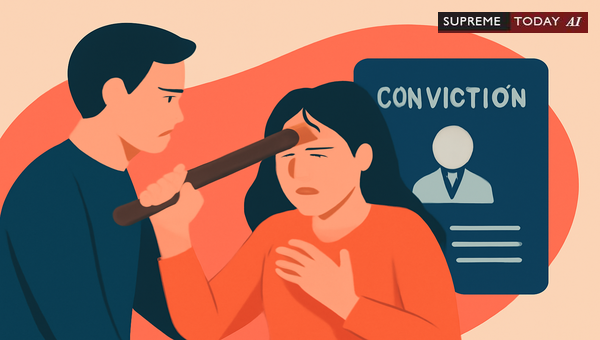
Can Acquittal Under IPC Section 307 for Lathi Hit on Forehead Lead to Section 326 Conviction?
In the heat of a dispute, a blow from a lathi (stick) to the forehead can result in serious injuries, sparking intense legal battles over charges like . But what happens when a court acquits an accused under —punishment for —due to insufficient evidence of lethal intent? Does this bar a conviction for the lesser but still grave offense under — by dangerous weapons?
This question, often phrased as S 307 by Lathi Hit on the Forehead Acquittal, arises frequently in assault cases involving . Generally, courts have held that such an acquittal does not preclude a conviction under Section 326, provided the evidence supports . This blog post delves into the legal nuances, drawing from judicial precedents and key principles to clarify this issue. Note: This is general information based on case law and not specific legal advice. Consult a qualified lawyer for your situation.
Understanding the Core Legal Issue
targets acts done with the that they are likely to cause death. It doesn't always require injuries on vital parts, but the prosecution must prove or () 1991 0 Supreme(SC) 153.
In contrast, applies to voluntarily causing using dangerous weapons like a lathi, focusing on the severity of harm rather than death intent. Injuries from blunt objects on the forehead—while painful and potentially grievous (e.g., fractures)—may not suffice for Section 307 if they lack proof of lethal aim 1991 0 Supreme(SC) 153.
Courts typically analyze:- : Blunt like lathi vs. sharp or firearms.- : Forehead (non-vital) vs. vital organs.- : Number of blows, circumstances, and medical reports.
Key Judicial Findings: Acquittal Under 307 Compatible with 326 Conviction
Legal documents affirm that an acquittal under Section 307 for a lathi hit on the forehead does not necessarily preclude a conviction under Section 326 1991 0 Supreme(SC) 153. The reasoning? Injuries from on often fail the '' threshold but clearly establish .
For instance, courts have noted: Since injury sustained on head by the deceased which proved to be fatal has not been attributed to any one of the appellants, they can be held guilty only under .1991 0 Supreme(SC) 153 2023 0 Supreme(Raj) 1360. Here, blunt instrument injuries were proven by (PW-4), leading to Section 326 convictions despite Section 307 acquittal 2023 0 Supreme(Raj) 1360.
The clarifies that Section 307 hinges on , not just injury severity: it is not necessary to prove that the injury was on a vital part or that it was of a nature likely to cause death; what matters is the .1991 0 Supreme(SC) 153. Yet, for lathi blows to the forehead, evidence often shows no such intent, shifting focus to Section 326.
Relevance of Injury Nature and Weapon Used
A lathi is a blunt weapon, capable of causing fractures or lacerations but rarely instant death unless repeatedly aimed at vital spots. Forehead injuries, though serious, are typically non-fatal without complications 1991 0 Supreme(SC) 153. Medical testimony plays a pivotal role:- indicators: Fractures, dislocations, or injuries endangering life ().- Non-lethal profile: Simple or superficial blunt trauma.
In one analyzed case, injuries were caused by blunt instruments or stones, insufficient for Section 307 but fitting Section 326 2023 0 Supreme(Raj) 1360.
Insights from Related Case Law
Several precedents reinforce this distinction, integrating blunt weapon assaults:
In a case involving multiple assailants, a lathi hit followed a missed gunshot, but simple injuries led to acquittal under serious charges due to inconsistencies and enmity motives 2024 Supreme(Online)(ALL) 186. The appellate court upheld acquittal, emphasizing limited interference in acquittal judgments unless perverse.
Another incident saw lathi blows to the back and forehead during a sudden quarrel, resulting in conviction modification from murder () to () or hurt (), highlighting lack of 2024 0 Supreme(Jhk) 351. Narayan, Jeebu and Anil assaulted... with lathi which hit on his back and forehead.
claims succeeded where prosecution failed to explain accused injuries, leading to Section 307 acquittal despite lathi assaults and gunshot wounds 2025 0 Supreme(All) 3061. Bilua... started assaulting with lathi, due to which he sustained injuries on his head and legs.
Convictions under were upheld for chhura assaults post-Section 307 acquittal, based on injury seriousness: the seriousness of the assault and the resultant injury could have been gathered... leading to an inference that the appellant intended to cause... serious injuries.2011 0 Supreme(Pat) 2315.
Sudden fights without invoke , altering charges from murder to lesser offenses, even with lathi blows to head/legs 2009 1 Supreme 465.
These cases illustrate courts' flexibility: acquittal on higher charges doesn't bar lesser ones if evidence aligns 2012 0 Supreme(All) 1720 2005 0 Supreme(Del) 344.
Exceptions and Limitations
While compatible, convictions aren't automatic:- Vital part injuries or lethality: May sustain Section 307 (e.g., repeated blows).- or unexplained accused injuries: Can lead to full acquittal 2025 0 Supreme(All) 3061.- Sudden quarrels: May reduce to Part II or 323/324 2024 0 Supreme(Jhk) 351 2005 0 Supreme(Del) 344.
Prosecution must prove ; defense probabilities (e.g., robbery claims) can overturn convictions 2012 0 Supreme(All) 1720.
Practical Implications and Recommendations
For litigants and lawyers:- Analyze evidence meticulously: Weapon, injury reports, witness IDs.- Charge framing: Courts should opt for Section 326 for blunt, non-vital injuries to avoid acquittal risks.- Appellate strategy: Acquittals under 307 remain open for 326 if hurt is established 1991 0 Supreme(SC) 153.
Judges are urged to: carefully analyze the nature of injuries and the weapon used before framing charges under Section 307.
Conclusion: Key Takeaways
Generally, an acquittal under IPC Section 307 for a lathi hit on the forehead aligns with potential conviction under Section 326, as blunt weapon injuries on non-vital areas rarely prove intent 1991 0 Supreme(SC) 153 2023 0 Supreme(Raj) 1360. This judicial approach balances justice, punishing harm without overcharging.
Key Takeaways:- Prove intent/knowledge for 307; suffice hurt for 326.- is crucial.- Lesser convictions persist post-higher acquittals.- Consider context like sudden fights or .
Stay informed on evolving case law. For personalized guidance, seek professional legal counsel.
References:1. 1991 0 Supreme(SC) 1532. 2023 0 Supreme(Raj) 13603. 2024 Supreme(Online)(ALL) 1864. 2024 0 Supreme(Jhk) 3515. 2025 0 Supreme(All) 30616. 2011 0 Supreme(Pat) 23157. 2009 1 Supreme 4658. 2005 0 Supreme(Del) 344
#IPC307 #CriminalLaw #LegalAcquittal












