


Under What Law is an Filed in India?
Introduction
Losing a loved one is challenging enough, but managing their estate can add layers of legal complexity. If you're an heir, creditor, or legatee dealing with a deceased person's assets, you might need to file an . But under what law is such a suit filed? This question arises frequently in estate matters across India, where proper administration ensures fair distribution of assets, settlement of debts, and protection of rights. 2018 0 Supreme(Bom) 694
In this comprehensive guide, we'll explore the legal framework, procedures, and key considerations for administration suits. While this information is generally helpful, it's not a substitute for professional legal advice—consult a qualified lawyer for your specific situation.
What is an ?
Administration suits are typically filed to seek the administration of the estate of a deceased person under court orders. 2018 0 Supreme(Bom) 694 These suits involve reliefs such as distributing assets, settling debts, and determining heirs' rights. The key element is the involvement of administering the deceased's estate. 2018 0 Supreme(Bom) 694
Unlike ordinary civil suits, an refers to a type of relief rather than a specific cause of action. 2018 0 Supreme(Bom) 694 It's often initiated when there's no will () or the executor fails to act, requiring to legally manage the estate.
Common Scenarios for Filing
- Heirs or legatees seeking their share in the residue (). 2018 0 Supreme(Bom) 694
- Creditors claiming debts (—within 3 years from accrual). 2018 0 Supreme(Bom) 694
- Contested estates involving immovable properties, where jurisdiction may be challenged based on location. 2021 0 Supreme(Bom) 932
Primary Law Governing Administration Suits
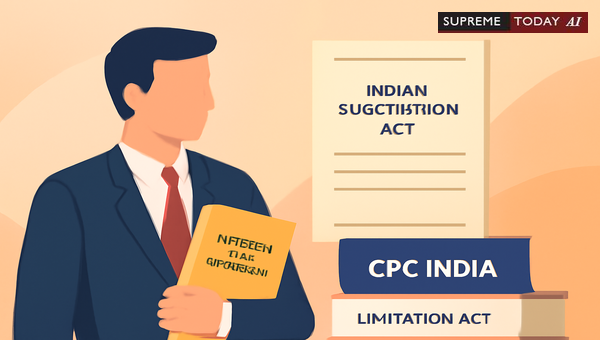
An is primarily filed under the (Section 278), which governs the grant of . This Act provides legal authority to administer the estate when no will is proved or the executor doesn't act. The proceedings are treated as a , with the petitioner acting as the . (e.g., 2024 0 Supreme(Mad) 977, 2024 0 Supreme(Mad) 732, 2022 0 Supreme(Ker) 919, 2023 0 Supreme(All) 1436)
Key Provisions from the Indian Succession Act:- Applications for are filed before the or court with jurisdiction under the Act.- Once granted, states: no other person can file a suit in estate matters unless the grant is revoked. 2024 0 Supreme(Mad) 977
The governs the overall procedure for filing and adjudicating these suits. 1976 0 Supreme(SC) 312 Contested applications convert into full suits, with pleadings and evidence following CPC rules. (e.g., 2022 0 Supreme(Jhk) 949, 2022 0 Supreme(Ker) 919, 2024 0 Supreme(Guj) 2207)
Additionally, the sets time limits:- Depends on the cause (e.g., creditor vs. heir). 2018 0 Supreme(Bom) 694- Legacy/share: Article 106. 2018 0 Supreme(Bom) 694- Creditor: Article 113 (3 years). 2018 0 Supreme(Bom) 694
Jurisdiction and Procedure
Jurisdiction lies with the or courts empowered under the Succession Act to hear civil suits related to estates. 2022 0 Supreme(Jhk) 949
If immovable properties are involved, challenges may arise based on their location. 2021 0 Supreme(Bom) 932
Step-by-Step Procedure
- File Application: Submit for , affirming no prior application elsewhere. Hence, the suit is filed for grant of . 2017 0 Supreme(Mad) 1402 2017 0 Supreme(Mad) 1494
- Contest or Caveat: If opposed, it converts to a suit—petitioner as , as . 2022 0 Supreme(Ker) 919
- Court Directions: Administer debts first, then legacies; file inventory within 6 months. Hence, they filed the present suit for ... undertakes to duly administer... within six months. 2017 0 Supreme(Mad) 12
- Adjudication: Follow CPC; court acts as in some cases, like temple properties. 2022 0 Supreme(Mad) 983
In cases like trusts, suits may seek declarations against mismanagement, akin to administration actions. I do not see how on principle the present suit differs from an administration action. 2022 Supreme(Online)(Mad) 60693
Key Considerations and Limitations
- Time Bars: Strictly apply; e.g., specific performance suits have 3-year limits, extendable in cases like vendor's demise. The suit is filed within the period prescribed under the law. 2021 0 Supreme(Mad) 323
- Court's Inherent Powers: May stay proceedings if a prior suit exists. Since the petition filed by the first respondent is later... the court below should not have stayed. 2023 0 Supreme(Kar) 614
- Maintainability: Executive officers can file for public institutions. The suit filed by the Executive Officer is maintainable. 2022 0 Supreme(Mad) 983
Always verify facts—no disputes on mismanagement unless pleaded. 2022 Supreme(Online)(Mad) 60693
Challenges and Case Insights
Courts emphasize procedural compliance. For instance, later petitions shouldn't stay earlier proceedings. 2023 0 Supreme(Kar) 614 In probate-like matters, no other court applications should precede. 2017 0 Supreme(Mad) 12
Jurisdiction disputes often hinge on property location or original competence. 2021 0 Supreme(Bom) 932 2022 0 Supreme(Jhk) 949
Conclusion and Key Takeaways
Administration suits in India are governed by the (esp. Section 278), supplemented by the CPC and Limitation Act. They ensure orderly estate management but require timely action and proper jurisdiction. 2018 0 Supreme(Bom) 694 2006 4 Supreme 502 2008 0 Supreme(Bom) 1322
Key Takeaways:- File under Succession Act for .- Follow CPC for contested suits.- Mind limitation periods per your status.- Jurisdiction: or equivalent.
This framework promotes fairness, but specifics vary. Seek tailored advice from a legal expert to navigate your case effectively. For more on estate laws, stay tuned to our blog.
(Word count: 1028. All info is general; not legal advice.)
#AdministrationSuit #IndianSuccessionAct #EstateLaw















