


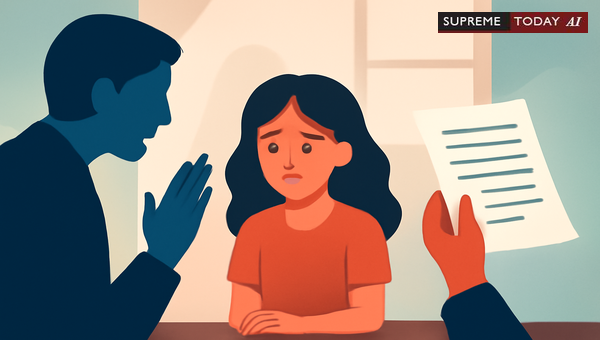
: Can It Convict in India?
In the realm of Indian criminal law, a common question arises: —can the word of a single witness alone secure a conviction? This issue often puzzles litigants, lawyers, and the public alike. While the principle of '' demands robust evidence, courts have long held that quantity does not always trump quality. This blog delves into the nuances of under Indian law, drawing from precedents and key judgments to clarify when it suffices and when corroboration is essential.
Understanding this is crucial for anyone involved in litigation, as it influences trial strategies and appeals. Note that this is general information based on judicial trends and should not be taken as specific legal advice—consult a qualified lawyer for your case.
General Principles of
Indian courts, particularly the , have established clear guidelines on relying on a single witness's testimony without corroboration. The cornerstone is reliability. A court can act on if it is found to be , with no legal bar to conviction. 1992 0 Supreme(SC) 200 1992 0 Supreme(MP) 180
The classifies witness testimony into three categories:- : Can form the basis of conviction alone.- : Cannot sustain a conviction.- nor : Requires corroboration in , and courts must proceed with caution. 1992 0 Supreme(SC) 200 1992 0 Supreme(MP) 180
This classification underscores that corroboration is not a rigid rule but a matter of , depending on facts and circumstances. Courts prioritize the quality of evidence over the number of witnesses. 1979 0 Supreme(Ker) 132 2007 0 Supreme(Cal) 664
For instance, in cases involving attempt to murder under , courts have emphasized that the evidence of an injured witness can inspire full confidence if unimpeached. The evidence of injured inspires full confidence and therefore, conviction can be safely based on his evidence. The medical evidence supports the informants unimpeached testimony. 2020 0 Supreme(Bom) 938 Similarly, in another Section 307 case, the court upheld conviction based on the injured victim's testimony, corroborated by medical evidence, noting the accused's intention inferred from circumstances like repeated knife blows. 2020 0 Supreme(Bom) 1339
Specific Considerations for Vulnerable Witnesses
Certain witnesses demand extra scrutiny due to their vulnerabilities.
Child Witnesses
There is no absolute prohibition on accepting a child witness's , but prudence dictates seeking corroboration. Children's testimony may be influenced by external factors, making reliability assessment critical. 2016 0 Supreme(HP) 1600
Victims in Sexual Assault Cases
In sexual offense cases under , a victim's credible testimony can stand alone without corroboration. However, contradictions or reliability doubts necessitate supportive evidence. Medical evidence corroborates the testimony of the . 2018 0 Supreme(Bom) 159 Courts have rejected baseless arguments, like claims that rape cannot occur during menstruation, affirming that such testimony, when reliable, suffices. 2018 0 Supreme(Bom) 159
Injured Witnesses
Testimony from injured witnesses carries weight due to their direct involvement, but uncorroborated versions require careful scrutiny. Absence of corroboration may hinder conviction, as seen in property and assault disputes where medical or other evidence bolsters the account.
In civil contexts, like probate under the , uncorroborated claims of lost documents fail if not proven beyond doubt. His testimony in that behalf remained uncorroborated. 2018 0 Supreme(Mad) 2615 The court refused probate, holding that suppressing evidence undermines claims.
Judicial Approach: Balancing Discretion and Caution
Courts exercise discretion judiciously, evaluating factors like:- Consistency in the witness's statement.- Demeanor and opportunity to observe events.- Independent corroboration in material aspects, even if not essential.- Nature of the offense and stakes involved.
In recovery suits under , unchallenged testimony may prove documents, but ownership claims falter without broader proof. Testimony of this witness has also gone unchallenged. 2018 0 Supreme(Del) 700 Yet, the court dismissed claims where land was public right-of-way, highlighting the need for comprehensive evidence. 2018 0 Supreme(Del) 700
The repeatedly stresses: Conviction cannot rest on fanciful doubts but must withstand rigorous testing. If testimony is sterling and inspires confidence, a single voice can echo justice. 1992 0 Supreme(MP) 180
Practical Recommendations for Litigants
To strengthen your case involving :- Thoroughly assess reliability: Cross-examine effectively to expose inconsistencies.- Gather supporting evidence: Medical reports, forensics, or circumstantial proof can tip scales.- Contextualize the testimony: Highlight motives, opportunities, and consistencies.- Prepare for appeals: Courts modify sentences or fines based on totality, as in Section 307 cases where fines compensated victims. 2020 0 Supreme(Bom) 1339
If primary testimony raises doubts, bolster it proactively—courts appreciate comprehensive evidence.
Conclusion: Reliability Over Multiplicity
can indeed lead to conviction in India if deemed , but courts remain vigilant, especially for vulnerable witnesses. The presiding judge's discretion, guided by precedents, ensures fairness. Key takeaway: Focus on quality— a single truthful witness outweighs a crowd of doubters.
While these principles provide general guidance, outcomes vary by case specifics. Always seek professional legal counsel. For more insights on Indian evidence law, stay tuned.
References: 1992 0 Supreme(SC) 200 1992 0 Supreme(MP) 180 1979 0 Supreme(Ker) 132 2007 0 Supreme(Cal) 664 2016 0 Supreme(HP) 1600 2014 0 Supreme(MP) 12652020 0 Supreme(Bom) 938 2020 0 Supreme(Bom) 1339 2018 0 Supreme(Bom) 159 2018 0 Supreme(Mad) 2615 2018 0 Supreme(Del) 700
#UncorroboratedTestimony #IndianLaw #EvidenceLaw















