


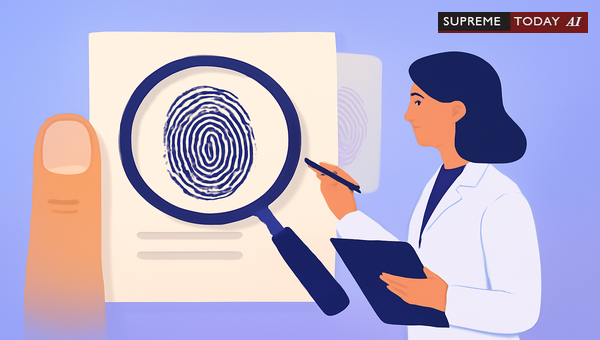
Can Be Exhibited as Court Evidence?
In legal proceedings, documents bearing often play a pivotal role, especially in cases involving illiterate parties or property disputes. But a common question arises: Can Thumb Impression be Exhibited by an Investigating Officer (IO) during evidence? The answer isn't a simple yes or no. Generally, while can be produced and marked as exhibits, their comparison and hinge on strict legal conditions, particularly expert forensic analysis. This post delves into judicial precedents, procedural requirements, and best practices under Indian law, drawing from key court rulings.
Note: This article provides general information based on judicial decisions and is not legal advice. Consult a qualified lawyer for case-specific guidance.
The Role of Investigating Officers in Handling
The IO's primary duty is to collect and preserve evidence, not to act as a forensic expert. Courts have consistently held that IOs cannot independently compare without expert support. For instance, the comparison of by an IO at the time of evidence without the benefit of expert opinion is not permissible 2024 0 Supreme(Del) 804.
In evidence collection, the IO may record , but exhibiting them conclusively requires more. As noted, mere production and marking of a document as exhibit by Court cannot be held to be a due proof of its contents and its execution has to be proved or admitted that the document was written and that the person voluntarily affixed his signature or thumb impression 2003 7 Supreme 664. Without this foundation, such exhibits lack .
Legal Principles Governing Admissibility
Thumb impression comparison is recognized as a far more accurate and exact result than comparison of handwriting 2013 4 Supreme 318. The has affirmed that the science of identifying thumb impression is an and does not admit of any mistake or doubt 1979 0 Supreme(SC) 130. However, this precision demands expert involvement under , which allows opinions from fingerprint experts.
Courts emphasize that IOs must limit themselves to preservation. The comparison of can only be properly done with the assistance of an expert 2008 0 Supreme(SC) 284. Relying solely on an IO's visual comparison at trial is typically unreliable and inadmissible.
Judicial Decisions on Exhibiting
Several rulings clarify these boundaries:- In one case, the court ruled that without expert evidence, IO-led comparisons are impermissible, directing impressions be sent for forensic scrutiny 2024 0 Supreme(Del) 804.- Another judgment cautioned that court comparisons without experts are hazardous, requiring detailed reasoning if undertaken 2008 0 Supreme(SC) 284.- The IO's function mirrors recording , where the recorder ensures fitness but doesn't opine on authenticity: the person who records a dying declaration must be satisfied that the maker is in a fit state of mind and is capable of making such a statement 2011 0 Supreme(SC) 1065.
These principles ensure scientific rigor, preventing miscarriages of justice from casual assessments.
Insights from Additional Case Law
Broader jurisprudence supports exhibiting when procedures are followed. For example, the of exhibited documents, including , can be analyzed at the time of final judgment
. Courts have allowed forensic referrals for wills and agreements bearing thumb marks, such as sending documents under Section 45 for comparison with registered specimens
.
However, procedural hurdles exist. In Md. Shamsul Hoque S/o Late Rustom Ali vs State of Assam Rep. By the Deputy Collector - _176_2023, a request for forensic examination of a thumb impression on Exhibit-4 was rejected because it was never exhibited during the trial nor its authenticity or genuineness was specifically challenged during the trial. This underscores that impressions must be properly marked and contested timely.
Other cases highlight authentication challenges: absence of transferee thumb marks on deeds raised doubts
, and presumptions under apply to aged documents (over 30 years) for signatures/ unless rebutted
. Attesting witnesses can bolster genuineness, as in wills where experts confirmed matches 2024 Supreme(Online)(MAD) 16202.
Exceptions and Cautions
Limited exceptions allow courts to compare impressions themselves if explicit and visible, but only after thorough analysis and reasons, and not casual perusal 2008 0 Supreme(SC) 284. Vague or smudged prints demand expert aid—guessing is prohibited.
Key limitations include:- No independent IO exhibition without expert backing.- Procedural lapses (e.g., no trial challenge) bar late forensics 2024 0 Supreme(Gau) 1496.- Mere marking doesn't prove contents 2003 7 Supreme 664.
Recommendations for Litigants and IOs
To ensure admissibility:- Collect Properly: IOs should secure impressions with witnesses and send for expert analysis promptly.- Seek Expert Opinion: Rely on Section 45 for forensic reports from fingerprint bureaus.- Exhibit Strategically: Mark documents early and challenge authenticity during trial to enable forensics 2021 Supreme(Online)(MP) 5536.- Presume for Old Docs: Leverage for ancient documents.
Courts recommend: should be compared and proved through expert opinion under .
Conclusion and Key Takeaways
are powerful evidence tools but demand expert validation for exhibition and comparison. While IOs can produce them, conclusive reliance requires forensic support—casual IO or court comparisons are generally inadmissible. Integrating lessons from cases like 2013 4 Supreme 318 2024 0 Supreme(Del) 804 and 2024 0 Supreme(Gau) 1496, proper procedure is paramount.
Key Takeaways:- Exhibit with foundation; compare via experts.- Challenge timely to unlock forensics.- Science trumps subjectivity for accuracy.
Stay informed on evolving precedents to strengthen your cases. For tailored advice, engage legal experts.
#ThumbImpressionEvidence, #LegalForensics, #IndianEvidenceAct












