Searching Case Laws & Precedent on Legal Query..!
Scanned Judgements…!



Searching Case Laws & Precedent on Legal Query..!
Scanned Judgements…!
Section 138 of the N.I. Act - Only the drawer of the cheque can be prosecuted under Section 138. The act involves dishonour due to insufficient funds or other reasons, and presumes liability once the cheque is admitted to be signed by the drawer, unless rebutted by evidence. 2023 0 Supreme(P&H) 2393, 2023 0 Supreme(Cal) 345, 2025 0 Supreme(HP) 94, 2024 0 Supreme(Raj) 670, 2025 0 Supreme(Ker) 2550
Admissibility of Cheque and Signature - The signature on the cheque, once admitted, creates a presumption of liability for the amount and the debt or liability it represents. However, this presumption can be rebutted with evidence showing absence of debt, prior payment, or other valid defenses. 2025 0 Supreme(HP) 94, 2023 0 Supreme(Cal) 345, 2024 0 Supreme(Raj) 670
Existence of Debt or Liability - For Section 138 to apply, there must be a legally enforceable debt or liability on the date of cheque issuance. If the cheque is issued as an advance or without a subsisting debt, the offence may not be made out. The date of the debt's existence (e.g., at the time of issuance or maturity) is crucial. 2025 0 Supreme(HP) 94, 2024 0 Supreme(Raj) 670
Rebuttal of Presumption - The accused can rebut the presumption by proving that the cheque was issued without consideration, after repayment, or in a context that does not constitute a debt or liability. Evidence such as prior payments, absence of demand, or the cheque being blank or obtained fraudulently can negate liability. 2025 0 Supreme(Mad) 4907, 2023 0 Supreme(Cal) 1372, 2025 0 Supreme(Ker) 2550
Legal Proceedings and Notices - Proper issuance of demand notices and response thereto are vital. Denial of liability in reply to such notices can be a defense. Also, the absence of a demand or notice for the specific cheque amount weakens the case under Section 138. 2023 0 Supreme(Cal) 1372, 2025 0 Supreme(Mad) 4907
Special Cases - Cheques issued in blank or without a date, or obtained through fraud, may not automatically attract liability under Section 138. The court considers whether the cheque represented a discharge of an existing debt and whether the cheque was presented within the validity period. 2025 0 Supreme(Mad) 2691, 2024 0 Supreme(Raj) 670
Analysis and Conclusion:
Admitting that a cheque is signed by the drawer does not automatically mean the cheque is admitted in the sense of acknowledging a debt under Section 138. The key points are that the cheque must be drawn for consideration, and there must be a subsisting, legally enforceable debt or liability at the time of issuance or maturity. The burden of proof can shift to the accused to rebut the presumption, especially if the cheque was issued without consideration, in blank, or obtained fraudulently.
Therefore, signing a cheque alone does not automatically mean the cheque is admitted as a debt under Section 138 of the NI Act. The court will examine the facts, including the existence of a debt, the circumstances of issuance, and whether proper demand was made and responded to, before concluding whether the cheque is admitted and whether the section applies.
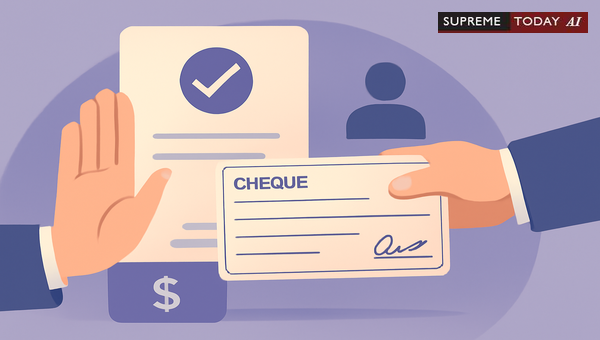
In the fast-paced world of business transactions, cheques remain a common payment method despite digital alternatives. However, when a cheque bounces, it can lead to serious legal consequences under (). A frequent question arises: Whether if the sign is admitted, it means the cheque is admitted and Section 138 is made out?
This query often surfaces in cases, where the accused admits signing the cheque but disputes the underlying debt or liability. This blog post delves into the legal nuances, drawing from established case laws and judicial precedents. We'll examine the presumptions, , and practical implications. Note: This is general information and not specific legal advice. Consult a qualified lawyer for your situation.
Section 138 penalizes the dishonour of a cheque due to insufficient funds or exceeding arrangements, provided certain conditions are met, such as issuance for a and proper demand notice. The cornerstone is , which creates a that the cheque was issued for discharge of a or liability in favor of the holder.
Once the accused admits the signature on the cheque, it is generally presumed that the drawer issued it validly. This admission shifts the focus to whether the cheque represents a debt. As held in judicial precedents, The admission of the signature on a cheque by the accused is a critical factor in establishing liability under Section 138... Once the signature is admitted, it is presumed that the cheque was issued in discharge of a or liability, unless the accused can provide evidence to the contrary. 2016 0 Supreme(Del) 3340 2016 0 Supreme(Del) 4088 2019 0 Supreme(P&H) 2070
Further, supports this by presuming consideration unless rebutted. Importantly, details like payee name, date, or amount filled post-signature do not invalidate it: It does not matter if the details such as the name of the payee, date, and amount are filled in after the signature is provided. The mere admission of the signature suffices to establish the offence under Section 138, provided the cheque is otherwise valid. 2016 0 Supreme(Del) 4088
Indian courts have consistently upheld this principle through key judgments:
: The clarified that once the signature on the cheque is admitted and the cheque is dishonoured, the offence under Section 138 is made out. 2016 0 Supreme(Del) 3340 This case emphasizes that the complainant need not prove the debt initially; the onus shifts to the accused.
: Reinforcing the above, the court stated that a signed cheque, even if filled in by another person, remains valid, and the drawer is presumed liable unless they can prove otherwise. 2022 7 Supreme 412 This underscores the drawer's responsibility post-signature admission.
These rulings establish that admitting the signature typically makes out a prima facie case under Section 138, but it's rebuttable.
While admission of signature creates a strong , it's not absolute. Courts examine the cheque's validity and context. Several scenarios from judicial sources highlight exceptions:
Even with admitted signatures, no arises if the cheque is invalid. For instance: Though, the signature on the cheque Ex.P1 is admitted by the accused, no can be drawn under Section 138 of the Act. The can be drawn only if a valid and legal negotiable instrument is in existence. 2019 0 Supreme(Kar) 753 Blank cheques obtained coercively may not attract liability: complainant himself has admitted that on the complaint regarding blank cheque of accused Mangal Ram, police had kept him sitting in police station overnight... 2023 0 Supreme(Chh) 569
Section 138 requires a subsisting debt at issuance. For Section 138 to apply, there must be a or liability on the date of cheque issuance. If the cheque is issued as an advance or without a subsisting debt, the offence may not be made out. Cheques issued without consideration or post-repayment can be defended. 2025 0 Supreme(HP) 94 2024 0 Supreme(Raj) 670
In firm cases, signature admission ties liability: It is also the admitted fact that, he is the signatory in the cheque. Admittedly, in this case 2nd accused is the Managing Director of the firm. 2020 0 Supreme(Ker) 404 Yet, mere doesn't apply without charge/responsibility averments.
The accused's burden is not heavy—probable defense suffices: Once the signature is admitted, the can be drawn under Section 118... it is sufficient if he is able to make out a probable case. 2016 0 Supreme(Mad) 3891 Evidence like prior payments, fraud, or no demand notice helps: Denial of liability in reply to such notices can be a defense. 2023 0 Supreme(Cal) 1372 2025 0 Supreme(Mad) 4907
Other defenses include:- Cheque as security, not debt discharge. 2025 0 Supreme(Mad) 2691- Improper notice or presentation beyond validity. 2024 0 Supreme(Raj) 670- It is admitted that the aforesaid cheque was signed by the applicant. But courts below found issuance proven. 2019 0 Supreme(MP) 442 2019 0 Supreme(MP) 497
For complainants, secure signature admission early via . Serve under . For accused:- Gather evidence rebutting debt (receipts, communications).- Challenge cheque validity if blank/fraudulent.- Respond to notice denying liability.
Only the drawer of the cheque can be prosecuted under Section 138. 2023 0 Supreme(P&H) 2393 Proper procedures are vital.
Admitting a cheque signature generally means the cheque is presumed issued for a debt, making out Section 138 —but only presumptively. Courts scrutinize facts: validity, debt existence, and . Cases like Vijay v. Laxman and Bir Singh support this, yet exceptions abound for invalid instruments or no consideration. 2016 0 Supreme(Del) 3340 2022 7 Supreme 412 2022 0 Supreme(P&H) 1685
Key Takeaways:- Signature admission shifts onus to accused. 2016 0 Supreme(Del) 4088- Rebut with probable evidence of no debt or invalidity. 2019 0 Supreme(Kar) 753- Always issue proper notices; respond promptly.- Prepare robust defenses early.
Disclaimer: Legal outcomes vary by facts. This analysis draws from precedents like 2016 0 Supreme(Del) 3340 2016 0 Supreme(Del) 4088 2022 7 Supreme 412 2019 0 Supreme(P&H) 2070 2022 0 Supreme(P&H) 1685 2023 0 Supreme(Chh) 569 2019 0 Supreme(Kar) 753 2020 0 Supreme(Ker) 404 2019 0 Supreme(MP) 442 2016 0 Supreme(Mad) 3891 2025 0 Supreme(HP) 94 2024 0 Supreme(Raj) 670 2023 0 Supreme(Cal) 1372 2025 0 Supreme(Mad) 4907 2025 0 Supreme(Mad) 2691. Seek professional advice for your case.
#Section138, #ChequeBounce, #NIACT


He also admitted that he had received Rs.2,00,000/- (Rupees Two Lakhs only) as advance sometime in October, 2010 and made representation to the Accused that he will bring all the legal heirs of the Narasimhaiah to sign the agreement. ... He had admitted that during the pendency of the suit in O.S.No.138 of 2007, he had made representation to the Defendant that they can enter into sale ag....

In the above situation, the allegations made by the complainant are rebutted. 20. According to the provisions of Sections 138(b), 138(c) and 142(b) of the N.I. ... The noteworthy fact in the case at hand that complainant himself has admitted that on the complaint regarding blank cheque of accused Mangal Ram, police had kept him sitting in police station overnight and also made signature ....

Section 138 of the N.I. Act.

This Court reiterates that it is only the drawer of the cheque who can be made an accused in any proceeding under Section 138 of the Act. ... In view of the above, the present petition is allowed and the complaint bearing No.NIACT/944/2019 titled as 'Joginder Singh v. ... Before proceeding further, it would be apposite to refer to the provisions of section 138 of the Negotiable Instruments Act. The same a....

The crucial question to determine the applicability of Section 138 of the Act is whether the cheque represents the discharge of existing enforceable debt or liability, or whether it represents an advance payment without there being a subsisting debt or liability. ... As the signature in the cheque is admitted to be that of the accused, the presumption envisaged in Section 118 of the Act....

Having admitted the fact that the cheque Exhibit 2 contains his signature, the accused person has incurred the liability to pay the money and also he has made himself culpable for the offence within the meaning of section 138 of the NI Act. ... Considering the language used in Section 138 of the NI ACT, it can be said that it is only the “drawer” of the cheque who can be made#....

The cheque in question was admitted as Exhibit-1 while Return memo is admitted as Exhibit-2. Notice was issued by the Complainant through his advocate, was admitted as Exhibit-3. Reply to the said notice by the drawer of cheque, received by the complainant was admitted as Exhibit-4. ... The question that calls for consideration is whether the language used in purported ....

Regarding this, the issue whether the offence of section-138 of Negotiable Instruments Act is made out from liability/debt existing on date of issuance of cheque or date of maturity comes up. ... This is unjust to the drawer who made a part payment already by some other means. Hence the court considered this submission and held that the date of maturity of the cheque sh....

means there is no sufficient funds. ... The learned Counsel for the Respondent therefore submitted that the learned Judicial Magistrate-I had arrived at a right conclusion that the Complainant did not have sufficient means to extend the loan and he was not able to prove the claim made in the complaint. ... In this case, the cheque was issued by the Accused in blank. The Bank to which the cheque was presen....

Sections 118 and 139 of the N.I Act in the following manner: Section 138 (b) of the N.I Act. In that circumstance, I find no reason to interfere with the findings in the impugned judgment that the complainant has not succeeded in proving the offence under Section 138 of the N.I Act against the accused.

In such circumstances, simply because there is no averments in the complaint to the effect that, the Managing Partner is in charge and responsible he cannot escape from responsibility. It is also the admitted fact that, he is the signatory in the cheque. Admittedly, in this case 2nd accused is the Managing Director of the firm.

Looking from any angle, the said explanation given by the complainant-appellant is not going to validate the cheque Ex.P1. Though, the signature on the cheque Ex.P1 is admitted by the accused, no presumption can be drawn under Section 138 of the Act. The presumption can be drawn only if a valid and legal negotiable instrument is in existence and if signature is admitted. When the said instrument itself is not valid then, under such circumstances all other contentions which ha....

On the other hand, both the Courts below found that disputed cheque Ex.P/1 was issued by applicant No. 1 himself. It is admitted that the aforesaid cheque was signed by the applicant.

It is admitted that the aforesaid cheque was signed by the applicant. On the other hand, both the Courts below found that disputed cheque Ex.P/1 was issued by applicant No. 1 himself.

Once the signature is admitted, the presumption can be drawn under Section 118 of the Negotiable Instruments Act and it is for the respondent/accused to rebut the presumption, though it is well settled that the burden is not so heavy on the Respondent/Accused to prove the rebuttal presumption and it is sufficient if he is able to make out a probable case." The Respondent also admitted the execution of Promissory Note but only disputed the date and receipt of consideration stated therein. #HL_S....


An indispensable Tool for Legal Professionals, Endorsed by Various High Court and Judicial Officers
Please visit our Training & Support
Center or Contact Us for assistance

Scan Me!
India’s Legal research and Law Firm App, Download now!


For Daily Legal Updates, Join us on :



 Back to top


