Searching Case Laws & Precedent on Legal Query.....!
Analysing the retrieved Case Laws
Scanned Judgements…!



Searching Case Laws & Precedent on Legal Query.....!
Analysing the retrieved Case Laws
Scanned Judgements…!
Vicarious Criminal Liability of AI - The sources primarily discuss traditional criminal liability principles, emphasizing that vicarious liability is generally not applicable in criminal law unless specific statutory provisions, such as Section 141 of the Indian Penal Code or the Negotiable Instruments Act, explicitly extend liability to individuals based on their role or connection to a corporation. These provisions require strict compliance with conditions and are interpreted narrowly, especially since criminal liability involves serious consequences Md. Fassihuddin VS State of Bihar (Now Jharkhand) - Jharkhand, Md. Fassihuddin VS State of Bihar (Now Jharkhand) - Jharkhand, Pawan Kumar Goel VS State of U. P. - Supreme Court, S. C. Garg VS State of Uttar Pradesh - Supreme Court, Nenshi Healthcare Thro Bhanushali Kishorkumar Damjibhai VS State of Gujarat - Gujarat, Girish Ghanshyambhai Golani VS State Of Gujarat - Gujarat.
Section 141 and Corporate Liability - Section 141 creates a deemed vicarious liability for officers of a company when an offence, such as dishonour of a cheque under Section 138, is committed by the company. However, this liability is an exception to the general rule against vicarious liability and is strictly construed, requiring fulfillment of specific conditions, including the role played by the individual Md. Fassihuddin VS State of Bihar (Now Jharkhand) - Jharkhand, Md. Fassihuddin VS State of Bihar (Now Jharkhand) - Jharkhand, Pawan Kumar Goel VS State of U. P. - Supreme Court, Nenshi Healthcare Thro Bhanushali Kishorkumar Damjibhai VS State of Gujarat - Gujarat.
Role over Status - Liability depends on the role an individual plays within the company, not merely their designation (e.g., director, manager). Strict interpretation of penal statutes necessitates literal compliance with conditions for extending criminal liability, emphasizing that mere association or status alone does not automatically impose criminal responsibility Pawan Kumar Goel VS State of U. P. - Supreme Court.
Limitations of Vicarious Liability - Criminal law generally does not recognize vicarious liability without explicit statutory backing. For offenses like cheating or criminal breach of trust, liability is typically attributed directly to the individual who committed the act, unless specific provisions, like Section 141, are invoked Pawan Kumar Lakhotia, S/o. Rameshwar Lal Lalhotia VS State of Jharkhand - Jharkhand, Md. Fassihuddin VS State of Bihar (Now Jharkhand) - Jharkhand.
Principles of Joint and Constructive Liability - Sections 34 of the IPC and Section 34 of the Penal Code establish principles of joint liability based on common intention and shared criminal acts. These principles involve proving a common intention and can lead to individual criminal liability through legal fiction once the act and intent are established Ravi Dhivar @ Muchakund Dhivar S/o Ratnu Dhivar VS State Of Chhattisgarh - Chhattisgarh, Vinod VS State of U. P. - Allahabad.
Strict Construction of Penal Provisions - Given the serious consequences of criminal liability, statutes like Section 141 are to be interpreted strictly, with courts insisting on literal and precise compliance with statutory conditions before extending liability Girish Ghanshyambhai Golani VS State Of Gujarat - Gujarat.
Vicarious Liability in Other Contexts - The concept of vicarious liability is generally absent in criminal law outside specific statutory provisions. For example, mere breach of contract or civil liability does not translate into criminal liability unless accompanied by fraudulent intent, negligence, or statutory violations Pawan Kumar Lakhotia, S/o. Rameshwar Lal Lalhotia VS State of Jharkhand - Jharkhand, Prashant Sopan Ahire VS State of Maharashtra - Bombay.
Analysis and Conclusion:Criminal liability of AI remains a complex and evolving area. Present legal frameworks, especially under Indian law, do not recognize vicarious liability for AI systems unless explicitly provided by statute. Liability primarily hinges on human involvement—developers, operators, or officers—who act in roles that can be legally attributed responsibility. For AI to be held criminally liable, new legal doctrines or statutory provisions would need to explicitly extend such liability, considering AI's autonomous capabilities. Until then, criminal responsibility for AI actions is likely to be ascribed to the human actors involved, with strict adherence to statutory conditions and interpretations Md. Fassihuddin VS State of Bihar (Now Jharkhand) - Jharkhand, Md. Fassihuddin VS State of Bihar (Now Jharkhand) - Jharkhand, Pawan Kumar Goel VS State of U. P. - Supreme Court, Girish Ghanshyambhai Golani VS State Of Gujarat - Gujarat.
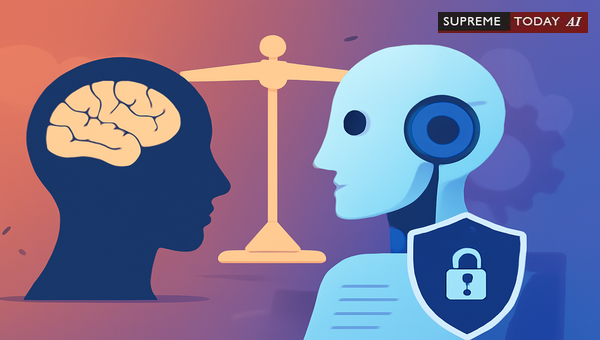
In an era where artificial intelligence (AI) powers everything from self-driving cars to medical diagnostics, a pressing question arises: Criminal Liability of AI. Can machines be prosecuted for crimes they commit? Under Indian law, the answer is nuanced, hinging on foundational principles like actus reus (the guilty act) and mens rea (guilty mind). This blog delves into whether AI can be directly held criminally liable or if responsibility falls on human actors.
Note: This article provides general information based on legal principles and is not specific legal advice. Consult a qualified lawyer for your situation.
Criminal liability in India requires both actus reus and mens reaPrakash Nayi @ Sen VS State of Goa - 2023 1 Supreme 405. As one document states, the law recognizes nothing but incapacity to realise the nature of the act and presumes that where a man's mind or his faculties of ratiocination are sufficiently dim to apprehend what he is doing, he must always be presumed to intend the consequence of the action he takes Prakash Nayi @ Sen VS State of Goa - 2023 1 Supreme 405.
AI, lacking sentience or consciousness, cannot form intent. It performs programmed actions without moral agency, making direct criminal liability impossible Varsha Corporation Limited rep. by its Managing Director VS State of A. P. rep. by Public Prosecutor - 2022 0 Supreme(Telangana) 394. Courts distinguish legal from medical insanity, emphasizing mental capacity at the time of the act Prakash Nayi @ Sen VS State of Goa - 2023 1 Supreme 405. By extension, AI's absence of any mental capacity precludes responsibility.
Legal documents affirm AI cannot be an autonomous legal subject Varsha Corporation Limited rep. by its Managing Director VS State of A. P. rep. by Public Prosecutor - 2022 0 Supreme(Telangana) 394. It functions as a tool, akin to a hammer in a crime—liability lies with the wielder. Criminal liability rests on principle of mens rea or intention. It is well settled law that a person intends what he does Sadiq Khanday VS State - 2010 Supreme(J&K) 427 - 2010 0 Supreme(J&K) 427.
This aligns with broader principles: The criminal liability is personal strict in nature Pfizer Limited VS State of M. P. - 2019 Supreme(MP) 382 - 2019 0 Supreme(MP) 382, requiring personal culpability.
While direct liability evades AI, vicarious liability may apply to humans like developers, operators, or company officials Varsha Corporation Limited rep. by its Managing Director VS State of A. P. rep. by Public Prosecutor - 2022 0 Supreme(Telangana) 394. For instance, when the allegation is that any of the Directors, Partners, Managers, etc. of a Company or a Firm, are involved in committing an offence along with the Company or a Firm, there is every requirement to plead, aver and establish that the said individuals have the required knowledge/information or mens rea to commit such acts Varsha Corporation Limited rep. by its Managing Director VS State of A. P. rep. by Public Prosecutor - 2022 0 Supreme(Telangana) 394.
Corporate criminal liability, extended to mens rea offenses over time, relies on responsible persons R. S. Sodhi VS Partha Pratim Saikia - 2009 Supreme(Gau) 632 - 2009 0 Supreme(Gau) 632. The knowledge relevant for attributing criminal liability must be contemporaneous knowledge. A Director cannot be implicated by the mere fact that he obtained knowledge much later of the alleged offence having been committed Sesa Goa Limited VS State of Maharashtra - 2008 Supreme(Bom) 1728 - 2008 0 Supreme(Bom) 1728.
Section 141 of the Indian Penal Code (IPC) exemplifies this for cheque dishonor, deeming liability for company officers but strictly construed—role over status matters Md. Fassihuddin VS State of Bihar (Now Jharkhand) - JharkhandMd. Fassihuddin VS State of Bihar (Now Jharkhand) - JharkhandPawan Kumar Goel VS State of U. P. - Supreme Court. Courts demand literal compliance: mere designation doesn't suffice Pawan Kumar Goel VS State of U. P. - Supreme CourtNenshi Healthcare Thro Bhanushali Kishorkumar Damjibhai VS State of Gujarat - Gujarat.
Vicarious liability is exceptional in criminal law, absent general application without statutes Pawan Kumar Lakhotia, S/o. Rameshwar Lal Lalhotia VS State of Jharkhand - Jharkhand. For AI, humans must have active roles, knowledge, or intent.
Sections 34 IPC enable joint liability via common intention Ravi Dhivar @ Muchakund Dhivar S/o Ratnu Dhivar VS State Of Chhattisgarh - ChhattisgarhVinod VS State of U. P. - Allahabad. If multiple humans collaborate on faulty AI deployment, shared intent could implicate them.
Other contexts reinforce: estoppel in criminal proceedings emphasizes determined liability Santhosh VS State of Kerala - 2018 Supreme(Ker) 604 - 2018 0 Supreme(Ker) 604. Breaches without fraud don't criminalize Pawan Kumar Lakhotia, S/o. Rameshwar Lal Lalhotia VS State of Jharkhand - Jharkhand.
Imagine an AI trading bot causing market manipulation or a drone striking a pedestrian. Liability probes developers' training data, operators' oversight, or firms' policies. Current frameworks focus on humans, but evolving AI autonomy challenges this.
In course of time, however, criminal corporate liability started being extended to even those offences, which require presence of mens rea or criminal intent R. S. Sodhi VS Partha Pratim Saikia - 2009 Supreme(Gau) 632 - 2009 0 Supreme(Gau) 632. Future laws may adapt, but today, humans bear the burden.
To mitigate risks:- Clear Frameworks: Advocate regulations specifying AI liability chains.- Accountability Mechanisms: Developers and operators should document intent and safeguards.- Guidelines: Follow ethical AI deployment to preempt misuse IN Re Policy Strategy For Grant Of Bail VS . - 2025 0 Supreme(SC) 1533.- Insurance and Compliance: Businesses deploying AI need robust policies.
Under Indian law, AI cannot be criminally liable due to lacking actus reus and mens reaPrakash Nayi @ Sen VS State of Goa - 2023 1 Supreme 405Varsha Corporation Limited rep. by its Managing Director VS State of A. P. rep. by Public Prosecutor - 2022 0 Supreme(Telangana) 394. Responsibility vicariously shifts to humans with requisite involvement, per strict principles Md. Fassihuddin VS State of Bihar (Now Jharkhand) - JharkhandPawan Kumar Goel VS State of U. P. - Supreme Court. As AI advances, expect legislative evolution, but for now, human agency reigns.
Key Takeaways:- AI: No direct liability.- Humans: Liable via knowledge/intent.- Need: Updated laws for AI era.
References:1. Prakash Nayi @ Sen VS State of Goa - 2023 1 Supreme 405: Actus reus/mens rea principles.2. Varsha Corporation Limited rep. by its Managing Director VS State of A. P. rep. by Public Prosecutor - 2022 0 Supreme(Telangana) 394: Vicarious/corporate liability.3. Others as cited.
#AICriminalLiability, #IndianLawAI, #MensRea


The normal rule in the cases 20 involving criminal liability is against vicarious liability, that is, no one is to be held criminally liable for an act of another. ... Section 141 contains conditions which have to be satisfied before the liability can be extended to officers of a company. Since the provision creates criminal liability, the conditions have to be strictly complied with. ......

The normal rule in the cases 20 involving criminal liability is against vicarious liability, that is, no one is to be held criminally liable for an act of another. ... Section 141 contains conditions which have to be satisfied before the liability can be extended to officers of a company. Since the provision creates criminal liability, the conditions have to be strictly complied with. ......

Liability depends on the role one plays in the affairs of a Company and not on designation or status. If being a Director or Manager or Secretary was enough to cast criminal liability, the Section would have said so. ... Liability depends on the role one plays in the affairs of a Company and not on designation or status. If being a Director or Manager or Secretary was enough to cast criminal lia....
When appellant No. 1 is the Company and it is alleged that the company has committed the offence then there is no question of attributing vicarious liability to the office bearers of the Company so far as the offence of cheating or criminal breach of trust is concerned. ... No. 860060 for Rs. 1,11,357/- have been accounted for against liability of accused person and ultimately, liability of the accused firm to the tune of ....

The first proviso carves out under what circumstances the criminal liability would not be fastened. Sub-section (2) enlarges the criminal liability by incorporating the concepts of connivance, negligence and consent that engulfs many categories of officers. ... The concept of corporate criminal liability is attracted to a corporation and company and it is so luminescent from the language....

Section 34 of the Penal Code thus lays down a principle of joint criminal liability. ... It lays down a principle of joint liability in doing of a criminal act. The essence of that liability is to be found in the existence of common intention, animating the accused leading to doing of a criminal act in furtherance of such intention. ... The section thus lays down a principle of joint #HL....

Section 34 also deals with constructive criminal liability. …………. 23. ... Once the criminal act and common intention are proved, then by fiction of law, criminal liability of having done that act by each person individually would arise. ... Once the criminal act and common intention are proved, then by fiction of law, criminal liability of having done ....

Section 141 is an exception to the normal rule that there cannot be any vicarious liability when it comes to a penal provision. The vicarious liability is attracted when the ingredients of subsection 1 of Section 141 are satisfied. ... Section 141 is an exception to the normal rule that there cannot be any vicarious liability when it comes to a penal provision. The vicarious liability is attracted when the ingredients of s....
There can be no doubt that a mere breach of contract is not in itself a criminal offence and gives rise to the civil liability of damages. However, as held by this Court in Hridaya Ranjan Prasad Verma v. ... Apart from the fact that the complaint lacks necessary ingredients of Sections 405, 406, 420 read with Section 34 IPC, it is to be noted that the concept of “vicarious liability” is unknown to criminal law. ... it is ....

The law on the point of medical negligence and criminal liability on doctor or surgeon has been well settled by now. 12. In case of Dr. Suresh gupta Vs. ... Government of N.C.T of Delhi and Another, AIR 2004 SC 4091, it is observed that “for fixing criminal liability on a doctor or surgeon, the standard of negligence required to be proved should be so high as can be described as "gross negligence" or recklessness". ... Omk....

The criminal liability is personal strict in nature. That apart, the authority is also required to ascertain and record its satisfaction as regards the acts of commission and omission on the part of the individual pointed alleged breach of the award by the person accused of the offence before initiating the process for prosecution. The petitioner-company had filed MCC No. 1862/2016 on 25.7.2016 for restoration of W.P. No. 11770/2009 to which the workman had filed reply on 23.....

In Marz v. The Queen 96 CLR 62 the High Court of Australia said: It depends upon well-known doctrines which control the relittigation of issues which are settled by prior litigation.” The emphasis here again would be seem to be on the determination of criminal liability. “The Crown is as much precluded by an estoppel by judgment in criminal proceedings as is a subject in civil proceedings...

Act 1997 is a piece of welfare legislation, intended to treat delinquent children of tender age differently from adult accused. A person is punished for an act or omission recognized by law as a crime, because such a person is taken to have intended the alleged act or omission. It is to be appreciated that criminal liability rests on principle of mens rea or intention. It is well settled law that a person intends what he does.

In course of time, however, criminal corporate liability started being extended to even those offences, which require presence of mens rea or criminal intent. Let me, first, consider as to how the concept of corporate criminal liability developed in the United States.
They were neither Directors of SIL nor SGL at that time and, therefore, could not have been involved in either the inducement or entrustment. The knowledge relevant for attributing criminal liability must be contemporaneous knowledge. A Director cannot be implicated by the mere fact that he obtained knowledge much later of the alleged offence having been committed.


An indispensable Tool for Legal Professionals, Endorsed by Various High Court and Judicial Officers
Please visit our Training & Support
Center or Contact Us for assistance

Scan Me!
India’s Legal research and Law Firm App, Download now!


For Daily Legal Updates, Join us on :

 Back to top


