


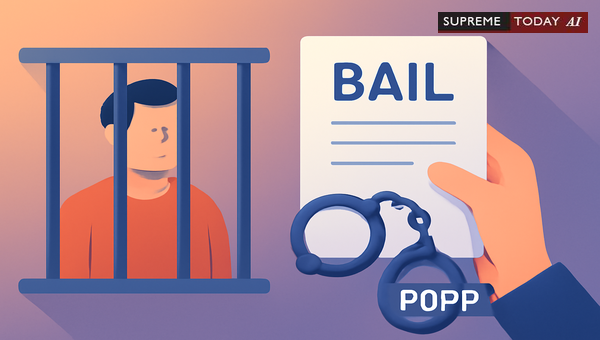
PDPP Act Bail After Custody: Key Rights Explained
Imagine this scenario: During a confrontation, an individual attacks police personnel and damages a police jeep by breaking its step. They are charged under , and have spent in custody. A pressing question arises: Is the accused entitled to bail?
This situation is not uncommon in cases involving public unrest or clashes. While bail is generally a right under Indian criminal law, offenses under the PDPP Act come with unique restrictions. This post breaks down the legal framework, bail entitlements, judicial approaches, and practical steps, drawing from key judgments and guidelines. Note: This is general information, not specific legal advice—consult a lawyer for your case.
Applicability of Section 3(1) PDPP Act
Section 3(1) of the PDPP Act penalizes causing damage to public property, punishable by imprisonment up to 5 years and a fine. Breaking the step of a police jeep qualifies as such, as police vehicles are public property. Courts have consistently applied this provision in cases of attacks on police during riots or assaults. 2009 3 Supreme 557
The Justice K.T. Thomas Committee guidelines, approved in judicial reviews, underscore a strict stance: The Committee felt that offenders arrested for damaging public property shall be subjected to a still more stringent provision for securing bail. The discretion of the court in granting bail to such persons should be restricted to cases where the court feels that there are reasonable grounds to presume that he is not . 2009 3 Supreme 557 2018 0 Supreme(SC) 961
Bail Restrictions Under
Unlike routine cases, mandates a rigorous bail process: No person accused or convicted of an offence punishable under S.3 or 4 shall, if in custody, be released on bail or on his own bond unless the prosecution has been given an opportunity to oppose the application for such release. 2024 0 Supreme(Ker) 1553
This overrides casual bail grants under . Courts adopt a cautious approach, aligning with CrPC but emphasizing prosecution input. Bail is not routine; it's limited to scenarios suggesting non-guilt, often with conditions.
Typical Conditions for Bail
- Deposit of Damage Value: Accused may need to deposit the quantified loss (e.g., market value of the jeep step on the incident day) or furnish security. Person(s) involved in such violence may be granted upon depositing the quantified loss caused due to such violence or furnishing security for such quantified loss. 2018 0 Supreme(SC) 961
- Fines and Default Imprisonment: Courts can impose fines equal to damage value, with further imprisonment in default. 2009 3 Supreme 557
- Other Strings: Compliance with investigation, no tampering, reporting to police.
In a vandalism case with Rs.10,000 damage (similar to a jeep step), bail was granted only after deposit, refundable if acquitted. 2024 0 Supreme(Ker) 1553
Impact of in Custody: No Automatic Bail
After , no under accrues. is capped at 15 days total (spread across investigation), extendable to 60/90 days before kicks in if no . The period of 15 days being the maximum period that can be granted in favour of the police would span from time to time with total period of 60 or 90 days as the case may be. 2023 8 Supreme 269
PDPP Section 5's hearing requirement persists—no absolute bar or grant after . Discretion remains post-prosecution opposition.
Judicial Precedents: Bail Granted with Conditions
cases illustrate courts' balanced approach in similar police attack and PDPP scenarios:
- In a case involving assault on police and , bail was granted to the 5th accused due to insufficient identification evidence for assault, focusing on property damage, with stringent conditions.
- After 50 days custody in a police jeep key-pulling and stone-throwing incident under , bail was allowed considering custody duration, no antecedents, and investigation progress, but with strict terms.
- Multiple rulings in political clashes destroying police jeeps () granted bail under after periods, imposing conditions to protect investigations.
2010 Supreme(Online)(KER) 20067
2010 Supreme(Online)(KER) 47698
These precedents show bail is possible even in serious cases, weighed against custody time, evidence strength, and risks, but rarely unconditional.
Exceptions and Limitations
- Minor Damage: Low-value damage (e.g., jeep step) may favor , but prosecution can oppose if flight risk or threats persist. 2009 3 Supreme 557
- Strong Evidence: Videography mandates from Thomas Committee strengthen prosecution cases, impacting bail. 2009 3 Supreme 557
- No automatic release; tempers discretion under CrPC. 2024 0 Supreme(Ker) 1553 2022 7 Supreme 641
Recommendations for Bail Applications
- File under , ensuring prosecution hearing (PDPP Section 5).
- Propose depositing estimated damage value as security.
- Cite Thomas Committee for conditional release.
- Highlight custody duration, cooperation, no priors.
- Appeal denials, noting should decide within 2 weeks. 2022 7 Supreme 641
Key Takeaways
- No Unconditional Bail Post-: PDPP Section 5 demands prosecution hearing; expect conditions like damage deposits.
- Rigorous but Not Impossible: Courts grant bail with strings, especially if evidence weak or custody prolonged.
- Strategic Steps: Offer securities, comply with probes for better chances.
In summary, while custody doesn't trigger automatic bail in PDPP cases, a well-prepared application can succeed. Always seek professional legal counsel tailored to facts, as outcomes vary by jurisdiction and evidence.
References:1. 2009 3 Supreme 557: Thomas Committee; PDPP bail stringency.2. 2018 0 Supreme(SC) 961: guidelines.3. 2024 0 Supreme(Ker) 1553: PDPP Section 5 application.4. Other Kerala HC cases as cited.
#PDPPAct #BailRights #CriminalLaw












