


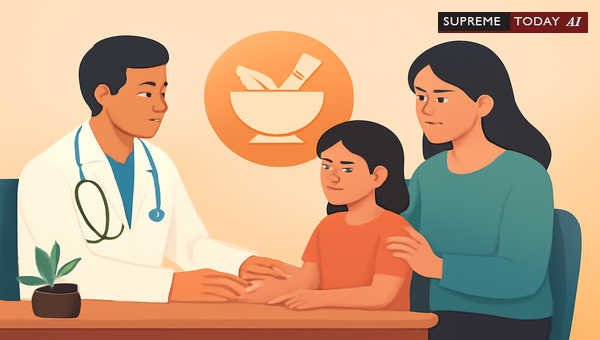
Legal Duties of BAMS Practitioners in Pediatric Care
In the holistic world of Ayurvedic medicine, treating children requires not just ancient wisdom but also a firm grasp of modern legal and ethical standards. As Bachelor of Ayurvedic Medicine and Surgery (BAMS) students prepare for their careers, understanding the intersection of traditional practices and contemporary law is crucial—especially in pediatrics, where vulnerable young patients and protective parents are involved. A pressing question for BAMS students is: What are the legal responsibilities and ethical considerations for a BAMS practitioner when treating pediatric patients, particularly in relation to and parental rights? This article delves into this vital topic, drawing from key legal precedents and educational guidelines to provide comprehensive guidance. 1999 0 Supreme(Kar) 42 2012 0 Supreme(Del) 3270
Understanding in Pediatric Ayurvedic Treatment
forms the cornerstone of ethical medical practice, and in pediatrics, it typically rests with parents or guardians. For minors, the age of consent varies, but generally, children under 18 cannot provide legally binding consent without parental involvement. BAMS practitioners must explain treatments—such as Panchakarma adaptations for children or herbal remedies—in clear, accessible language, detailing risks, benefits, and alternatives.
Key aspects include:- Parental Role: Parents hold primary decision-making authority, but practitioners should involve the child age-appropriately to foster trust. Failure here can lead to disputes.- Documentation: Always record consent discussions meticulously to defend against negligence claims.- Emergencies: In life-threatening situations, treatment may proceed without prior consent if delay endangers the child, but post-treatment notification is essential.
Courts emphasize that deviations from standard care invite scrutiny. For instance, in cases under the , , courts analyze records and expert opinions to assess reasonableness. One judgment noted, The court found no deviation from normal practice and concluded that there was no on the part of the opposite parties, highlighting reliance on expert evidence in pediatric treatment evaluations.
Ethical Considerations: Balancing Ayurveda and Modern Standards
Ayurveda views children () through dosha balances unique to their growth stages, but ethics demand prioritizing safety. BAMS practitioners must:- Ensure Child Well-Being: Adapt treatments to avoid harm, integrating modern diagnostics where needed.- Cultural Sensitivity: Respect family beliefs while upholding 'do no harm' ().- Confidentiality: Protect pediatric patient privacy, sharing info only with guardians as required.
Balancing tradition with ethics is key. Ethical lapses, like unproven remedies without evidence, may trigger complaints. Judgments stress, diagnosis and management of these conditions in children in part of the both undergraduate and post-graduate pediatric curricula, underscoring that pediatric topics like tuberculoma are standard in Indian medical education, relevant for BAMS curricula too.
Legal Framework Governing BAMS Pediatric Practice in India
India's legal landscape for Ayurvedic practitioners is shaped by the , and state regulations. Key laws include:- Laws: Aligned with the and medical council guidelines; minors require guardian consent.- : Under and Consumer Protection Act, negligence in pediatric care can lead to compensation claims. Courts determine standards via expert opinions, medical literature, and established practice.
- Ayurvedic-Specific Rules: sets standards, emphasizing ethics in pediatrics.
Potential repercussions for malpractice include license suspension or damages. Sources note relevant laws in Karnataka, Delhi, Bombay, and Gujarat, reinforcing uniform responsibilities. 1999 0 Supreme(Kar) 42 2012 0 Supreme(Del) 3270 2020 0 Supreme(Kar) 1735 2013 0 Supreme(Bom) 2058
BAMS education reinforces this through curriculum on pediatric care, though exam regulations are strict. For example, regulations state, a failed student of 3rd professional who has ... (2)(c) the failed student of second professional who have passed all the subjects of first professional examination shall be allowed to appear in third profes, highlighting rigorous standards that prepare students for legal duties. 2022 Supreme(Online)(KER) 60875 2022 Supreme(Online)(KER) 11075
Insights from Court Cases on Pediatric Care and Qualifications
Judicial precedents offer practical lessons. In negligence disputes, courts dismiss claims lacking evidence of deviation, as in a case where the court discussed the allegations... and found no .
Qualifications matter too. For pediatric specialties, rules mandate, Must have had teaching experience in the speciality of Paediatrics/Paediatric Haematology... Degree in Haematology/Training in Pediatric Haematology. Though for allopathic posts, this principle applies: A person must possess the educational qualification prescribed under the relevant rule to be considered for any appointment. BAMS practitioners should ensure competency certifications. 2009 0 Supreme(Mad) 3936
BAMS students face exam hurdles, with no automatic '.' One ruling held, once university has decided not to grant mercy chance to a student who has got re-appear in two subjects, same cannot be claimed by petitioner as a matter of right. 2013 0 Supreme(P&H) 1434 This underscores discipline in education, mirroring practice standards.
BAMS Curriculum and Pediatric Preparedness
BAMS programs cover (pediatrics), but legal training is implicit. Regulations like those from KUHS conflict resolution with CCIM standards ensure minimum education. Students must master both theory and ethics. 2022 Supreme(Online)(KER) 37886 2024 Supreme(Online)(Kar) 38495
Key Takeaways for BAMS Students and Practitioners
- Prioritize documented parental consent for pediatric treatments.
- Align Ayurvedic practices with evidence-based ethics to mitigate negligence risks.
- Stay updated on CCIM guidelines and local laws.
- In disputes, expert opinions and records are your best defense.
This exploration fosters a comprehensive understanding of roles as Ayurvedic pediatric providers. While this provides general insights drawn from precedents, it is not legal advice—consult qualified professionals for specific cases. Always practice diligently to safeguard young patients.
(Word count: approximately 1050)
#BAMSPediatrics #AyurvedaEthics #MedicalLawIndia















