


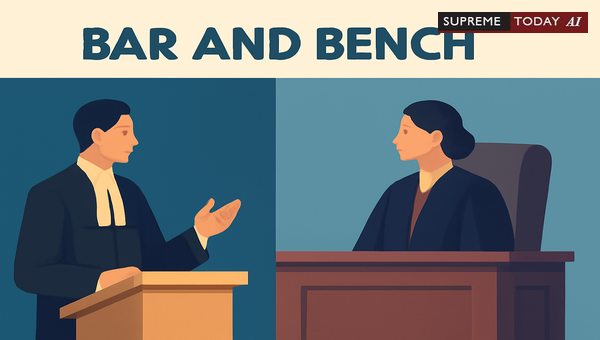
vs. : Understanding the Key Differences in the Judiciary
In the world of law, terms like and are frequently used, yet many people—even those interacting with the legal system—wonder about the difference between and Banch. First, a quick clarification: Banch is often a typographical error or variant spelling commonly seen in legal documents, typically intending (judges) or occasionally Branch (as in bank or crime branch). This blog post dives deep into the core distinction between the and the , their interdependent roles in the Indian judiciary, ethical considerations, and how misspellings like Banch can lead to confusion. Whether you're a law student, legal professional, or curious citizen, this guide provides clarity grounded in judicial principles.
Disclaimer: This article offers general information on legal concepts and is not a substitute for professional legal advice. Consult a qualified lawyer for specific cases.
Defining the and the
What is the ?
The refers to the collective body of lawyers who are licensed to practice law. These legal professionals, often called advocates or attorneys, represent clients in court, draft legal documents, and advocate for justice. Lawyers are considered and play a pivotal role in the administration of justice by presenting facts, arguments, and precedents. 1999 0 Supreme(Mad) 154
Key characteristics of the include:- Licensing and Regulation: Members must be enrolled with a under the .- Advocacy Role: They argue cases on behalf of clients, ensuring the court's access to all relevant information.- Ethical Duties: Upholding client confidentiality, , and professional integrity. 1999 0 Supreme(AP) 1074 1999 0 Supreme(Ker) 485
What is the ?
The , on the other hand, comprises judges and the judiciary as a whole. Judges interpret laws, apply them to facts, and deliver impartial judgments. The symbolizes the seat from which judicial authority is exercised, overseeing trials and appeals to ensure justice is served fairly. 1999 0 Supreme(Mad) 149
Attributes of the :- Impartiality: Judges must remain neutral, free from bias or external influence.- : Responsible for rulings, sentencing, and upholding constitutional rights.- Hierarchy: Ranges from trial courts to and the .
Key Differences Between and
While both are essential to the judicial ecosystem, the and have distinct functions:
| Aspect | (Lawyers) | (Judges) ||-----------------|----------------------------------------|---------------------------------------|| Role | Advocates for parties | Impartial decision-makers || Appointment| Elected/enrolled by Council | Appointed via collegium/judicial process || Perspective| Partisan (client-focused) | Neutral || Interaction| Presents arguments | Hears, questions, decides |
The and are often described as two sides of the same coin, highlighting their interdependence. The serves as an extension of the justice system, while the provides oversight and . 1999 0 Supreme(Mad) 154 1999 0 Supreme(Mad) 149
Lawyers act as spokespersons for the judiciary, as judges rarely engage in public discourse outside proceedings. 2024 4 Supreme 483
The Interdependent Relationship
The success of the Indian judiciary relies on harmonious - relations. Lawyers' expertise fuels effective , while judicial guidance shapes legal practice. Tensions, such as delays or ethical lapses, can undermine this balance, but ongoing dialogue fosters resolution.
For instance, the contributes positively by maintaining high ethical standards, essential for judicial integrity. 1999 0 Supreme(AP) 1074 1999 0 Supreme(Ker) 485
Ethical Considerations for the
Members of the are bound by a strict code of ethics, emphasizing dignity and trust in the legal profession. This includes:- Avoiding conflicts of interest.- Respecting court decorum.- Promoting access to justice.
Such standards are crucial for public confidence. 1995 0 Supreme(SC) 892 2021 0 Supreme(Mad) 2782
Navigating Confusions: Banch in Legal Contexts
Searches for difference between and Banch often stem from real-world document quirks. In Indian legal filings, Banch frequently appears as a misspelling:
- As : In appellate contexts, e.g., referring to the , Cochin . 2021 Supreme(Online)(KER) 23682 2021 Supreme(Online)(KER) 11107 2021 Supreme(Online)(KER) 1572 2021 Supreme(Online)(KER) 15515
- As Branch: Common in banking and police titles, like Specialized Commercial Banch () or . These denote branches, not judicial benches.
2022 BEFORE THE DATED: CORAM: THE HONOURABLE MR. JUSTICE G.K.ILANTHIRAIYAN Crl.O.P.(MD)No.2715 - Madras
2022 BEFORE THE ( Criminal Jurisdiction ) Date : PRESENT The Hon`ble Mr.Justice A.D.JAGADISH CHANDIRA CRL OP(MD). No.8683 - Madras
Difference between Bank and Banch: Here, Bank is the standard financial institution, while Banch is a typographical variant, as in , Fort Banch. In modern usage, stick to Bank or Branch for clarity. 2011 0 Supreme(Bom) 1387
Other unrelated uses include technical standards (e.g., rib angles on bars) or liquor regulations distinguishing bars from shops. 2022 0 Supreme(Del) 1203 2021 0 Supreme(Del) 187 2018 0 Supreme(Del) 2686 1999 0 Supreme(Mad) 1443 2025 4 Supreme 298
These examples underscore the importance of context in legal reading—Banch rarely means something novel but signals a need for correction.
Importance in the Indian Judiciary
In India, the - dynamic upholds the . Landmark cases reinforce their collaboration, from to strikes resolved through dialogue. Understanding this prevents misconceptions and promotes respect for both.
Recommendations for Legal Practitioners
- Professional Development: Engage in ethics training and skill-building to excel as members.
- Foster Dialogue: Maintain open communication with the to tackle systemic issues like case backlogs.
- Clarity in Documentation: Avoid or correct misspellings like Banch to enhance precision.
Conclusion and Key Takeaways
The (lawyers) and (judges) are pillars of justice—distinct yet symbiotic. While Banch confusions arise from typos in cases like
2022 BEFORE THE DATED: CORAM: THE HONOURABLE MR. JUSTICE G.K.ILANTHIRAIYAN Crl.O.P.(MD)No.2715 - Madras
, the essence remains: lawyers advocate, judges adjudicate. Grasping these roles empowers better navigation of India's legal landscape.Key Takeaways:- : Lawyers, client advocates. 1999 0 Supreme(Mad) 154- : Judges, impartial arbiters. 1999 0 Supreme(Mad) 149- Interdependent for justice delivery.
- Ethics bind the . 1995 0 Supreme(SC) 892- Beware document misspellings.
Stay informed, uphold integrity, and contribute to a robust judiciary.
References:- 1999 0 Supreme(Mad) 154 1999 0 Supreme(Mad) 149
1999 0 Supreme(AP) 1074 1999 0 Supreme(Ker) 485 2024 4 Supreme 483 1995 0 Supreme(SC) 892 2021 0 Supreme(Mad) 2782- Additional sources:
2022 BEFORE THE DATED: CORAM: THE HONOURABLE MR. JUSTICE G.K.ILANTHIRAIYAN Crl.O.P.(MD)No.2715 - Madras
2021 Supreme(Online)(KER) 23682 and others noted inline. #BarAndBench, #IndianJudiciary, #LegalTerms












