


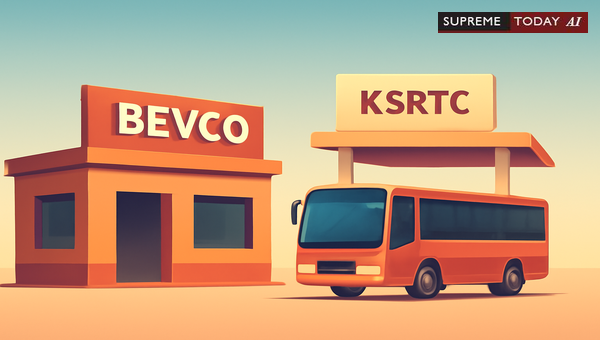
Bevco Outlet in KSRTC Bus Station: Navigating PIL and Legal Hurdles
Starting a business in a high-traffic public space like a bus station sounds promising, especially for a outlet catering to travelers. But the question arises: Starting a Bevco Outlet in Ksrtc Bus Station Public Interest Litigation – is it feasible amid ongoing ? This post breaks down the legal landscape, drawing from court precedents and regulatory insights to guide potential entrepreneurs.
Note: This is general information based on available legal precedents and not specific legal advice. Consult a qualified lawyer for your situation.
The PIL Context Surrounding KSRTC Bus Stations
PILs in Kerala often spotlight bus stations due to their role in public utility, infrastructure, and urban planning. Courts have repeatedly emphasized that decisions on bus stand locations and operations must prioritize public interest over arbitrary actions. For instance, several PILs have addressed land use and management of bus stands, stressing local governance involvement 2021 Supreme(Online)(MAD) 16811.
In one case, PILs highlighted the need for local bodies to participate in planning and decision-making regarding bus stand locations, ensuring that such decisions are not arbitrary and consider public interest . This sets a precedent: any commercial venture like a Bevco outlet must align with these norms to avoid judicial scrutiny.
Related cases reinforce this. A PIL sought directions for bus terminal regulations amid traffic congestion from unauthorized parking, directing the to act 2024 Supreme(Online)(KER) 33342. The court noted, The has the authority to regulate traffic and must address unauthorized parking causing congestion within a specified timeframe. While not directly about retail, it underscores how commercial activities could exacerbate congestion, inviting PIL challenges.
Land Use Regulations and Local Governance
KSRTC bus stations are public utility assets governed by transport departments and local self-governments like . Introducing a commercial outlet involves , where land primarily designated for transport may restrict retail, especially alcohol sales.
PILs have ruled that bus stand locations demand collaborative planning. Courts have cautioned against developments that interfere with public access or safety. For example, in disputes over autorickshaw stands near bus stands, the held under that Traffic Regulatory Committees (TRCs), chaired by local self-government heads, decide locations to avoid impacting traffic or pedestrian flow 2022 0 Supreme(Ker) 472. The ruling stated, Permitting parking of autorickshaws permanently in front of shoprooms on side of Highway is an appropriation of private right of owners... Traffic Regulatory Committees... are competent to decide, locate and demarcate autorickshaw stands.
Similarly, a PIL on a new bus stand location dismissed interference, noting courts shouldn't micromanage executive decisions on suitability unless arbitrary 2020 0 Supreme(Mad) 2262. Whether the place now chosen is most suited one for the Municipality to locate a bus-stand or not was left to authorities, warning against into governance.
For a Bevco outlet, this means verifying land use permissions. Alcohol outlets near public transport hubs could face objections if seen as promoting vice in transit areas.
Commercial Licensing and Regulatory Compliance
Launching a Bevco outlet requires multiple approvals:- Bevco Licensing: From the Kerala State Beverages Corporation and , complying with the .- Local Permissions: From KSRTC, local panchayats/municipalities, and fire/safety authorities.- Commercial Operations: Food safety, building permits, and environmental clearances.
Legal documents rarely address retail inside bus stations specifically, but general principles apply: commercial activities need authority approvals 2021 Supreme(Online)(MAD) 16811. Bevco-related cases, like employment disputes or liabilities 2022 Supreme(Online)(KER) 33512, show the corporation's operations are tightly regulated, but not in bus contexts.
KSRTC cases often involve liability for accidents or hires, holding owners, operators, and insurers jointly liable under the 2015 0 Supreme(SC) 1028 2019 0 Supreme(Kar) 1146. In case a vehicle is plied under control of the SRTC and it meets with an accident, the victim will have to be compensated by the registered owner, SRTC and the insurer 2015 0 Supreme(SC) 1028. This illustrates KSRTC's accountability, extending potentially to commercial lessees.
Implications of PILs on Proposed Bevco Outlets
PILs focus on safety, utility, and governance, not licensing per se. However, a Bevco outlet might be challenged if:- It causes congestion or safety risks, akin to unauthorized parking PILs 2023 Supreme(Online)(Ker) 56138.- It violates safety norms, like bus decorations banned for pilgrims 2024 Supreme(Online)(KER) 11661 2024 Supreme(Online)(KER) 53443. Courts reiterated, KSRTC buses must not be decorated with flowers for transporting Sabarimala pilgrims to ensure safety 2024 Supreme(Online)(KER) 11661.- It conflicts with public interest, as in traffic regulatory matters 2024 Supreme(Online)(KER) 33342.
Alcohol sales in bus stations could amplify concerns over public drunkenness or youth access, inviting PILs.
Practical Recommendations for Entrepreneurs
To proceed cautiously:1. Conduct Thorough : Review zoning, master plans, and existing PILs via RTI or legal counsel.2. Secure Multi-Level Approvals: Approach KSRTC, Bevco, local bodies, and TRCs early.3. Assess Public Interest Alignment: Ensure the outlet enhances facilities without hindering transport functions.4. Mitigate Risks: If objections arise, consider preemptive legal clearance or PIL filing for clarity.5. Engage Stakeholders: Consult transport departments and locals, as PILs stress participatory governance .
Other cases, like autorickshaw stands, show courts directing TRCs to balance stakeholder rights 2022 0 Supreme(Ker) 472.
Key Takeaways
- PILs Prioritize Public Utility: Bus stations aren't free for commercial ventures; land use must serve transport primarily.
- Layered Permissions Essential: Licensing alone isn't enough—align with planning and safety rules.
- Proactive Compliance Wins: Coordinate with authorities to sidestep litigation, as courts defer to executives unless malafide.
In summary, starting a Bevco outlet in a KSRTC bus station involves navigating licensing, land use, and PIL sensitivities. While feasible with approvals, public interest scrutiny looms large. Always prioritize regulatory harmony to build sustainably in Kerala’s dynamic legal environment.
Word count approx. 1050. Sources cited from and related judgments for informational purposes.
#BevcoOutlet #KSRTC #KeralaPIL












