


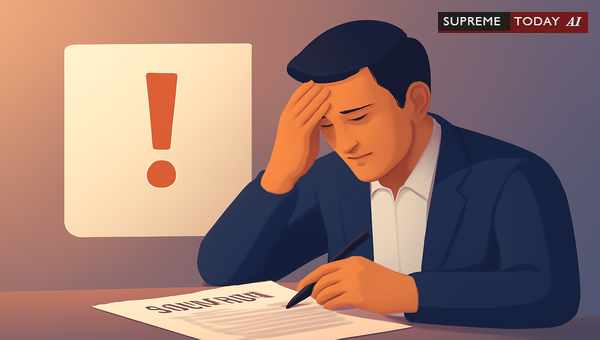
Signing a Contract Without Reading: Are You Still Bound?
In the fast-paced world of business and personal dealings, it's tempting to sign agreements quickly—perhaps under pressure or trust in the other party. But what if you didn't read the fine print? A common legal adage echoes: No prudent man would sign an agreement without reading it. Courts in India have repeatedly addressed this in judgments, upholding a strong presumption that signing means you've understood and accepted the terms. This blog dives into the legal principles, landmark cases, exceptions, and practical takeaways to help you navigate this issue.
Disclaimer: This article provides general information based on judicial precedents and is not specific legal advice. Consult a qualified lawyer for your situation.
The Core Legal Question: No Prudent Man Would Sign the Agreement Without Reading It
This phrase captures a fundamental principle in contract law: parties are typically bound by what they sign, read or not. The question arises frequently in disputes where a signatory claims ignorance of terms. Indian courts, drawing from the , emphasize personal responsibility. As we'll see, the law presumes a signer is aware, shifting the burden to prove otherwise.
Key Legal Principles on Signing Without Reading
1.
A cornerstone rule is that signing a document presumes you've read and comprehended it, absent or force. The in firmly stated there is a presumption that a person has read the document properly and understood it when they affix their signature. 2012 0 Supreme(Cal) 830 2015 0 Supreme(P&H) 949
This isn't mere formality—it's to ensure contracts are reliable. Courts view signing as assent, protecting transactional certainty.
2. Binding Contractual Obligations
Even if unaware of exact effects, you're bound. In , the court held a person is bound by the terms of a document they sign, even if they are unaware of its precise legal effect. 2013 0 Supreme(Bom) 1833 1977 0 Supreme(Cal) 300
This principle promotes diligence. As one judgment notes, it's improbable for someone to sign without reading, especially if literate: It is completely improbable that the Jhadu Ram would sign the document of sale without reading the same. 2018 0 Supreme(Chh) 662
3. The 'Prudent Man' Standard
Judgments often invoke the prudent man test. For educated or experienced parties, claims of not reading ring hollow. In a commercial dispute, the court observed: Thus, respondent is an educated person and experienced businessman... It can’t be expected from him, that he would sign certain papers without reading and understanding the content thereof. 2018 0 Supreme(Del) 3093 2018 0 Supreme(Del) 827
Landmark Case Law Reinforcing the Rule
Defendant's Literacy and Capacity
In a key ruling, a defendant with a B.Com degree and English proficiency claimed ignorance of an agreement. The court rejected this, ruling they were bound due to sufficient education to understand. This reinforces that literacy defeats 'blind signing' defenses.
Execution Does Not Admit Full Understanding—But Burden is High
While execution doesn't always mean full grasp, challenging it requires strong proof. One case clarified: The does not admit to its contents being understood if the signatory can prove they were unaware... However, this is a high burden. 2022 6 Supreme 291
In arbitration contexts, similar logic applies. For a settlement agreement, courts upheld validity against claims of non-reading, noting the signatory's business experience made ignorance unlikely. The judgment emphasized: None of this recrimination would have made any sense if Mr Mehra really thought that everything was still open to negotiation... It is unclear what he meant by saying that he had signed the agreement 'without even reading it'. 2019 0 Supreme(Bom) 1122
Another arbitration case under dismissed challenges to a settlement, finding it despite disputes, as the signatory was experienced. 2018 0 Supreme(Del) 3093
Exceptions: When You May Escape the Binding Effect
The presumption isn't absolute. Courts recognize scenarios where enforceability falters:
- or Misrepresentation: If misled about the document's nature, you may void it.
- or : Proof of force shifts the outcome.
- Illiteracy or Incapacity: For illiterate parties, special protections apply, but literate ones face skepticism.
As noted: The can be challenged if there is proof of , , or if the signatory was misled. 2022 6 Supreme 291
In real estate consumer disputes, courts scrutinize but still bind informed parties. One case involving a flat booking stressed remedies lie in civil courts for breaches, not excuses of non-reading.
Insights from Additional Judgments
Recent cases echo these themes. In franchise and settlement disputes, courts dismissed appeals challenging agreements, holding: The court found that the settlement agreement was and not barred by limitation, thus dismissing the appeal. This infused a fresh cause of action, underscoring signed documents' weight. 2018 0 Supreme(Del) 3093
In property sales, signatures (not thumb impressions) proved awareness: In fact, the sale deed... shows that Jhadu Ram had put his signatures... This also proves falsity of the plea. 2018 0 Supreme(Chh) 662
Consumer forums, too, apply this. In a non-construction case, despite project halts, the developer was held to refund based on market value, but the agreement's terms stood unless proven invalid.
Practical Implications and Recommendations
For businesses and individuals:- Always Read Thoroughly: Courts expect prudence. Skimming isn't enough.- Seek Clarifications: Ask about unclear terms before signing.- Document Concerns: Note any pressure or misrepresentations in writing.- Literacy Matters: Educated signatories face higher scrutiny.
Advising clients: Thoroughly read and understand any agreement before signing, as the law typically holds them accountable... Proving otherwise requires substantial evidence.
In commercial trades, practices like settlement deeds presume mutual understanding post-negotiation. 2018 0 Supreme(Del) 827
Conclusion: Diligence is Your Best Defense
Indian jurisprudence is clear: signing without reading generally binds you, embodying the prudent man principle. While exceptions exist for or , they demand robust evidence. Landmark cases like Grasim Industries and cement this, with modern judgments applying it to arbitrations, sales, and consumer matters.
Key Takeaways:- is strong upon signing. 2012 0 Supreme(Cal) 830 2015 0 Supreme(P&H) 949- Literacy and experience undermine ignorance claims.
- Exceptions require proof of vitiating factors. 2022 6 Supreme 291- Prioritize reading to avoid disputes.
Stay informed, read before you sign, and protect your interests. For tailored advice, reach out to a legal professional.
References:- 2013 0 Supreme(Bom) 1833 2012 0 Supreme(Cal) 830 2015 0 Supreme(P&H) 949
2022 6 Supreme 291 2019 0 Supreme(Bom) 1122 2018 0 Supreme(Del) 3093 2018 0 Supreme(Chh) 662 2018 0 Supreme(Del) 827
#ContractLaw, #IndianJudgments, #LegalAdvice















