Searching Case Laws & Precedent on Legal Query.....!
Scanned Judgements…!



Searching Case Laws & Precedent on Legal Query.....!
Scanned Judgements…!
Husband's Impotency Allegation - The wife refused to engage in physical relations, prompting the husband to claim impotency. The Family Court found that the husband failed to prove his impotence, as medical tests and evidence were not sufficiently presented. The husband's efforts to establish his incapacity were inconclusive, and the court dismissed the suit, emphasizing the importance of medical proof in such cases. 2023 0 Supreme(UK) 226
Wife's Allegation and Legal Burden - The wife alleged her husband's impotency and demanded medical testing. Medical examinations by authorized doctors and medical inquiry committees are crucial when such allegations are made, especially if they impact the consummation of marriage. The legal position mandates that the husband must prove his incapacity if accused, often through medical evidence, to substantiate claims of impotence. 2024 0 Supreme(All) 51
Presumption of Legitimacy and Access - Even if the husband is cohabiting, non-access during the conception period can rebut legitimacy presumptions. Conversely, if the husband has had access and no impotence is proved, children born are presumed legitimate. The onus is on the husband to prove non-access or impotence if allegations are made. Failure to do so weakens his case for contesting paternity or marriage validity.
Sunny Devi VS Ram Babu Kumar - Current Civil Cases
Impotency as a Ground for Divorce and Cruelty - Allegations of impotence can constitute cruelty and grounds for divorce, but the husband must prove his potency through medical evidence. False allegations can cause mental cruelty and damage reputation. Courts have dismissed cases where no medical proof was provided, emphasizing the need for concrete evidence. 2025 Supreme(Online)(Chh) 7932, 2023 Supreme(Online)(MAD) 8948, 2023 Supreme(Online)(KAR) 8695, 2025 0 Supreme(Bom) 1096
Legal Requirements for Medical Proof - The law requires the husband to prove impotency with medical evidence, especially when allegations are serious. Without such proof, ex-parte orders or judgments based solely on allegations are not sustainable. The refusal of the husband to undergo medical testing further complicates establishing impotence. 2023 Supreme(Online)(MAD) 8948, 2023 Supreme(Online)(KAR) 8695
Impact of False Allegations - Making unsubstantiated claims of impotence can lead to mental cruelty and legal consequences. Courts scrutinize whether such allegations are made in good faith, and failure to produce medical evidence diminishes the credibility of such claims. The absence of medical proof often results in dismissal of related petitions. 2025 0 Supreme(Bom) 1096,
A.C.Sudhakar vs Vinaya - Madras
Analysis and Conclusion:In cases where a wife alleges her husband's impotence, it is legally incumbent upon her to prove the claim with credible medical evidence. The husband can defend himself by demonstrating medical tests confirming his potency. Courts generally require concrete proof, such as medical reports, to substantiate allegations of impotency, as mere assertions without evidence are insufficient. Failure to provide such proof results in the dismissal of claims and maintains the presumption of the husband's capacity and the legitimacy of children born during the marriage. Therefore, the onus of proof lies heavily on the wife to establish impotency, and courts emphasize the importance of medical validation in such disputes.
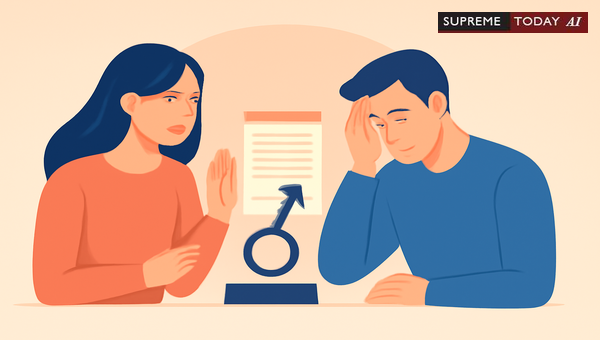
In the sensitive realm of family law, allegations of impotency can strike at the heart of a marriage, often surfacing in petitions for divorce, , or . Imagine a scenario where a wife claims her husband is impotent, unable to or fulfill marital obligations. The burning question arises: When Wife Alleges Impotency of Husband the Husband should Prove the same? This query touches on critical legal principles governing , evidence standards, and court presumptions.
This article delves into Indian court judgments and legal precedents to clarify the position. Note that this is general information based on case law and not specific legal advice. Consult a qualified lawyer for personalized guidance.
When the wife alleges that the husband is impotent, the burden of proving such impotency generally lies on the husband. This is supported by multiple judgments indicating that the spouse claiming impotency must substantiate the claim with appropriate evidence 2000 0 Supreme(Ker) 61 1979 0 Supreme(Ker) 147 1989 0 Supreme(Ker) 394.
Courts have consistently held that mere unresponsiveness or resistance to sexual advances is insufficient to establish impotency without 1979 0 Supreme(Ker) 147 2000 0 Supreme(Ker) 61. The alleging spouse—here, the wife—bears the primary responsibility, but the husband may need to demonstrate his capacity through evidence to counter the claim effectively.
In practice, this means:- The claimant must lead evidence: If the wife alleges impotency, she typically needs to produce proof, but judgments emphasize the husband's role in refuting via medical tests 1979 0 Supreme(Ker) 147.- No automatic : Courts do not presume impotency from allegations alone; concrete proof is required 1989 0 Supreme(Ker) 394.
Medical evidence is crucial to establish impotency. The courts have consistently emphasized that the burden is on the spouse alleging impotency to prove the condition medically 2000 0 Supreme(Ker) 61 1989 0 Supreme(Ker) 394.
Key requirements include:1. Medical reports and expert testimony: Simple refusal to engage in sexual relations or inability to consummate does not prove impotency; mental health evaluations or specialist opinions are necessary 1979 0 Supreme(Ker) 147 2000 0 Supreme(Ker) 61.2. Authorized examinations: In one case, the wife demanded medical testing, underscoring that examinations by authorized doctors or committees are vital when impacting marriage consummation 2024 0 Supreme(All) 51.
For instance, courts have dismissed claims where no medical evidence was adduced. The respondent/wife did not adduce any medical evidence or by examining doctor to prove the impotency
. Without such proof, allegations fail.
The courts have held that if there is no conclusive evidence of impotency, the is generally in favor of the husband or wife, depending on the context, and the burden remains on the claimant to prove their case 1979 0 Supreme(Ker) 147.
Courts reject claims based solely on or suspicion: The courts have rejected allegations based solely on or suspicion without medical proof, emphasizing the need for concrete evidence to substantiate claims of impotency 1979 0 Supreme(Ker) 147 1989 0 Supreme(Ker) 394.
Related presumptions include : Even during cohabitation, or proven impotency can rebut it, but the onus is on the challenger—often the husband—to prove or impotence
.
Numerous judgments reinforce the need for robust proof:- In a dispute, the husband's admitted impotency allowed the wife to live separately, entitling her to : impotency of applicant-husband as admitted by him would be sufficient reason for the respondent-wife to reside separately 2024 0 Supreme(Chh) 2.- Allegations of impotency in are relevant if causing , but the petitioner must prove grounds: when the wife alleges due to impotency it has caused to the wife, she is certainly justified in making those allegations
.
The wife is often the best witness: Generally, the wife is the best witness to speak about the impotency of the husband. The conduct of the parties subsequent to the marriage would be important to decide the question of impotency 1999 0 Supreme(Mad) 245. No minimum standard of proof exists beyond reasonable evidence in sexual matters.
False or unsubstantiated claims backfire: Allegations of impotence can constitute cruelty and grounds for divorce, but the husband must prove his potency through medical evidence. False allegations can cause 2025 Supreme(Online)(Chh) 7932 2023 Supreme(Online)(MAD) 8948 2023 Supreme(Online)(KAR) 8695 2025 0 Supreme(Bom) 1096.
In a case where the husband sought divorce, the wife's counter-allegation of his impotency was noted, but no sexual relationship was established without further proof 2009 0 Supreme(Mad) 655. Another highlighted non-consummation due to husband's impotency as a key allegation, alongside ill-treatment 1989 0 Supreme(AP) 498.
Proven impotency amounts to cruelty: where it is proved to the satisfaction of the court that a husband is impotent and is unable to discharge his marital obligations, this would amount to both 1984 0 Supreme(Del) 64.
Recent examples affirm: The dismissed a husband's impotency claim against the wife due to lack of medical tests 2023 0 Supreme(UK) 226. without proof are unsustainable 2023 Supreme(Online)(MAD) 8948 2023 Supreme(Online)(KAR) 8695.
While medical evidence is paramount, courts may consider spousal conduct as indicative but not conclusive: In some cases, the court may consider the conduct and behavior of the spouse as indicative but not conclusive of impotency unless supported by medical evidence 1979 0 Supreme(Ker) 147.
If proved, impotency is a valid ground for or divorce, but proof must be clear 2000 0 Supreme(Ker) 61 1989 0 Supreme(Ker) 394. Husband's refusal to test complicates claims against him.
Recommendations:- For husbands: Undergo medical tests to affirm potency.- For wives: Gather medical records or expert opinions if alleging genuinely.- Always prioritize evidence to avoid dismissal or counter-claims of cruelty.
In summary, when a wife alleges her husband's impotency, courts require concrete medical validation. Failure leads to dismissal, upholding presumptions of potency and marital validity. As analysis from cases shows: the onus of proof lies heavily on the wife to establish impotency with medical reports essential.
This underscores family law's balance between protecting rights and demanding proof. For tailored advice, seek professional legal counsel.
#FamilyLaw #ImpotencyClaims #DivorceLaw


she refused to make physical relationship with her husband, the Family Court finally came to the conclusion that the husband has failed to prove that his wife is impotent and, as such, the plaintiff failed to prove the condition as required for declaring the marriage voidable and dismissed the suit ... In this case, the stand of the husband was that in spite of his earnest efforts, he wa....

Consequently, the impugned FIR was lodged by the petitioner wife on 01.07.2023 with allegation of mental and physical cruelty regarding non-fulfillment of demand of dowry and concealment of fact of impotency of her husband by birth. ... She herself had raised a question of impotency of her husband/accused and demanded his potency test. Further, it is contended that her husband was medica....

live with her husband and the wife would be entitled to maintenance from her husband according to his means. ... For the reasons as discussed above that the impotency of applicant-husband as admitted by him would be sufficient reason for the respondent-wife to reside separately. 7. ... She submits that ground of impotency can also be one of the sufficient reason for #HL....

In such situation, he could prove non-access only by way of pleading impotency, serious illness or impossibility of cohabitation with the Appellant – wife. But there is no such pleading or evidence on the part of the husband. ... This conclusive proof has not been rebutted by the Respondent-husband by proving non-access to the Appellant-wife. Only statement of the husband#HL_EN....
The allegation made by the wife regarding the husband's impotency amounts to cruelty, especially when no medical evidence was brought on record by the respondent-wife to support the claim of impotency. 14. ... Upon a thorough review of the written statement filed by the respondent-wife, it is evident that she made serious allegations of impotency against the husband, w....

When the respondent/wife made an allegation against the appellant/husband about his impotency, then it is for the respondent/wife to prove that the appellant/husband was impotent and that, ex-parte order cannot be passed without any medical evidence especially in the case where there are allegations ... The appellant is husband and the respondent is wife#HL_EN....

The false allegations of such impotency made by the wife as stated supra definitely cause mental agony disharmony and anguish in the mind of the husband. ... But without filing such medical/Impotency - 17 - certificate the petitioner alleges that he is potent having potentiality. ... Though impotency is not a ground set up by the respondent-wife, but, the ....
In a Hindu Marriage Petition, the allegations of impotency are very much relevant. That is to say when the wife alleges due to impotency it has caused mental cruelty to the wife, she is certainly justified in making those allegations. ... When a divorce petition is filed, the Petitioner has to prove one of the ground for dissolving the marriage. In a maintenance petition the wi....

In a Hindu Marriage Petition, the allegations of impotency are very much relevant. That is to say when the wife alleges due to impotency it has caused mental cruelty to the wife, she is certainly justified in making those allegations. ... When a divorce petition is filed, the Petitioner has to prove one of the ground for dissolving the marriage. In a maintenance petition the wi....

The respondent/wife did not adduce any medical evidence or by examining doctor to prove the impotency parents and sister of the husband were aware of his impotency test to prove his potentiality lead to the inference of his the doctor for consultation of curing impotency. ... But, the undisputed fact is that the husband#HL_END....

It is the husband who approached the Court seeking divorce and he never wanted the wife to be subjected to any medical examination about her sexual potency or disinclination to have sexual relationship with the husband. The lower Court observed that the cumulative effect of the averments of the husband and the wife would clearly indicate and evince that there was no sexual relationship which took place between them. But on the other hand the wife would impute impotency on the part of....

Where medical report showed wife to be potent, the onus of proof is on the husband to show impotency of the wife qua him. To succeed in her petition the wife had to prove not only that the marriage had not been consummated but also that any impediment was incurable. The burden of proving the allegation of husband's invincible repugnance to act of coitus rendering him incapable of submitting to sexual intercourse is on wife, and vice versa.

Generally, the wife is the best witness to speak about the impotency of the husband. The conduct of the parties subsequent to the marriage would be important to decide the question of impotency. In T. Rangaswami v. T. Aravindammal, 1957 AIR(Mad) 243 (stated supra) this Court held- "To prove impotency there is no minimum standard of proof necessary. As far as the sexual relationship between the wife and the husband is concerned, the wife or the husband can vouch the ....

( 2 ) ADMITTEDLY the marriage between the parties took place on 22-4-1984, but started living separately from 6-9-1985 because of the misunderstandings that arose between both the parties. The main allegation of the wife is that the marriage could not be consummated because of impotency of her husband. She also alleges that she was illtreated, driven out of her matrimonial house and she was also deprived of her jewellery and she was depending upon her brother. On the other ha....

The authority reported as Srikant v. Anuradha (AIR 1980 Kar 8) (10) also does not take the case of the appellant-wife any further. We hold that where it is proved to the satisfaction of the court that a husband is impotent and is unable to discharge his marital obligations, this would amount to both legal and mental cruelty which would undoubtedly be a just ground as contemplated by the aforesaid proviso for the wife s refusal to live with her husband and the wife would be entitled to maintena....


An indispensable Tool for Legal Professionals, Endorsed by Various High Court and Judicial Officers
Please visit our Training & Support
Center or Contact Us for assistance

Scan Me!
India’s Legal research and Law Firm App, Download now!


For Daily Legal Updates, Join us on :



 Back to top


