


Candidate Participation in Elections: Key Legal Insights
In the heart of every democracy lies the principle of broad and meaningful participation. But what does the law say about participation of candidates in elections? This question strikes at the core of electoral integrity, fairness, and representation. Indian courts have consistently underscored that wide involvement from candidates—and voters—ensures legitimacy and reflects the true will of the people. This blog post delves into the legal framework, drawing from key judgments and principles to provide clarity on this vital topic.
Whether you're an aspiring candidate, a voter, or simply interested in electoral processes, understanding these rules can empower your engagement. Note that this is general information based on legal precedents and not specific legal advice—consult a qualified attorney for personalized guidance.
Why Wide Candidate Participation Matters in Democracy
Democratic elections thrive on from both candidates and voters. As highlighted in legal documents, , there can be no two opinions that would alone guarantee the growth of a healthy democracy in the country 2013 6 Supreme 673. This participation includes the right to vote, propose, second, and stand for election, forming the bedrock of electoral integrity.
Broad candidate involvement promotes transparency, accountability, and genuine representation. Without it, elections risk losing public confidence and distorting outcomes. Courts have emphasized that restrictions on participation, unless justified by law or procedural fairness, undermine the democratic process 2025 0 Supreme(Kar) 1181.
For instance, in cases involving panchayat elections, delays by election authorities in addressing disqualifications—such as failure to lodge election expense accounts—have been criticized. The thrust of such elections is to secure so that the best candidate would emerge successful 2019 0 Supreme(Telangana) 103 2019 0 Supreme(Telangana) 100. Authorities cannot sleep over such matters for years together and then bar candidates at the threshold, as this negates the free democratic process.
Legal Principles Governing Candidate Participation
Fundamental Rights and Electoral Liberty
Participation is not just a statutory right but the . The right to vote—and by extension, to contest—is vital, with courts stressing imposing 2013 6 Supreme 673. For candidates, this translates to broad access to stand for election, ensuring legitimacy.
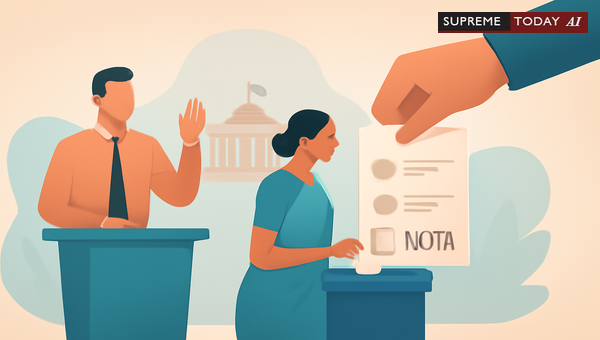
Key points include:- Democratic elections require maximum involvement from eligible candidates and voters alike 2013 6 Supreme 673.- Electoral participation must be facilitated within legal timelines, reflecting commitment to democratic principles 2025 0 Supreme(Kar) 1181.- Mechanisms like NOTA (None of the Above) enhance voter expression, indirectly supporting candidate diversity by allowing disapproval without coercion 2013 6 Supreme 673.
Procedural Safeguards and Fairness
Election processes demand procedural correctness. In election petitions, for example, non-compliance with provisions like joining all contesting candidates as parties can lead to rejection. Under (mirrored in state laws like ), failure to implead necessary parties is mandatory and grounds for dismissal under 2023 0 Supreme(MP) 852. This ensures all affected candidates participate in dispute resolution, upholding fairness.
However, pre-election challenges rarely halt processes. Courts reiterate that elections must remain uninterrupted; grievances like unauthorized nomination withdrawals are adjudicated only post-election via petitions under 2024 Supreme(Online)(MP) 37952. , and such challenges can only be addressed post-election via election petition 2024 Supreme(Online)(MP) 37952. This prevents disruptions while safeguarding participation rights afterward.
Restrictions on Participation: When Are They Justified?
While wide participation is prized, limitations exist—but they must not be arbitrary. Courts permit restrictions based on:- Legal disqualifications: Such as eligibility issues or past non-compliance, provided addressed timely 2025 0 Supreme(Kar) 1181.- Procedural fairness: Errors like untimely scrutiny or withdrawals are remedied post-election 2024 Supreme(Online)(MP) 37952.- Necessity: Ensuring only qualified candidates proceed, without undue barriers 2013 6 Supreme 673.
Unjustified barriers erode trust. For example, in tender analogies (though not directly electoral), courts uphold criteria ensuring a and maximum eligible participation, rejecting claims of arbitrariness without proof 2023 0 Supreme(Cal) 55. Similarly, in elections, restrictions or procedural barriers that limit participation must be justified by law, fairness, or necessity 2025 0 Supreme(MP) 215 2013 6 Supreme 673.
Exceptions include:- Disqualifications under statute (e.g., expense account failures, if acted upon promptly) 2019 0 Supreme(Telangana) 103.- Rejection of petitions for non-joinder of candidates, promoting complete participation in disputes 2023 0 Supreme(MP) 852.- Post-commencement, no halts—even for unrecognized party grievances; remedies lie in election petitions 2017 0 Supreme(P&H) 2331.
Arbitrary exclusions invite judicial intervention, as seen where lapses by authorities favored petitioners by setting aside disqualifications 2019 0 Supreme(Telangana) 100.
Voter Participation: The Complementary Pillar
Candidate participation intertwines with voter rights. Secrecy, NOTA, and protection from coercion encourage turnout, amplifying candidate diversity's impact. The inclusion of NOTA and the emphasis on secrecy and protection of voter identity reinforce the importance of enabling voters to participate freely 2013 6 Supreme 673. Voter eligibility must align with timely reforms, avoiding distortions 2013 0 Supreme(SC) 1044.
Practical Recommendations for Maximizing Participation
To foster healthy elections:- Design laws and procedures to remove unjustified barriers.- Maintain and enhance tools like NOTA for voter expression.- Base disqualifications on clear, transparent grounds, acted upon promptly.- Ensure continuous monitoring and judicial oversight for inclusivity 2013 6 Supreme 673 2025 0 Supreme(Kar) 1181.
Election authorities must act immediately or as soon as may be, preventing last-minute disqualifications that thwart participation 2019 0 Supreme(Telangana) 103.
Conclusion: Safeguarding Democracy Through Inclusion
Broad candidate participation is indispensable for legitimate, fair elections. Indian jurisprudence, from constitutional mandates to specific rulings, prioritizes maximum involvement while allowing justified curbs. Cases affirm that democracy flourishes when eligible candidates compete freely, voters choose without fear, and processes remain orderly—challenges resolved post-election to avoid chaos.
Key takeaways:- Maximize participation for legitimacy 2013 6 Supreme 673.- Justify restrictions legally; avoid arbitrariness 2025 0 Supreme(Kar) 1181.- Seek post-election remedies to protect the process 2024 Supreme(Online)(MP) 37952.
Stay informed, participate actively, and remember: a robust democracy depends on us all. For tailored advice, reach out to legal experts.
References:- 2013 6 Supreme 673: Core on democracy and NOTA.- 2025 0 Supreme(Kar) 1181: Timely participation and fairness.- 2025 0 Supreme(MP) 215: Procedural barriers.- 2023 0 Supreme(MP) 852: Election petition compliance.- 2024 Supreme(Online)(MP) 37952: Pre-election challenges.- 2019 0 Supreme(Telangana) 103 2019 0 Supreme(Telangana) 100: Disqualification delays.- 2017 0 Supreme(P&H) 2331: Election process continuity.
#ElectionLaw, #CandidateRights, #IndianDemocracy


















