


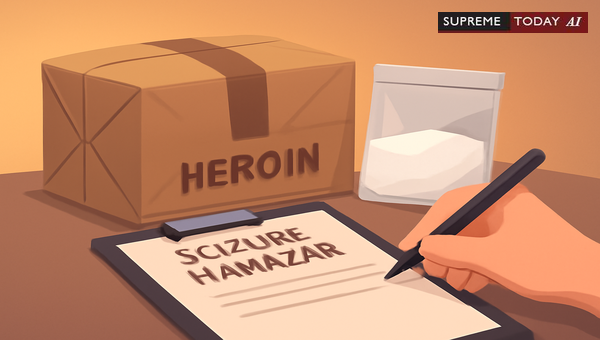
Contraband Seizure: Brown Paper Cover Myth Busted
In high-stakes drug cases under the , the devil is often in the details—especially when it comes to how contraband is seized, documented, and presented in court. A common prosecution narrative claims that contraband, like heroin packets, was covered with brown paper right at the time of seizure. But what happens when the evidence tells a different story?
Consider this pivotal legal question: At the time of seizure there was no brown paper with contraband, then the prosecution story is the contraband has been covered with brown paper. This scenario raises serious doubts about the prosecution's version, procedural integrity, and the overall credibility of the evidence. In this post, we'll dive deep into real case documents, highlight key discrepancies, and explore the legal implications—generally speaking, as this is not specific legal advice.
The Core Legal Issue: Brown Paper Covering at Seizure Time
At the heart of many NDPS cases is the claim that contraband was seized in a specific condition, such as wrapped in brown paper and oil paper, to ensure tamper-proof handling. However, inconsistencies between witness statements, seizure records (mahazar), and physical evidence can unravel the prosecution's case. Typically, courts scrutinize whether the covering was present at the time of seizure or added later, as undocumented changes compromise the .
The main legal finding from analyzed documents is clear: the prosecution's assertion that contraband was covered with brown paper during seizure is often inconsistent with the facts. For instance:- The initial seizure did not involve any brown paper covering the contraband 1999 0 Supreme(Ker) 568.- This claim is directly contradicted by procedural records 2001 0 Supreme(Ker) 724.- Handling discrepancies further erode authenticity 2001 0 Supreme(Ker) 134.
These issues don't just create doubt—they can lead to acquittals if procedural safeguards fail.
Evidence from Seizure and Investigation Records
Let's examine the seizure process through key documents. In one case 1999 0 Supreme(Ker) 568, police reportedly recovered contraband wrapped in brown paper and oil paper, which was seized and sealed at the scene. Here, the covering aligns with the narrative.
However, contrasting evidence emerges elsewhere. In 2001 0 Supreme(Ker) 134, the prosecution insists the contraband was covered with brown paper and sealed with a label at the scene. Yet, () testimony and the () reveal no such mention. The mahazar lacked details on packing procedures, and no signatures from the accused appeared on packets opened in court.
Key observations:- Contraband was found in packets, but covering details are inconsistent—brown paper and oil paper are noted, yet records suggest this was added post-seizure.- No documentation of brown paper at the scene in critical records 2001 0 Supreme(Ker) 134.
This pattern indicates that while contraband may have been wrapped later, claiming it was covered at seizure time misrepresents the evidence.
Discrepancies and Procedural Irregularities
amplify these issues. In 2001 0 Supreme(Ker) 134, the () omitted any reference to brown paper wrapping or on-site sealing. Witnesses confirmed packets lacked accused signatures upon court opening, pointing to broken .
Common irregularities include:- Absent packing procedure details in mahazar.- Inconsistent witness accounts on covering materials.- Failure to obtain independent witness signatures on seals.
Courts have noted that such gaps affect evidence credibility 2001 0 Supreme(Ker) 724. Without airtight documentation, the prosecution's story crumbles, as doubts must favor the accused in criminal matters.
Chemical Analysis: Confirming the Contraband's Nature
Despite packaging disputes, forensic confirmation is crucial. An analyst report states: the sample is in the form of brown coloured powder and it answers the tests for the presence of and is covered under . ... It is further reported that the samples are in the form of brown coloured powder. It answers the test for the presence of and is covered under . 2023 Supreme(Online)(MAD) 25100
This verifies the substance as heroin, underscoring NDPS applicability. However, it doesn't resolve packaging discrepancies—analysis occurs post-seizure, relying on intact , which was questionable here.
Legal Principles and Judicial Precedents
Indian courts emphasize strict compliance in NDPS seizures. As seen in 2001 0 Supreme(Ker) 724, failure to document covering materials undermines evidence. Precedents hold that post-seizure alterations without records compromise integrity.
Generally:- must be unbroken from seizure to analysis.- Mahazar must detail exact conditions, including coverings 2001 0 Supreme(Ker) 134.- Discrepancies invite acquittal if prosecution can't prove beyond doubt.
Exceptions exist: Courts may accept later covering if safeguards like witness signatures and seals are followed. But here, lacks strongly suggest the initial claim is unsubstantiated 1999 0 Supreme(Ker) 568 2001 0 Supreme(Ker) 134.
Practical Recommendations for Compliance
To avoid such pitfalls:- Seizure officers should document exact packing (e.g., brown paper presence) in mahazar.- Secure accused and witness signatures on packets/seals at the scene.- Maintain video recordings where possible for transparency.- Courts: Rigorously probe documentation before admitting evidence.
These steps bolster prosecution cases and protect rights.
Key Takeaways and Conclusion
In summary, when seizure records show no brown paper on contraband at the time of seizure, the prosecution's contrary story faces steep hurdles. Documents reveal contradictions 2001 0 Supreme(Ker) 724, procedural gaps 2001 0 Supreme(Ker) 134, and reliance on post-seizure handling without proof 1999 0 Supreme(Ker) 568. Even with confirmed heroin via analysis 2023 Supreme(Online)(MAD) 25100, packaging doubts can derail convictions.
This underscores NDPS enforcement's need for precision. Generally, such discrepancies highlight why meticulous records matter—courts prioritize evidence integrity over narratives. If facing similar issues, consult a qualified lawyer, as this post offers general insights only, not advice.
Stay informed on evolving NDPS jurisprudence to navigate these complexities effectively.
#ContrabandSeizure #NDPSAct #LegalDiscrepancies












