


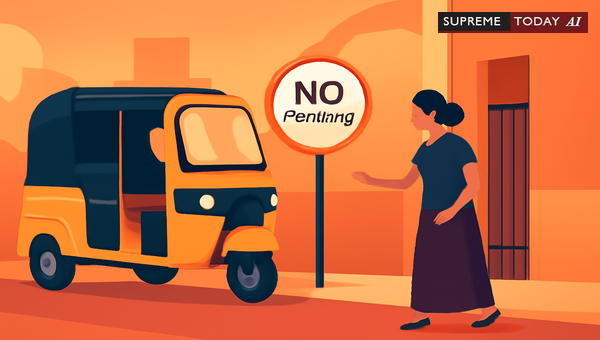
Justice Chitambaresh Judgment on Illegal Autorickshaw Parking: Key Insights
In bustling urban and semi-urban areas of Kerala, of autorickshaws often leads to chaos, obstructing business access and public pathways. A pivotal judgment by Justice Chitambaresh addresses this pressing issue head-on, ruling that such parking is illegal and emphasizing the binding nature of decisions. If you're a shop owner frustrated by autorickshaws blocking your entrance or a driver unsure about parking rules, this blog post breaks down the ruling and related precedents.
The core question at hand is: Justice Chitambaresh Judgment on Illegal Autorickshaw Parking. This judgment provides clarity on the legal obligations of drivers, authorities, and local bodies, drawing from the and traffic regulations. While this analysis offers general insights, it is not legal advice—consult a qualified attorney for specific cases.
Main Legal Findings from Justice Chitambaresh’s Judgment
Justice Chitambaresh’s ruling firmly establishes that decisions by the are final and binding on all parties, including autorickshaw drivers. —especially when it obstructs access to shops or occurs outside designated stands—is deemed illegal and subject to enforcement. The court directed strict compliance, highlighting the need to maintain and convenience. 2025 0 Supreme(Ker) 1569
Key points include:- decisions hold legal force and are not advisory. 2025 0 Supreme(Ker) 1569- Parking that blocks shop access or deviates from designated areas violates traffic laws. 2025 0 Supreme(Ker) 1569- Drivers must adhere to these arrangements to avoid liability under the . 2025 0 Supreme(Ker) 1569
This stance reinforces that even in areas without designated stands, random parking causing obstruction is unlawful.
Detailed Analysis: Authority and Enforcement
Binding Nature of Traffic Regulatory Decisions
The judgment underscores the authority of the , stating that its proceedings are conclusive. The court mandated implementation, noting, the ’s decision is final and binding. This legal obligation extends to autorickshaw drivers, who cannot ignore such directives. 2025 0 Supreme(Ker) 1569
In practice, this means local bodies like Panchayats or Municipalities must enforce these decisions promptly. Failure to do so can lead to judicial intervention, as seen in the directive for compliance.
Illegality of Obstructive Parking
A central concern was autorickshaws parking in front of shoprooms, hindering . Despite complaints, the had not designated stands, yet the court ruled such parking illegal. It referenced , which requires adherence to traffic regulations. Drivers were held accountable for obstructions, affirming that obstructing access is illegal. 2025 0 Supreme(Ker) 1569
Obligations Under
Section 72 mandates compliance with traffic authority decisions. The ruling consolidates that violations invite enforcement, protecting and property rights.
Insights from Related Kerala Judgments
Several precedents echo Justice Chitambaresh’s findings, strengthening the case against .
In one case, the Division Bench addressed an unauthorised autorickshaws stand, which has not been approved by the or anybody else. The court noted a police report on parking issues, directing resolution. 2021 Supreme(Online)(KER) 28257
Another ruling directed a respondent to implement the decision taken during the meeting conducted on to remove the illegal and unauthorised parking of autorickshaws in front of the petitioner’s establishment causing obstruction to the . The court affirmed the Committee’s authority where spaces aren't earmarked for parking. 2025 Supreme(Online)(Ker) 37908
Property owners' rights were upheld in a under the Kerala Act and . The court held that property owners have a right of access to the highway at all points, which cannot be obstructed by . Respondents had no right to park on public roads not designated for it. 2025 Supreme(Online)(KER) 13237
Additionally, courts have directed Traffic Regulatory Committees to convene for parking disputes. In a commercial building case, the petitioner’s complaint about autorickshaws was routed to the Committee, emphasizing local remedies first. 2023 Supreme(Online)(KER) 5971 2021 0 Supreme(Ker) 92
These cases collectively affirm: Traffic authorities lead on parking management, unauthorized stands are invalid, and obstructions violate access rights.
Exceptions and Practical Challenges
The judgment notes challenges like absent designated stands but insists on following existing rules. In such scenarios, authorities should designate spaces promptly. While drivers may face limited options, illegal parking remains prohibited. 2025 0 Supreme(Ker) 1569
Recommendations for Compliance
To avoid legal pitfalls:- Authorities: Designate parking stands swiftly and enforce Committee decisions. Regular monitoring is essential. 2025 0 Supreme(Ker) 1569- Drivers: Park only in approved areas; respect shop access. Non-compliance risks penalties under the .- Business Owners: File complaints with Traffic Regulatory Committees before courts. 2023 Supreme(Online)(KER) 5971- Local Bodies: Provide adequate facilities, as duties under laws like the Kerala Act require. 2025 Supreme(Online)(KER) 13237
Conclusion and Key Takeaways
Justice Chitambaresh’s judgment is a clarion call for orderly traffic management in Kerala. Unauthorized autorickshaw parking, particularly when obstructing access, is illegal, with decisions binding all. Related rulings reinforce property rights and Committee primacy, urging proactive enforcement.
Key Takeaways:- Committee decisions are legally enforceable. 2025 0 Supreme(Ker) 1569- Obstructive parking violates access rights. 2025 Supreme(Online)(KER) 13237- Seek administrative remedies first. 2023 Supreme(Online)(KER) 5971- Designate stands to prevent disputes. 2025 Supreme(Online)(Ker) 37908
This ruling promotes harmony between livelihoods and public rights. For tailored advice, consult a legal expert. Stay informed on Kerala traffic laws to navigate these issues effectively.
#IllegalParking, #KeralaTrafficLaw, #AutoRickshawRules












